




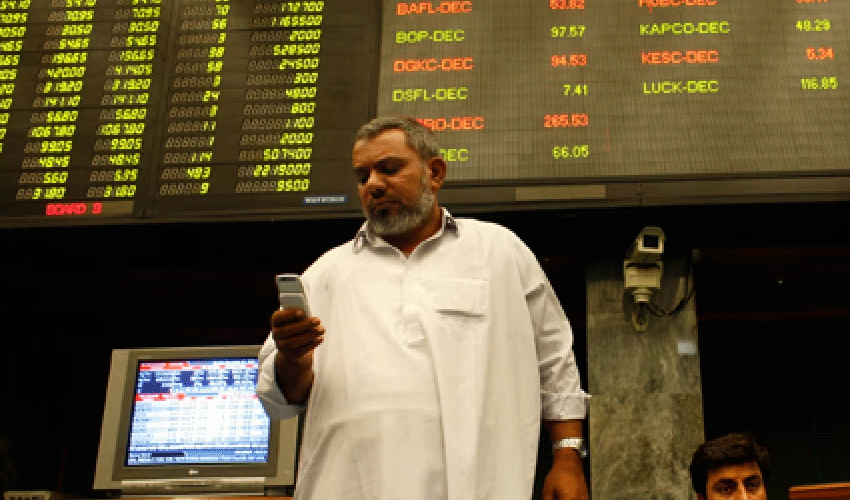
The Pakistan Stock Exchange (PSX) witnessed one of its steepest falls in recent years on Wednesday as geopolitical tensions between Pakistan and India escalated to their most serious point in more than two decades.
The benchmark KSE-100 Index plunged over 6,500 points within minutes of the market opening, shedding 6,560.82 points or 5.78% to hover at 107,007.68 by 9:30am, prompting panic among investors.
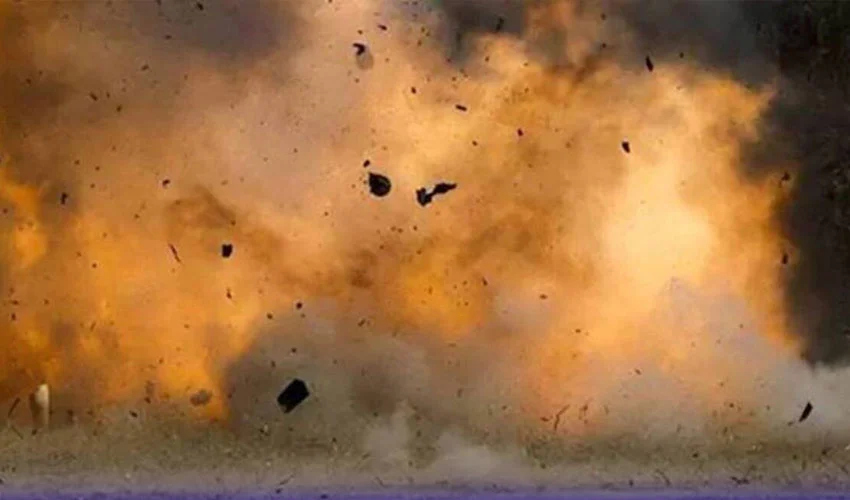
Market analysts attributed the nosedive to the cross-border military confrontation, which intensified overnight. Shelling and gunfire erupted across the Line of Control (LoC), with Indian forces reportedly targeting several locations within Pakistan.
Addressing a press conference in the early hours of Wednesday, Director General of Inter-Services Public Relations (DG ISPR) Lt Gen Ahmed Sharif Chaudhry confirmed that Indian missile strikes had hit six locations, including Bahawalpur, Kotli, and Muzaffarabad. At least eight Pakistani civilians were martyred and 35 others injured, he said.
In response, Pakistan's military reportedly shot down five Indian Air Force jets, according to Defence Minister Khawaja Asif, who spoke to Bloomberg following the strikes.
The developments marked the most significant military escalation between the two nuclear-armed neighbours since the Kargil conflict of 1999. The abrupt outbreak of hostilities triggered immediate concern across financial markets, with investors offloading shares across the board.
Heavy selling was observed in key sectors including commercial banks, oil and gas exploration, oil marketing companies (OMCs), power generation and distribution, and refineries. Index-heavy stocks such as OGDC, PPL, POL, HUBCO, SNGPL, and SSGC all traded in the red.
“The market has responded purely to geopolitical uncertainty,” said a senior equity analyst at a Karachi-based brokerage house. “This kind of drop reflects fear rather than fundamentals. If tensions persist or worsen, further volatility is expected.”
The fallout began taking shape a day earlier. On Tuesday, the KSE-100 Index had closed lower by 534 points at 113,568.51, after briefly gaining nearly 1,000 points during intra-day trading — a signal of the market’s underlying nervousness.
Meanwhile, international reaction to the flare-up has been swift. US President Donald Trump termed the Indian strikes “a shame” in a statement on Tuesday, but stopped short of proposing any immediate mediation or intervention.
Despite the regional turmoil, global markets remained relatively unaffected. Investors appeared more focused on news of economic support from China and easing trade tensions with the United States. The S&P 500 futures were up 0.9%, Hong Kong’s Hang Seng gained 1.7%, and China’s blue-chip stocks rose by 0.5%.
The People’s Bank of China announced a 10 basis point cut to its benchmark interest rate and reduced bank reserve requirements by 50 basis points, effectively injecting more liquidity into the banking system. The financial regulator also expanded an investment scheme to channel insurance funds into the stock market and pledged further steps to shore up the struggling property sector.
For Pakistan, however, the immediate concern remains the military standoff with India. “Markets will remain volatile until there is clarity on how far this conflict might go,” said another trader. “Investors are in wait-and-watch mode, and the next few days are critical.”