




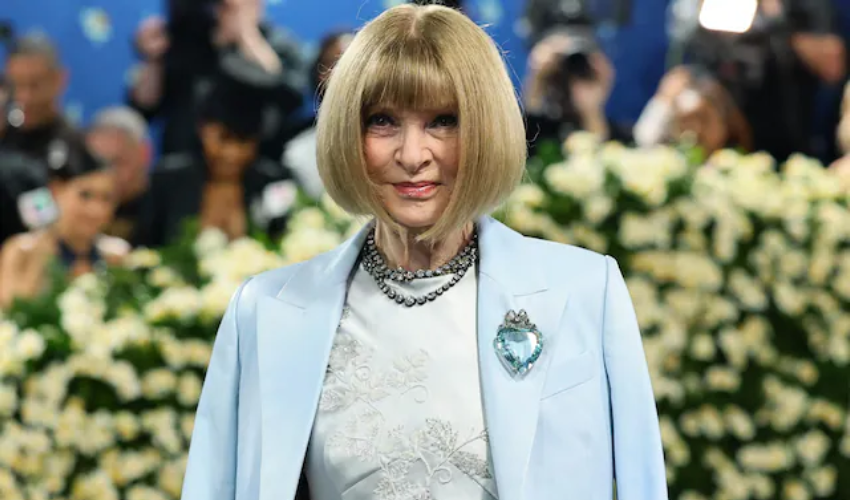
The Met Gala may be renowned for its outrageous outfits and A-list appearances, but behind the glitz stands one unshakable figure—Anna Wintour, editor-in-chief of Vogue and the event’s visionary architect.
From curating the celebrity guest list to deciding themes that spark global trends, Wintour has turned the Gala into the most awaited night in fashion. But her impact goes far beyond one red carpet.

Born into journalism, drawn to fashion
Anna Wintour grew up in a family of journalists. Her father, Charles Wintour, was a respected editor at the Evening Standard in London and pushed her toward fashion at an early age, landing her a boutique job when she was just 15. Even in school, Wintour challenged dress codes and debuted the iconic bob haircut she still wears today.
By her late teens, Wintour was devouring fashion content and offering her father suggestions to attract younger readers—early signs of the sharp editorial instincts that would later define her career.
Bold climb in fashion media
Wintour’s rise wasn’t without struggle. After working in boutiques and briefly at Harper’s & Queen UK, she transitioned into fashion journalism, thanks in part to her then-boyfriend. Her creative eye led to groundbreaking photo shoots, but internal rivalries pushed her to leave the UK and seek new opportunities in New York.
There, she held several editorial positions, each one moving her closer to her ultimate dream—running Vogue. In a famously bold interview, she once told then-editor Grace Mirabella, “I want your job.” Though that moment didn’t land her the gig, it set the tone for her career—fearless, direct, and unapologetically ambitious.
The Vogue revolution
By 1987, Wintour became the editor of American Vogue, fulfilling her long-time goal. Her impact was immediate. Gone were the overly polished aesthetics. In came minimalist, relatable, and natural fashion spreads—models with tousled hair, genuine smiles, and real stories. She gave fashion a human face while keeping it aspirational.
Her editorial choices redefined Vogue and influenced how fashion journalism was consumed globally.
Hollywood couldn’t resist
Wintour’s persona—sharp, stylish, and commanding—made her a natural muse for cinema. The most famous portrayal came in The Devil Wears Prada, where Meryl Streep’s ‘Miranda Priestly’ was reportedly inspired by her. The story, penned by Wintour’s former assistant, captured the intense world of fashion media, with all eyes on the powerful woman at the helm.
She's also appeared in numerous documentaries, like The September Issue and The First Monday in May, offering rare glimpses into her world.
The queen of the Met Gala
Wintour has chaired the Met Gala since 1995, turning it from a niche socialite fundraiser into a global pop culture phenomenon. She oversees every aspect—from themes and guest lists to food and seating charts. Under her leadership, the Gala has expanded beyond Hollywood to welcome musicians, athletes, artists, and influencers from around the world.
Her curated themes have pushed celebrities to get creative, leading to viral fashion moments year after year. The 2025 theme, "Superfine: Tailoring Black Style," exuded excitement as it showcased another unforgettable night.
Anna Wintour is not just a gatekeeper of style—she's the architect of modern fashion culture.
Her influence permeates every aspect of today's fashion industry, from reshaping Vogue to reinventing the Met Gala.