





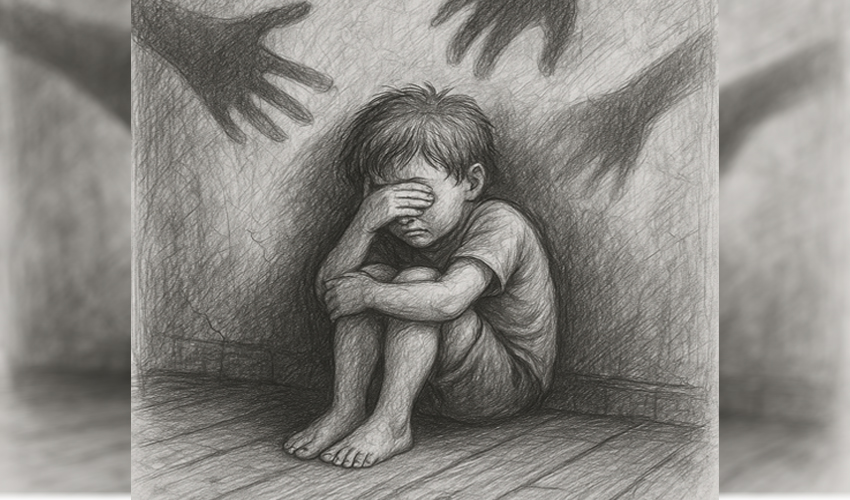
The situation is not just worrisome; it is terrifying. There has been no letup in child sexual abuse or pornography cases. The numbers shatter the illusion of safety and optimism that child protection and anti-rape laws claim to provide. The unprecedented spikes in the sex crime graph witnessed over the past 10 years are not just part of the news cycle but a stain on our collective conscience. Adding to the dilemma are the taboos attached, which force victims to avoid reporting incidents, hence allowing perpetrators to act repeatedly with impunity. It is high time society realized that speaking out on such crimes is not as shameful as staying silent, especially when children are the victims.
Recent data speaks poorly on the state of affairs, revealing that at least five children fall prey to sexual abusers each day. Last year alone, of the 1,828 cases reported, 56 children were murdered after rape. As many as 2,021 cases were reported the preceding year, 2,123 cases the year before, 2,275 before that, and so on. Even mentally challenged children are not spared; in fact, they are considered soft targets. Moreover, annual reports repeatedly point to acquaintances as the main culprits, including neighbors, family members, school staff, etc. Shockingly, data rips apart the narrative that girls are mostly the victims. More boys were sodomized and killed.
While this happens, another disturbing ‘trend’ that continues to resurface is that of child pornography. Despite gaining massive attention after the 2015 Kasur child sexual abuse scandal, as many as 116 such cases were reported in 2024, around 21 more than the preceding year. Just days ago another global gang involved in child pornography was busted in Muzaffargarh and six children rescued.
The numbers don’t stop, because the perpetrators don’t stop, and they won’t stop because the authorities won’t stop them. At least not in the manner they ought to
It is also disappointing that victims and their families have to face double jeopardy. Despite a case registration rate of more than 90 percent, the conviction rate has remained just over 1 percent, mainly because either the evidence is erased or investigation remains weak. Consequently, the numbers don’t stop, because the perpetrators don’t stop, and they won’t stop because the authorities won’t stop them. At least not in the manner they ought to.
From Kasur to Karachi, the laws exist, but justice does not keep pace. The Zainab Alert Act, child protection laws, or soon-to-be central DNA database in Punjab have proved to be hollow due to lack of effective enforcement. The state must realize that by reacting conventionally – forming committees and suspending a few officers – instead of taking solid steps to ensure a meaningful conviction rate, it is accepting that such incidents will keep happening. It must decide to either take real action to protect children or openly admit that it has lost this war. While deciding, authorities must bear in mind that silence and inaction amount to complicity in such crimes.