




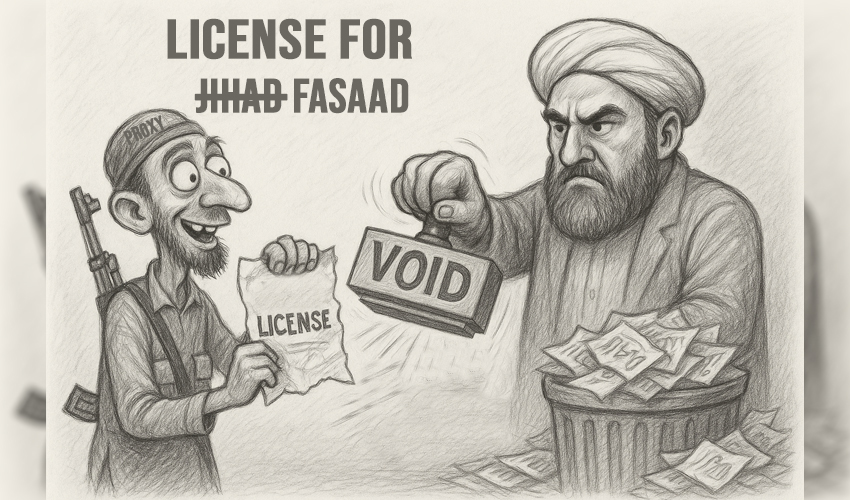
It is about time the Kabul government took this line. A recent statement by an Afghan Taliban commander that declares ‘jihad’ against Pakistan to be ‘fasaad’ is a welcome development. Every word the official spoke lands squarely in Pakistan’s favor, and simultaneously hints at Kabul’s quiet but meaningful moves to improve its relationship with Islamabad. This fresh stance is a direct blow to the self-proclaimed warriors of Islam who have been operating under false banners in a bid to bring destruction to Pakistani soil.
Commander Saeedullah Saeed’s warning to 'Khawarij' factions signals a shift in doctrinal language coming from within the Afghan Taliban ranks. He categorically declares that no individual or group has the right to launch jihad independently because only the head of the state holds that authority. The declaration is expected to lessen – if not put an immediate end to – attacks inside Pakistan.
Afghan authorities have drawn a clear line between authentic resistance and chaos incited by proxies. The use of the term “unauthorized jihad” is also important here. Saeed explicitly outlined that any militant group operating without the Emirate’s approval is not engaged in resistance but corruption. In other words, jihad cannot be franchised or subcontracted by splinter factions, nor can it be used to justify cross-border operations under false religious pretexts.
This is the first time such a direct warning has been issued publicly, and in such clear religious terms. One sentence, in particular, that cuts through the noise is that “jihad based on personal ego or group loyalty is fasaad, not legitimate resistance”.
The statement comes amid repeated concerns by Pakistan about militants enjoying sanctuary on Afghan soil. These concerns have not emerged from nowhere. The evidence is extensive and persistent. While past Afghan responses have not been overtly dismissive, they have often lacked any concrete follow-through.
Afghan leadership has now indicated that it no longer wants to provide ideological space to the chaos agents posing as freedom fighters
Also worth noting is Saeed’s warning against unauthorized entry into Pakistan, which he termed an act of disobedience. This is a direct challenge to the groups operating along the border with tacit or active support from local and regional facilitators. India-backed proxies operating under the garb of religio-political movements are an open secret. By calling them Khawarij, which is historically a derogatory term for violent dissenters in Islamic tradition, the Afghan leadership has now indicated that it no longer wants to provide ideological space to the chaos agents posing as freedom fighters. At the same time, the statement strengthens Pakistan’s counterterrorism narrative and supports its efforts to de-link religion from militancy.
However, Pakistan must tread carefully. It would be a mistake to take this statement as a policy change until it translates into ground-level action. Words do help, but they do not dismantle safe houses. Declarations are not border control. What matters now is whether this warning will be enforced. Islamabad must seize the moment to demand tangible steps. Intelligence sharing, patrol coordination, and joint tracking mechanisms must now follow.
The fight against fassad does not end with a statement, but it must begin with one. It is time to shut the door on ambiguity. Either this region chooses peace, or it surrenders to perpetual proxy war under the lie of holy resistance. There is no middle ground left.