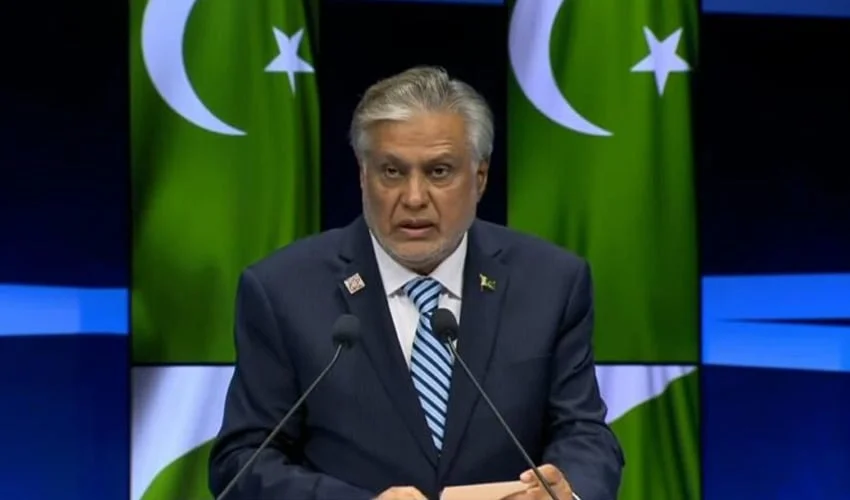






Chief Justice of Pakistan (CJP) Yahya Afridi on Tuesday shared a comprehensive overview of the judiciary’s ongoing reform initiatives, plans to adopt technology, and insights from his recent visits to China and Turkey during a meeting with Supreme Court beat reporters.
Speaking about his visit to China, the chief justice revealed that he led a five-member delegation and was warmly received by Chinese authorities. He said that Pakistan and China have agreed to enhance judicial cooperation and signed a mutual cooperation agreement to assist in case management and reforms.
“China’s judicial system, like ours, operates through four tiers. They have 367 judges, yet no backlog of cases — which surprised us,” the CJP said. He noted that Chinese judges were shocked to learn about the high number of pending cases in Pakistan.
“They asked how we manage such a huge backlog. I told them we’ve come to learn from you, and that our focus now is to dispose of cases swiftly using technology.”
He said China had agreed to cooperate on various issues, including artificial intelligence and resolution of cases. "A mutual cooperation agreement has also been signed with the Chinese judiciary."
Justice Afridi added that the chief justice of the Indian Supreme Court also participated in the China visit and very important discussions were held with him and other Indian judges. However, due to current geopolitical sensitivities, he said, “I won’t disclose the details now, but I will share them in the next meeting when the situation improves.”
He also named a sessions judge from Ghotki as part of the delegation to China.
The chief justice said that the next Shanghai Cooperation Organisation (SCO) judicial conference will be hosted by Iran. During his visit, he also met chief justices from Turkey, Azerbaijan, and India.
Justice Afridi stressed the importance of technology in judicial reforms, pointing out that Pakistan’s high courts are ahead of the Supreme Court in digital adaptation. “From June 15, only soft copies will be accepted for case filing in the Supreme Court,” he announced, adding, “We’re working towards going paperless and preparing an online case database.”
He announced that a meeting of the National Judicial Policy-Making Committee (NJPMC) will be held on May 26–27 to discuss the judicial reform agenda, particularly the issue of pending cases. All chief justices of high courts will attend.
Addressing the pressing matter of criminal cases, Justice Afridi revealed that three benches have been formed in the Supreme Court specifically for criminal matters, with two working continuously. “One bench will focus solely on death penalty cases. I want death penalty cases to be disposed of quickly,” he said. He added that there were more cases of life imprisonment than death penalty -- around 1,200 -- that are pending.
To further accelerate judicial processes, the chief justice announced the introduction of an evening shift from 2pm to 5pm, with a 50% salary increment for judges willing to work in these additional hours.
On the issue of enforced disappearances, Justice Afridi declared it as “agenda number one” in the upcoming judicial policy discussions. “This matter cannot be delayed any further,” he asserted.
The CJP also suggested that judicial recruitment exams at the district level should be conducted every six months. “We asked for 50 judges, only 18 passed. The rest were rejected by the Public Service Commission, and then we had to wait long for re-examinations,” he said.
Commenting on model courts, Justice Afridi said he personally doesn’t agree with the model court concept but believes in encouraging positive steps. “Just because I had a bad experience with them as a high court chief justice doesn’t mean we should discard them entirely.”
When asked about the 26th Constitutional Amendment, Justice Afridi declined to comment at this stage but added, “When the time comes, I’ll share my view. But one thing is clear — parliament makes laws and amendments.”
He further remarked that a chief justice had to act according to the Constitution, adding that the 26th Amendment had introduced changes in the powers of the chief justice that should be respected. "We have to respect the laws made by parliament until court decisions against them."
Closing the conversation on a lighter note, the CJP encouraged journalists to report the positive developments till the situation improved. “People are under a lot of stress. Tell them good things. Tell them that Allah will do good."