By deciding to play against India, Pakistan quietly redrew the balance of power within the International Cricket Council, regardless of the noise across the border.
Expressing his thoughts on X (formerly Twitter), renowned sports journalist Dr Nauman Niaz said that in the end, the outcome proved wiser than expected. Irrespective of rankings, Pakistan remains a central cog in the global cricket economy. Matches between Pakistan and India account for between 45 and 62 per cent of total ICC tournament revenue, a figure that rises to nearly 80 per cent in the Asia Cup.
In India, even a 10-second cut to advertisements has been shown to increase viewership, while audience numbers have continued to rise steadily since the 2015 ICC World Cup. It is no secret that the ICC has long leaned towards the Board of Control for Cricket in India (BCCI), largely due to its financial clout. India is the largest commercial market in cricket, contributing roughly 70 per cent of broadcast revenue and 78 per cent of overall tournament income, with individual player brand value adding further weight.
The ICC, however, is meant to function as a regulatory body rather than an extension of any single board, with equal voting rights for all full members. Instead, dominance gradually seeped into the system.
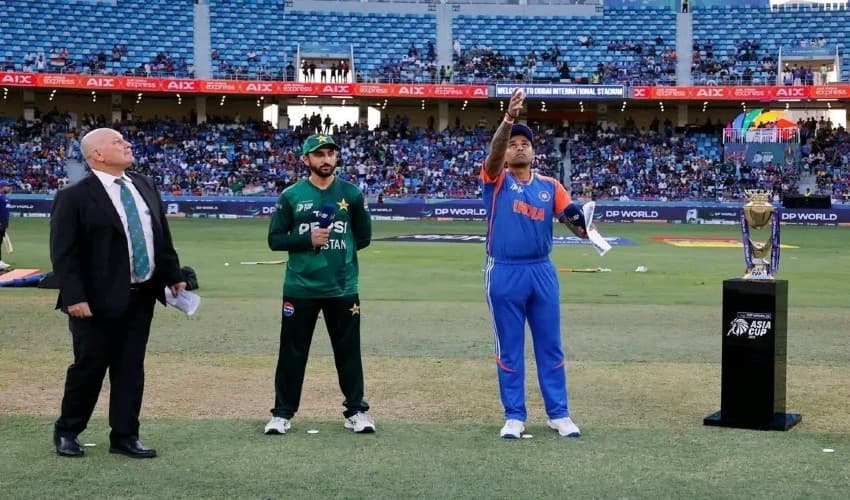
Political narratives entered the game and ultimately led to undesirable acts, including the refusal to receive the Asia Cup trophy from the ACC president, damaging the dignity of the sport. Post-match remarks by Suryakumar Yadav also appeared unnecessary and ran counter to the spirit that cricket demands.
A line had to be drawn. Someone had to expose the cracks in cricket’s governance to remind the ICC of equality and neutrality. Pakistan’s decision fulfilled that role. It exposed the dominance of a single board, reinforced Pakistan’s brand value, and clarified why, since 2017, the ICC has consistently placed India and Pakistan in the same pool, briefly separating and then reuniting them to maximise commercial returns.
Rising production costs and restrictions on gaming applications and surrogate advertising in India have made the India-Pakistan contest the backbone of the international calendar. In the next ICC media rights cycle, a shortage of buyers cannot be ruled out, and subsidies may be required. For this reason, high-profile encounters between India and Pakistan remain integral to the ICC’s financial structure. A resumption of bilateral series may eventually be deemed commercially viable, or it may not.
Dr Nauman Niaz said that ultimately, cricket must prevail under a neutral and fair-minded ICC, not, as Sharada Ugra once termed it, “the BCCI’s Dubai office”. Pakistan has redefined its position within the global cricket order.
Enough politics. Let the World Cup be enjoyed. India will begin as clear favourites, followed by New Zealand and South Africa. Injuries may hinder Australia. Pakistan? Either an early exit, or the dark horse whose fate remains impossible to predict.
Separately, the government of Pakistan confirmed that Prime Minister Shehbaz Sharif approved Pakistan’s participation in the high-profile match against India, scheduled for February 15, 2026, during the ICC Men’s T20 World Cup.
Officials said the decision followed careful consideration of diplomatic, sporting, and regional factors. According to an official statement, Pakistan Cricket Board chairman Syed Mohsin Raza Naqvi formally briefed the prime minister on the outcome of high-level discussions involving the International Cricket Council, the Bangladesh Cricket Board, and other stakeholders regarding recent challenges facing the tournament.