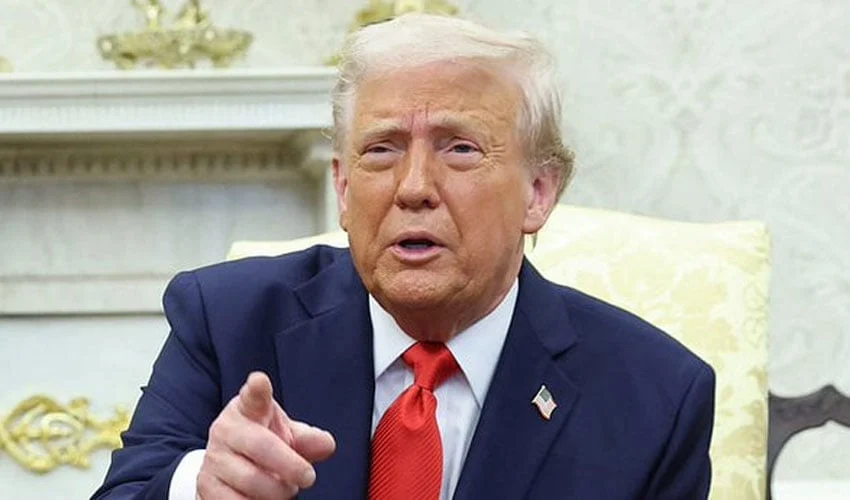






The United States has once again inserted itself into the Pakistan-India equation. Following a US-brokered ceasefire, President Donald Trump, using a bizarre metaphor, has urged both sides to “go out to dinner” and sort out their issues. But behind this quip lies an effort aimed at initiating direct communication between the nuclear-armed archrivals. However, while the US continues in its ‘matchmaking’ role, it must realize that dinner invitations alone will not suffice.
This transition from hostility to dialogue is what the saner minds would want. However, it does not seem to be happening soon, as neither side wants to sit at the table with strings attached. India, in particular, has often preferred to talk only on its own terms. It also appears Delhi wants silence from across the fence but refuses to stop shouting into a megaphone. Loathing third-party mediation while welcoming foreign support for narratives that suit itself exposes the duplicity prevalent in Raisina Hill. Moreover, the Indian government knows that if it allows mediation, be it by the United States, the United Nations, or any other country or global body, it would automatically concede that Kashmir is an unresolved international, “not bilateral”, dispute.
With that said, although the recent ceasefire announcement after four days of war has frozen military engagements, the entire Pakistan-India border now resembles the Line of Control. This is a very serious situation, with far-reaching implications for civilians living along these areas, who are often the first to bleed in the name of peace.
The US might have opted to act as a matchmaker this time around, but it cannot dictate the outcome of any talks. However, it must ensure that the half-open diplomatic doors are fully opened. The power players must ensure that future negotiations untangle issues and not tighten the knots.
Now that Washington has thrown itself into the mix, it must move beyond superficial responses and get the issues between Pakistan and India resolved. At the same time, it must ensure that if talks are to be held, they lead somewhere concrete. The objective cannot and should not be a return to the status quo ante. Furthermore, considering the fact that too many agreements have been torn up with little consequence, those pushing for calm must also share responsibility for ensuring continuity and, by extension, accountability.
The peacemakers and dealmakers must realize that an engagement between the two countries is inevitable. The US might have opted to act as a matchmaker this time around, but it cannot dictate the outcome of any talks. However, it must ensure that the half-open diplomatic doors are fully opened. The power players must ensure that future negotiations untangle issues and not tighten the knots.