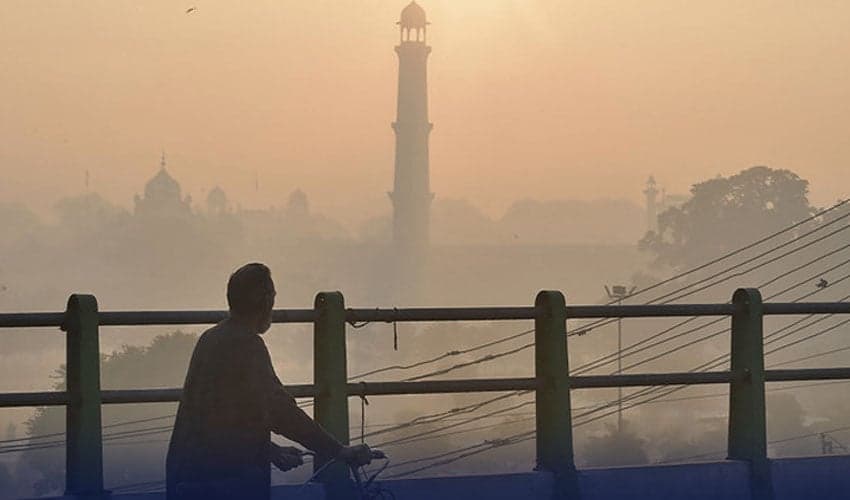
Environment-friendly policies introduced by the Punjab government have led to a marked improvement in Lahore’s air quality, with official data showing consistent progress compared to last year.
According to an analytical comparison report, Lahore’s air quality has shown continuous improvement since late 2025 and has remained on an upward trend into 2026. Notably, the improvement has occurred even during dry periods without rainfall, highlighting the impact of government interventions rather than weather conditions.
Since October 2025, Lahore’s overall Air Quality Index (AQI) has improved by 58 points, the report said.
Month-by-month AQI gains
The report detailed significant month-wise improvements. Lahore’s AQI improved by 8 points in October 2025, 192 points in November, and 13 points in December, indicating a clear change in the city’s environmental trajectory.
In the first 10 days of January 2026, the AQI further improved by 28 points compared to the same period last year, with better air quality recorded on seven days.
Sharp decline in smog
In October 2025, the average AQI stood at 205, which was 8 points better than October 2024’s average of 213, with 16 days of improved air quality recorded. November 2025 saw a major breakthrough, as the average AQI dropped to 261 from a hazardous 453 in November 2024 -- a massive improvement of 192 points, with 23 days of better air quality.
In December 2025, the average AQI was recorded at 247, which was 13 points higher than last year. However, despite severe smog conditions, Lahore still experienced 14 days of improved air quality during the month.
Fewer hazardous days
The analytical comparison report noted a significant reduction in days falling under the “hazardous” air quality category during the 2025 smog season. From October to December 2025, Lahore recorded an overall AQI improvement of 68 points, amounting to a 22% improvement.
During the 2025–26 period, air quality remained in the “good” category for 60 out of 102 days, reflecting a broader and more sustained improvement.
January begins with cleaner air
The first month of the new year also showed encouraging signs. In January 2026, air quality improved by 33 points on seven out of nine days compared to the same period last year, according to the report.
The average AQI during the first 10 days of January 2026 was 192, compared to 220 in the corresponding period of 2025.
The report emphasized that the improvement came despite reduced rainfall, underscoring the role of government measures. These included indiscriminate action against smog-emitting vehicles, the use of substandard fuel, and unchecked industrial emissions.
Data-driven policymaking, field monitoring, and a system of fines played a key role in controlling pollution levels.
Smog squads, modern monitoring
According to the report, the deployment of smog squads equipped with modern technology ensured timely action at pollution hotspots. Strict enforcement of environmental laws and improved coordination among institutions further strengthened pollution control efforts.
Traffic management measures and tighter regulation of industrial activity were also cited as effective steps in curbing the spread of smog.
Punjab Senior Minister Marriyum Aurangzeb said the improvement in air quality reflects the government’s commitment to clean air reforms. She stated that a modern monitoring system has been introduced to ensure long-term environmental protection.
She added that safeguarding public health remains the top priority of Punjab Chief Minister Maryam Nawaz, and that efforts to improve air quality will continue across the province.