





Tensions between nuclear-armed neighbours India and Pakistan escalated further as India moved its warships, equipped with supersonic cruise missiles, closer to Pakistan’s coastline following days of cross-border hostilities.
British newspaper The Telegraph reported that the Indian Navy has repositioned its western fleet in the northern Arabian Sea, bringing it within striking range of Karachi — a key economic hub that handles nearly 60% of Pakistan’s trade and the country's naval headquarters.
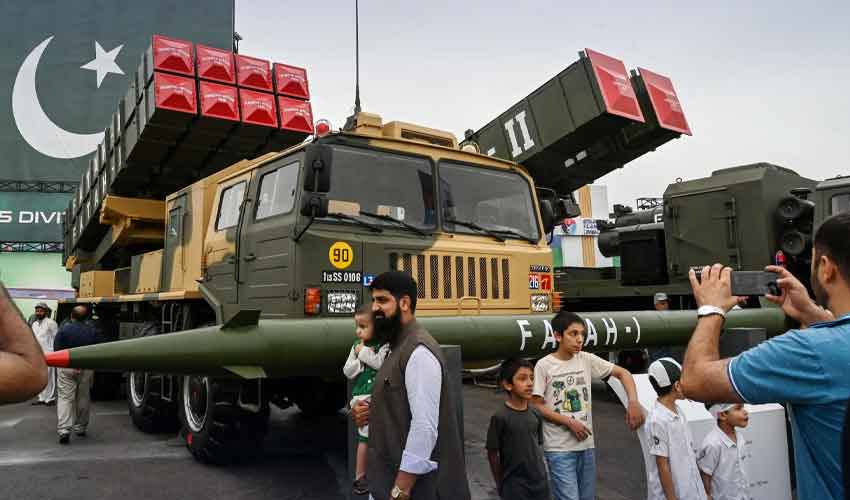
The fleet includes an aircraft carrier, destroyers, frigates, and anti-submarine vessels, and is said to be roughly 300 to 400 miles from the Pakistani coast. Some of these ships are reportedly armed with BrahMos cruise missiles — Indo-Russian-developed weapons, which carries a 300kg warhead capable of striking targets up to 500 miles away at speeds approaching Mach 3.
Defence analysts have warned that any attack on Karachi could be devastating for Pakistan, not only because of its economic importance but also due to the presence of Pakistan’s naval headquarters.
India’s naval deployment came a day after New Delhi claimed to have intercepted a barrage of Pakistani missiles and drones targeting 15 cities across India’s northern and western regions. Meanwhile, Pakistan has denied launching any such offensive, asserting instead that it intercepted 48 Indian drones during a recent wave of hostilities.
On Friday, at least 10 explosions were reported around Srinagar International Airport in India-held Kashmir. In Jammu, loud blasts and sirens caused panic and the region was plunged into darkness. Omar Abdullah, former chief minister of the region, reported hearing ongoing heavy artillery fire near his location. “Intermittent sounds of blasts, probably heavy artillery, can now be heard from where I am,” he posted on X.
Artillery shelling has continued along the Line of Control (LoC) last night, with at least two dozen civilian fatalities reported since May 7. In the most serious escalation, India launched large-scale airstrikes on Pakistan on May 7, in response to the April 22 attack in Pahalgam, where gunmen killed 26 people at a tourist site.
India claimed its airstrikes, carried out by 80 fighter jets, destroyed nine alleged terrorist training camps. However, Pakistan rejected the claims, stating that the air raids killed 31 civilians and targeted mosques and a power facility. Pakistan also said it downed several Indian aircraft, including three Rafale jets.
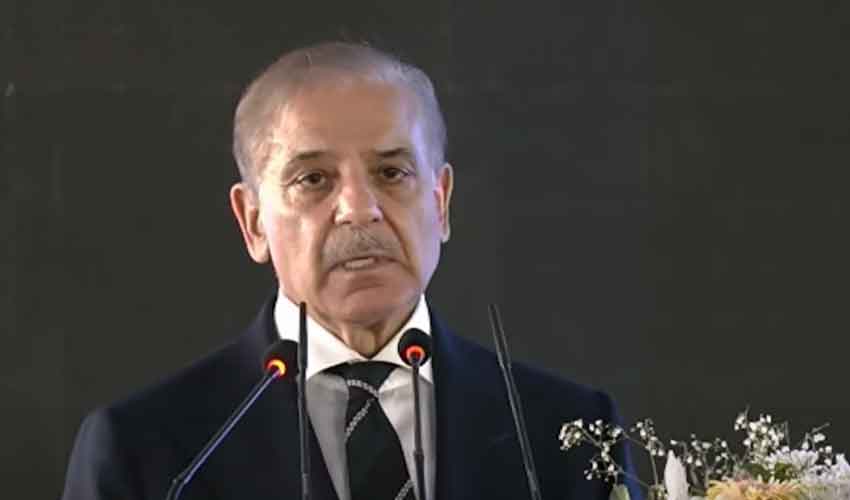
At a military press briefing in Rawalpindi, Pakistan Army spokesperson Lt Gen Ahmed Sharif Chaudhry accused India of attempting to set "a dangerous new precedent." Holding up photos of children allegedly killed in Indian strikes, he vowed a strong response, stating: “Pakistan will retaliate — at a time, place, and method of its choosing.”
Diplomatic efforts are also underway. India’s foreign secretary contacted his Pakistani counterpart to offer condolences over civilian casualties and urged both nations to de-escalate. He also held discussions with India’s foreign minister focused on counter-terrorism.