




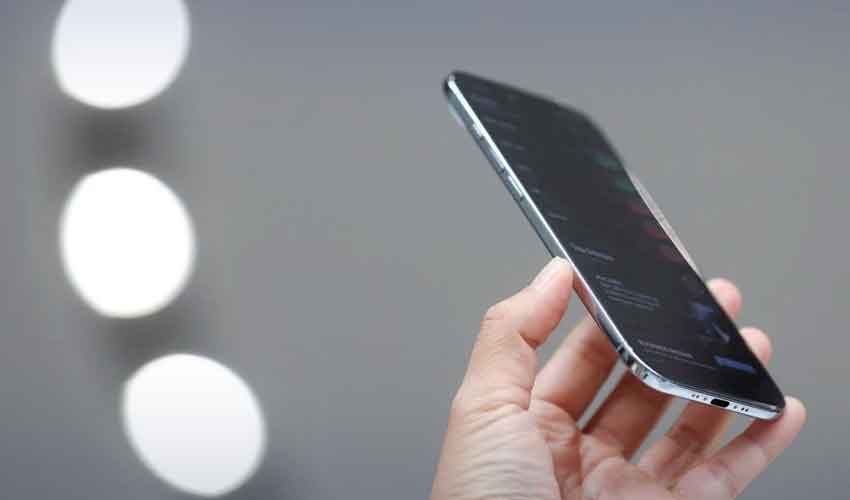
With smartphones, where Apple leads, others often follow, so the release of an iPhone this week without a traditional SIM card raises concerns about the future of a very familiar piece of phone technology.
All phone users will be familiar with the small plastic cards that must be carefully inserted into their devices in order for them to function. However, for iPhone Air buyers, this will be a thing of the past.
It will only work with an eSim, which allows users to switch networks or plans without using a fiddly fork to open a tiny SIM card tray.
Analyst Kester Mann told BBC News that Apple's announcement "marks the beginning of the end of the physical SIM card". But how long will it be before we've all discarded our tiny chip-carrying pieces of plastic, and how will it affect how we use our phones?
'Expect the tray to disappear'
SIM stands for Subscriber Identity Module. The chip is an essential component of your phone, allowing you to connect to your mobile network provider, manage calls and texts, and access your data.
In recent years, the eSim has emerged as an alternative, and newer phones allow users to use both a traditional Sim and an eSim.
The tech giant announced on Tuesday that the new iPhone Air, the newest and thinnest addition to the Apple family, would have an eSim-only design.
This is the first time that an eSim-only iPhone will be available worldwide. Customers in the United States have had eSIM-only iPhones since 2022. However, even Apple is not abandoning the physical SIM card completely.
While it is true that the other new iPhones announced this week - the 17, 17 Pro, and 17 Pro Max - will only be eSim in a few markets, the majority of countries will keep physical SIM cards.
Other major manufacturers, such as Samsung and Google, are embracing eSims as an option while still offering physical SIMs in most locations.
Experts, on the other hand, are certain of the path to take.
According to CCS Insight's most recent forecast, 1.3 billion smartphones with eSIMs will be in use by the end of 2024. That figure is expected to rise to 3.1 billion by 2030.
"In time, expect the Sim tray to disappear altogether," said Paolo Pescatore, a technology analyst at PP Foresight.
What are the benefits of an eSim?
Mr Pescatore stated that switching to an eSim provided "numerous benefits," the most obvious of which was that it saved some internal space in a phone, allowing for larger batteries.
He also emphasized the environmental benefits of not using plastic Sim cards, and believes that people who use an eSim when traveling abroad will have more provider options and fewer "bill shocks".
According to Kester Mann, it will result in new customer behaviours and "slowly change how people interact with their mobile provider".
For example, it may mean that some customers will not need to visit a high-street store to discuss their SIM card with their provider.
That could be a significant advantage for people looking to save time and a trip to a physical store.
However, he stated that, as with any change, it may not be welcomed by all.
"The shift could be especially significant among older populations or those who are less comfortable using technology. "The industry must work hard to explain how to use eSims," Mr Mann stated.