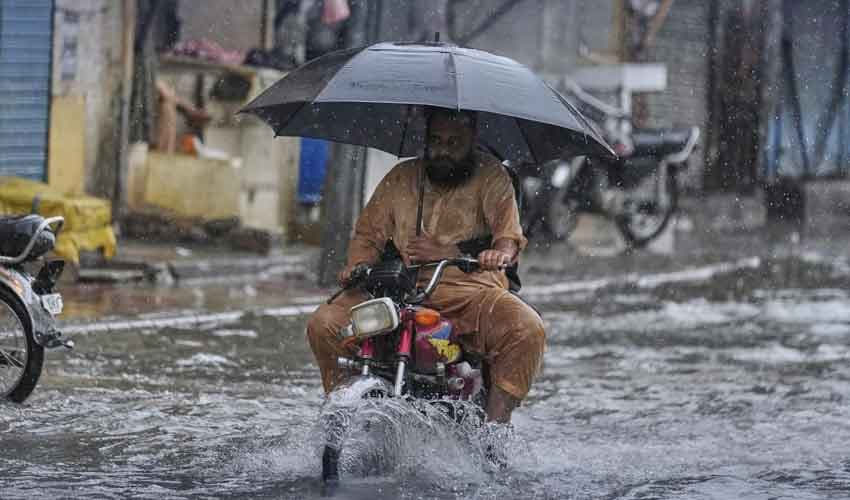
The Met Department has predicted a fresh spell of rains across the country starting August 29, with showers expected to continue in different regions until September 2.
The weather system may trigger urban flooding, landslides, and wind-related damage in vulnerable areas.
Rain forecast by region
According to the Met Office, the upcoming rain spell will affect multiple provinces:
-
Khyber Pakhtunkhwa: Rain expected from August 29 to September 1.
-
Punjab and Islamabad: Showers likely between August 29 and September 1.
-
South Punjab: Rain predicted from August 29 to September 2.
-
Sindh: Some areas may receive rain on August 30 and 31.
-
Balochistan: Showers likely from August 30 to September 1.
-
Upper parts of the country: Rain expected from August 30 to September 1.
Possible risks and hazards
The Met Office cautioned that heavy rainfall may lead to landslides in hilly areas and urban flooding in major cities. Strong winds and thunderstorms could also cause damage to weak infrastructure and standing crops.
Authorities on alert
Local administrations have been advised to remain on high alert during the forecast period and ensure that precautionary measures are in place to minimize potential losses. Citizens living in flood-prone or landslide-prone areas have been urged to exercise caution and follow safety advisories.
On the other hand, an NDMA briefing warned of high-level flooding at Head Marala and Khanki on River Chenab due to heavy water discharge. Pressure was also reported at Jassar and Shahdara in River Ravi and at Ganda Singh Wala and Sulemanki in River Sutlej.
Also Read: High flood alert: India releases water from Thein Dam into Ravi
To ensure readiness, the NDMA has positioned 2,000 trucks for the evacuation of affected people.
Punjab Disaster Management Authority (PDMA) Director General Irfan Kathia said around 20,000 to 25,000 people have been evacuated from areas along the Chenab and Ravi rivers due to rising water levels.
Addressing a press conference in Lahore, Kathia said the next spell of monsoon rains is expected to begin tomorrow but will not be as intense as earlier downpours.
Also Read: Chenab floods surpass capacity at Khanki Headworks, NDMA warns of structural risk
He claimed India had not provided sufficient alerts regarding water releases, forcing Pakistan to rely on data from the National Disaster Management Authority (NDMA) and satellite monitoring.
The Meteorological Department (PMD) on Wednesday said Sialkot has recorded its highest-ever 24-hour rainfall, breaking a 49-year-old record. According to PMD, the city received 363.5 millimeters of rain over the past 24 hours, surpassing the previous record of 339.7 millimeters set on August 6, 1976.

.jpg&w=640&q=75 "Holiday announced on July 22")


.jpg&w=256&q=75 "Holiday announced on July 22")