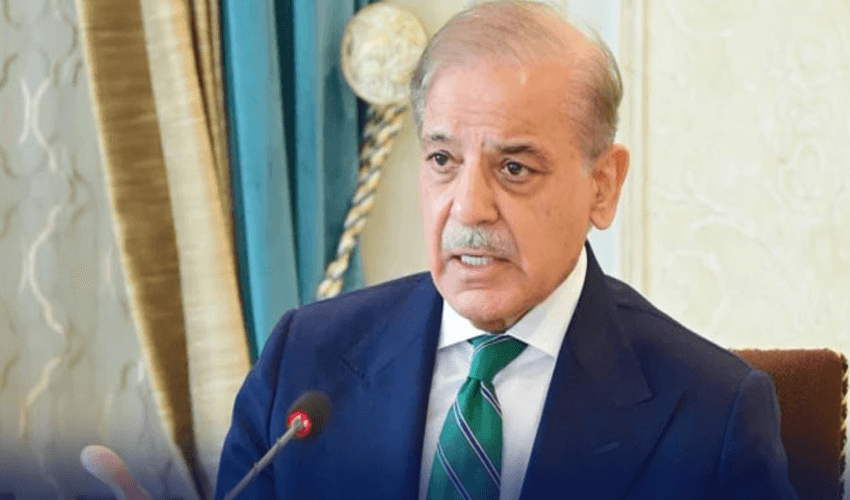
Prime Minister Shehbaz Sharif on Wednesday took immediate notice of the National Electric Power Regulatory Authority’s (NEPRA) newly notified Net Metering Regulations 2026, directing authorities to safeguard the interests of existing solar consumers.
A high-level meeting was convened under the chairmanship of the prime minister to review the new regulations.
The meeting was attended by Deputy Prime Minister Ishaq Dar, Information Minister Atta Tarar, Power Minister Awais Leghari, Parvez Malik, Bilal Kayani, Muhammad Ali, Ahad Cheema and other senior officials.
During the meeting, the prime minister instructed the Power Division and NEPRA to file a review appeal to ensure full protection of contracts signed with existing solar consumers.
He emphasised that the burden of approximately 466,000 solar consumers should not be shifted onto 37.6 million electricity consumers connected to the national grid.
“The rights of existing consumers must be fully protected,” the prime minister was quoted as saying, while also directing the Power Division to prepare a comprehensive action plan on the matter.
What are new Net Metering Regulations 2026?
Earlier, NEPRA formally notified the Net Metering Regulations 2026, introducing significant structural changes to the existing system.
Under the new framework:
-
The earlier Net Metering Regulations 2015 stand suspended.
-
A net billing system has replaced the previous net metering model.
-
The rules now also apply to biogas consumers, expanding the scope beyond solar users.
Under the revised system, consumers will receive a bill at the end of each billing cycle, marking a shift in how exported and imported electricity units are calculated and settled.
Dual-rate system introduced
According to NEPRA’s notification:
-
Electricity supplied by consumers to the national grid will be purchased at the National Average Energy Price.
-
Electricity consumed from the grid will be charged at the applicable tariff of the consumer’s category.
This creates a clear separation between buying and selling rates under the new policy.
Consumers exporting surplus electricity to the grid will now be compensated quarterly, replacing earlier settlement mechanisms.
The new regulations limit net metering contracts to five years, after which they may be renewed for another five-year term under applicable rules at that time.
This introduces periodic review points for agreements between consumers and power authorities.
Regulatory shift sparks concern
NEPRA stated that the updated regulations aim to streamline billing, enhance transparency, and align distributed energy generation with national pricing structures.
However, the changes have triggered concerns among stakeholders, prompting the prime minister’s immediate intervention to ensure that existing solar consumers are not adversely affected.
With the new framework now in place, all future billing, payments, and contracts will be governed under the Net Metering Regulations 2026.