The Bangladesh National Party (BNP) won a decisive two-thirds majority on Friday in general elections, a result expected to bring stability after months of tumult following the ouster of former Prime Minister Sheikh Hasina in a Gen Z-led uprising.
Latest counts in an election seen as the South Asian nation's first truly competitive in years gave the BNP and its allies at least 212 of the 299 seats up for grabs, domestic TV channels said. The opposition Jamaat-e-Islami and its allies won 70 seats in the Jatiya Sangsad, or House of the Nation.
The BNP, which returns to power after 20 years, thanked the people soon after winning a majority in the overnight vote count and called for special prayers on Friday for the nation and its people.
"Despite winning ... by a large margin of votes, no celebratory procession or rally shall be organised," the party said in a statement calling for prayers nationwide.
A clear outcome had been seen as key for in the Muslim-majority nation of 175 million after months of deadly anti-Hasina unrest disrupted everyday life and industries such as garments, in the export of which Bangladesh is No.2 globally.
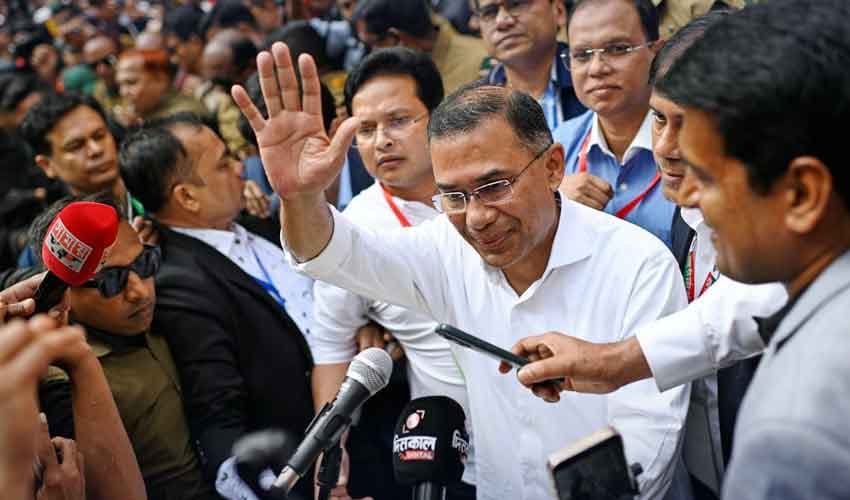
BNP leader Tarique Rahman is widely expected to be sworn in as prime minister. The son of the party's founder, former president Ziaur Rahman, he returned in December to the capital, Dhaka, from 18 years abroad.
Nobel peace laureate Muhammad Yunus, 85, held office as interim head after Hasina fled to neighbouring India in August 2024.
Now in exile in New Delhi, Hasina long dominated Bangladesh politics along with Rahman's mother, Khaleda Zia, while his father was a leading independence figure who ruled from 1977 to 1981 before he was assassinated.
Manual counting of paper ballots will run until at least noon on Friday, officials said, since starting on Thursday immediately after polls closed.
The BNP win with more than 200 seats is one of its biggest, surpassing its 2001 victory with 193, although Hasina's Awami League, which ruled for 15 years and was barred from contesting this time, secured a bigger tally of 230 in 2008.
But bigger tallies for both parties in elections of other years were widely seen as one-sided, boycotted or contentious.
National referendum
Bangladesh also held a national referendum alongside the general elections. According to official results, 72.9% of voters supported the proposed reforms, while 27.1% voted against them.
According to Bangladeshi media, the referendum ballot paper asked voters a single question requiring a “Yes” or “No” response. The public was asked to give its opinion on approximately 30 proposed reforms, including four major constitutional amendments.
The proposed changes include the establishment of new constitutional institutions, the creation of a bicameral parliament, and a provision that no constitutional amendment can be passed without the approval of the upper house.
BNP celebrates election victory
Workers of the Bangladesh Nationalist Party (BNP) gathered at the party office to celebrate their victory in the general elections. Women supporters were also seen making victory signs and taking part in the celebrations.
Supporters described the moment as historic, saying that after 17 years, they finally had the opportunity to vote for their preferred party.
One supporter said, “I have come here to celebrate this occasion. It is a big victory.”
Another added, “I am a big fan of Mr. Tariq Rahman, which is why I came here to see him after this victory.”
Others described the occasion as deeply memorable, saying, “After 17 years, we finally got the opportunity to vote for the candidates of our favorite party.”
A supporter praised the party leadership, stating, “Of course, he is the greatest leader we could ever wish for.”
Another expressed hope for the future, saying, “I don’t know what will happen, but I am hopeful. After what happened in July, he will bring the change that we are looking for.”
Jamaat promises positive opposition
Nightime throngs of supporters cheered and shouted slogans at the BNP headquarters in Dhaka as the scale of the party's landslide became clear.
The head of its main rival, the Islamist Jamaat-e-Islami, conceded defeat and vowed that his party would not engage in the "politics of opposition" just for the sake of doing so.
"We will do positive politics," Shafiqur Rahman told reporters.
Bangladesh’s other major political party, Jamaat-e-Islami, has now released a statement saying it is "not satisfied with the process surrounding the election results."
The Islamist party said candidates of its 11-party electoral alliance lost "narrowly and suspiciously" in various seats.
It also criticised the Election Commission's "reluctance" to publish voter turnout figures and alleged that a section of the interim administration favoured a major party.
"All of this undoubtedly raises serious questions about the integrity of the results process," it said.
The party did not call for any action, but it asked its supporters to "remain patient and await the official programme of the 11-party alliance."
The statement came about 12 hours after Jamaat's leader Shafiqur Rahman appeared to concede defeat and vowed that his party would not engage in the "politics of opposition" just for the sake of doing so.
However, the National Citizen Party (NCP), led by youth activists who played a key role in toppling Hasina and was a part of the Jamaat-led alliance, won just five of the 30 seats it contested.
The party cast itself as a centrist, reformist alternative to nepotism and two-party dominance following last year's Gen Z uprising. But it struggled to turn street power into voter support, opinion polls showed in the run-up to the election.
The NCP then struck an electoral alliance with Islamist party Jamaat-e-Islami, which critics viewed as undermining the party's founding ideals.
Turnout appeared on track to exceed the 42% of the last election in 2024, with media saying more than 60% of registered voters were expected to have participated.
More than 2,000 candidates, many independents among them, were on the ballot, which featured a record number of at least 50 parties. Voting in one constituency was postponed after a candidate died.
Broadcaster Jamuna TV said more than 2 million voters chose "Yes", while more than 850,000 said "No" in a on constitutional reforms held alongside the election, but there was no official word on the outcome.
The changes include two-term limits for prime ministers and stronger judicial independence and women's representation while providing for neutral interim governments during election periods, and setting up a second house of the 300-seat parliament.
India's Modi congratulates Rahman
Indian Prime Minister Narendra Modi has congratulated BNP leader Tarique Rahman on social media, adding he was looking forward to working together to strengthen relations between the two countries.
Relations have frayed since the ousting of Delhi-aligned Sheikh Hasina in 2024.