




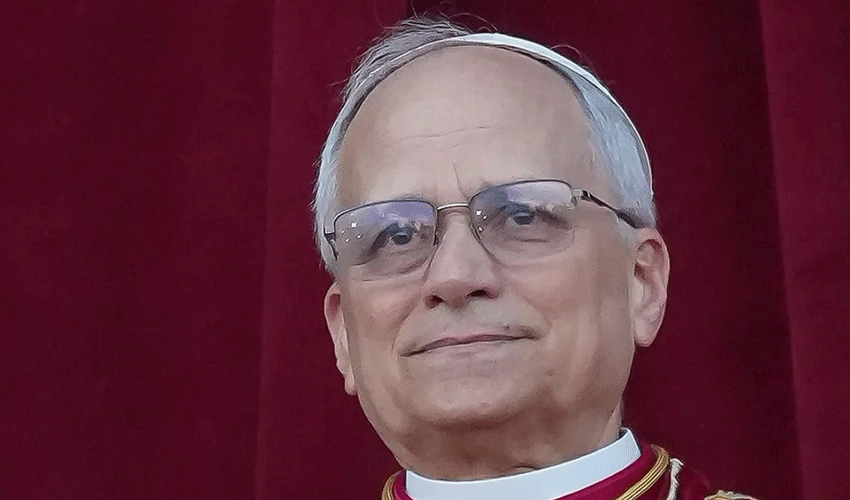
Pope Leo XIV, the spiritual leader and head of the Vatican City State, addressed a group of cardinals in a Consistory held on Saturday, May 10, at the Vatican.
In his speech, the Pope laid out his vision for the future of the papacy, focusing particularly on the emerging challenges posed by artificial intelligence (AI).
The Pope, known for his strong advocacy for human dignity, justice, and labor rights, emphasized that AI was one of the most pressing issues facing humanity in the 21st century.
He warned that while AI offers significant benefits, it also presents serious ethical concerns that need to be addressed. The Pope stressed the importance of regulating AI on a global scale, calling for the establishment of an international treaty to manage its development and use, particularly as his pontificate nears its conclusion.
“In our own day, the Church offers everyone the treasury of its social teaching in response to another industrial revolution and to developments in the field of artificial intelligence that pose new challenges for the defence of human dignity, justice, and labor,” the Pope stated during his address, underlining the Church’s commitment to guiding society through this technological transformation.
The call for a global treaty to regulate AI reflects growing concerns from various religious, ethical, and academic leaders about the rapid advancement of AI technologies. The Pope’s remarks also highlight the Church's long-standing position on defending the rights of the vulnerable, emphasizing that the use of AI must not undermine human dignity, particularly in areas related to employment and social justice.
The Pope’s intervention comes at a time when AI’s role in global affairs is expanding rapidly, with numerous industries and sectors integrating these technologies into their operations. From healthcare and education to finance and labor, the impact of AI is becoming more pronounced, prompting leaders worldwide to examine the ethical implications of its use.