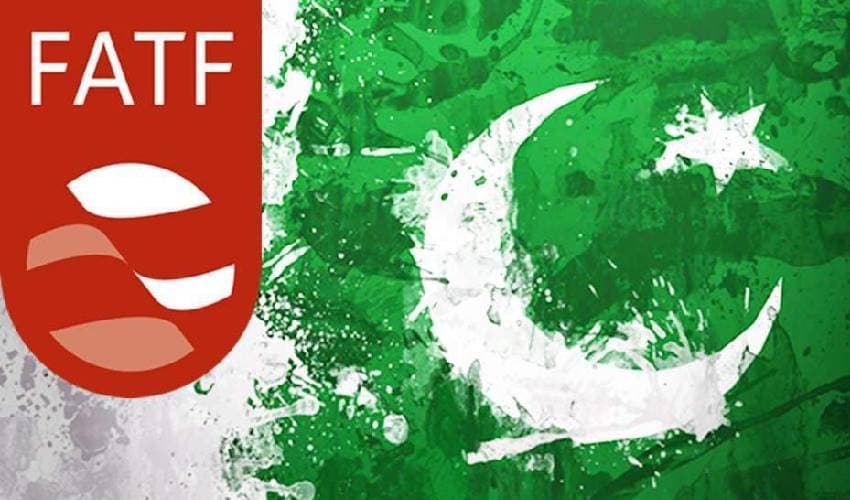
The Financial Action Task Force (FATF) is a global regulatory body frequently associated with Pakistan, often with a wave of anxiety whenever its name resurfaces in diplomatic or financial discourse. Established in 1989, FATF was mandated to combat three major global threats: money laundering, terrorist financing, and the proliferation of nuclear weapons.
These responsibilities, while technical in nature, have become politically loaded over time, especially in Pakistan’s case. Increasingly, FATF’s grey and black listing mechanisms are viewed not as neutral assessments but as tools of diplomatic pressure, wielded by powerful states to advance their geopolitical agendas. This critique has been particularly prominent in Pakistan, where despite demonstrable compliance, the country has faced prolonged scrutiny, punitive delays, and diplomatic isolation under the pretext of technical evaluations.
The most recent chapter in this story unfolded on June 13, 2025, during a FATF meeting in France. India, aligning itself with certain other countries, lobbied vigorously to have Pakistan re-added to the grey list following the Pulwama incident. India accused Pakistan of involvement in the attack, yet neither the Indian state nor any international institution has presented verifiable evidence to support this claim. Nevertheless, the pressure mounted. That FATF would entertain such unsubstantiated lobbying has led many observers to question whether it continues to function as a neutral evaluator or whether it has become a diplomatic instrument manipulated by bloc politics. The concern is not new. Each time Pakistan prepares to engage with international financial institutions like the IMF, FATF’s proceedings seem to escalate, indirectly pressuring Pakistan at moments of economic vulnerability.
Understanding the roots of this perception requires revisiting Pakistan’s history with FATF. The country was first grey-listed in 2012, amid heightened global suspicion following the discovery and killing of Osama bin Laden in Abbottabad in 2011. Allegations that Pakistan had knowingly provided sanctuary to a globally wanted terrorist, although never substantiated, sparked accusations of state complicity. These led to Pakistan being placed under heightened monitoring. After fulfilling FATF’s conditions, Pakistan was removed from the list in 2015, only to be grey-listed again in 2018. This time, the accusations centered on alleged support for Jamaat-ud-Dawa and Hafiz Saeed, both of whom India held responsible for attacks on its soil.
Following its re-listing, Pakistan was presented with a 27-point action plan, later expanded to 34 points, covering reforms in areas ranging from banking oversight and suspicious transaction reporting to preventing terror financing and regulating non-profit organizations. Pakistan’s response was far from passive. The government undertook wide-ranging institutional reforms, including the creation of a dedicated Anti-Money Laundering and Counter-Terrorism Force Authority, which operated in coordination with the National Counter Terrorism Authority, the State Bank of Pakistan, and the Securities and Exchange Commission of Pakistan. By 2022, Pakistan had fully complied with all 34 points. Yet despite fulfilling every requirement, Pakistan remained on the grey list for four more years. This delay, widely viewed as politically motivated, seriously undermined FATF’s credibility in the eyes of many within and beyond Pakistan.
The inconsistency becomes even more glaring when viewed in a regional context. India, which has repeatedly led the diplomatic charge against Pakistan at FATF, faces its own share of deep-rooted financial irregularities. According to the Institute of Chartered Accountants of India, India is estimated to launder around 100 billion dollars annually. India’s own Enforcement Directorate reports approximately 5,000 cases of terrorist financing each year. Furthermore, independent reports allege that nearly 200 billion dollars is transferred unofficially from India to Gulf states annually. In addition to this, there are credible claims regarding offshore companies linked to elected Indian parliamentarians, millions of unaccounted bank accounts within India’s financial system, and continued flows of unregulated political funding. Despite this record, India has never faced FATF scrutiny, nor have any formal review proceedings been initiated against it.
Even more troubling is the ideological component of India’s conduct. State institutions in India have been accused of using religion to justify campaigns of violence and discrimination, both domestically and across borders. From the siege of Kashmir to crackdowns on minorities, many of India’s domestic policies have invited international criticism. Yet, FATF remains notably silent. If financial flows used to promote extremist ideologies fall under FATF’s mandate, then silence in the face of such abuses suggests either selective blindness or deliberate deference to geopolitical influence.
This perception is reinforced by FATF’s voting system. Decisions are made through consensus, allowing powerful countries to influence outcomes by lobbying or building coalitions. In Pakistan’s case, the 2018 grey-listing was widely attributed to pressure from a coalition including India, the United States, Germany, France, and the United Kingdom. As a result, a platform intended for technical assessments was used to isolate a geopolitical rival. Such actions distort the original mandate of FATF and threaten the credibility of global financial governance.
However, the 2025 session marked a turning point. In a significant shift, the United States, which had twice supported Pakistan’s grey-listing in the past, now backed Pakistan’s case. President Donald Trump publicly acknowledged Pakistan’s counterterrorism efforts, including its role in eliminating high-profile Daesh operatives. He addressed Congress, affirming that Pakistan had suffered tremendous losses in the war on terror and should be recognized as a vital partner. This statement coincided with a broader shift in diplomatic mood, and Pakistan’s removal from the grey list was finally realized.
While international recognition is important, the real credit lies with Pakistan’s institutions. The creation of a centralized anti-money laundering authority and seamless coordination among national financial and security agencies proved critical. These efforts were not simply about escaping grey-listing; they represented a structural shift in Pakistan’s approach to financial oversight and compliance.
That said, FATF itself remains in urgent need of reform. Countries that have been unfairly targeted or disproportionately scrutinized must now form coalitions to demand institutional transparency, clear listing criteria, and independent review processes. The use of FATF as a diplomatic pressure tool not only undermines the institution's integrity but also threatens the principles of equal accountability that it claims to uphold.
For Pakistan, the task ahead is to maintain the momentum. Continued vigilance, institutional consistency, and policy discipline are essential—not only to prevent future listings but to reinforce global confidence. More broadly, the FATF experience underlines the importance of resilient national systems in the face of external pressures.