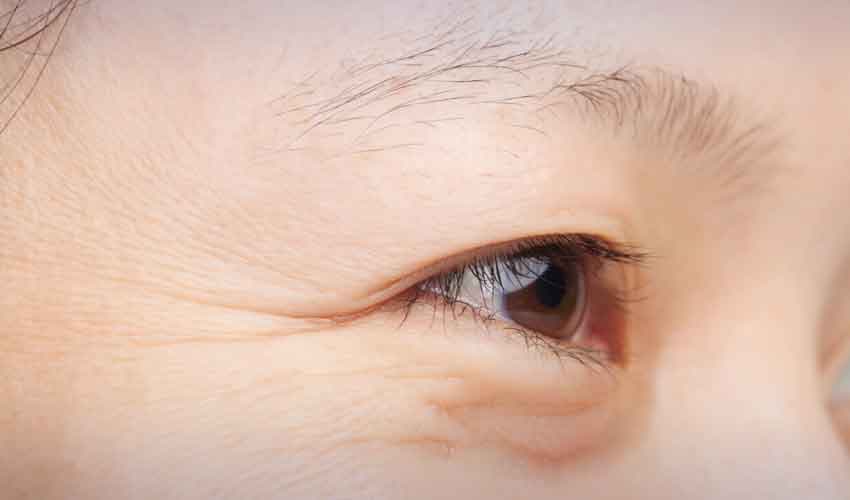
Wrinkles around the eyes and face are a natural sign of aging, but scientists have finally uncovered why they appear. A new study has provided the first experimental evidence of how changes in skin structure over time lead to fine lines and creases.
Wrinkles linked to skin’s changing structure
Researchers at Binghamton University analysed skin samples from people aged 16 to 91. They discovered that older skin behaves differently when stretched — instead of bouncing back smoothly, it forms small lines that eventually deepen into wrinkles.
The study found that, with age, the outer layer of skin gradually becomes harder while the inner layer softens. This change reduces skin volume, making it less resilient and more prone to creasing.
How study was conducted
Scientists used a low-force tensometer — a device that gently stretches skin — to mimic the pressures experienced during daily facial expressions. Under a microscope, they observed how the skin reacted to stretching and relaxing.
The results showed that middle-aged and older skin loses its elasticity, allowing wrinkles to form more easily over time.
Sun exposure speeds up process
The research also highlighted that ultraviolet (UV) rays from the sun accelerate skin damage. People who spend long hours outdoors are more likely to develop wrinkles earlier due to sun-induced skin changes.