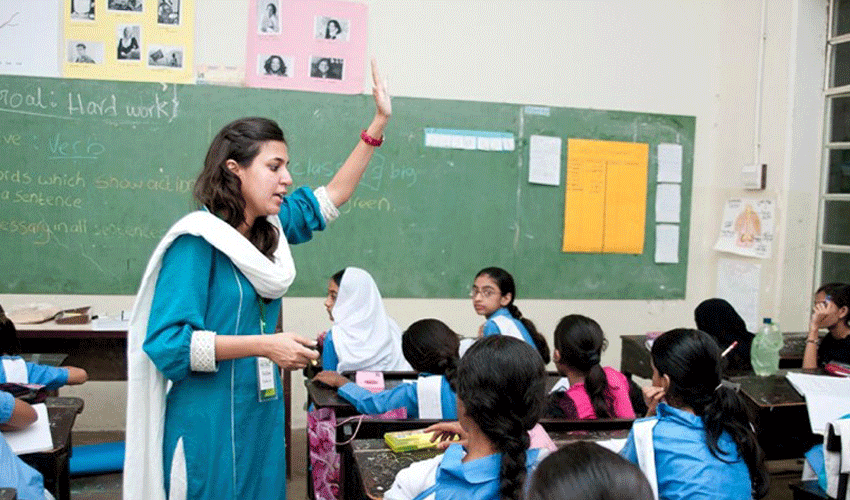
Punjab's education landscape is witnessing an unprecedented transformation, led by the Higher and School Education Departments under the unwavering commitment of Minister Rana Sikandar Hayat Khan.
A comprehensive reform agenda is being executed that promises to redefine learning paradigms across the province. This transformation combines substantial funding allocations, cutting-edge technological integration, and systemic overhauls to position Punjab as a leading province in human capital development in Pakistan.
Under previous governments, Punjab’s education policies primarily focused on traditional classroom learning, with limited emphasis on digital infrastructure and skill development. While initiatives like textbook distribution and teacher recruitment were prioritized, technological integration in schools remained slow, leaving students and educators ill-prepared for a rapidly digitizing world.
Breaking with tradition, the new government’s 2025 policies mark a transformative shift toward a tech-driven education system. Projects like the Google Education Village, Digital Safar, and AI-based interventions in schools highlight a strong commitment to equipping students with future-ready skills such as coding, AI, and digital literacy. Additionally, the IT Training Program for Rural Women and Ed-Tech Schools demonstrate a more inclusive approach, ensuring that marginalized communities—including women and underserved areas—benefit from digital education.
Unlike past policies, which often struggled with implementation gaps, the current government’s structured partnerships with tech giants like Google and local organizations such as Tech Valley and PITB ensure better execution and scalability. These reforms signify a decisive shift from outdated teaching methods to a modern, skill-based education system aligned with global digital advancements.
In the same spirit, Punjab's CM Laptop Program 2025 marks a significant leap in tech-enabled higher education, distributing 110,000 advanced laptops with 13th Gen Intel Core i7 processors to BS students across public universities, colleges, and medical institutions. This strategic initiative bridges the digital divide while equipping future professionals with essential technological tools, complementing the province's broader Digital Punjab vision. By combining hardware access with curriculum reforms in emerging technologies, the program fosters a robust ecosystem for digital skill development—ensuring students graduate with industry-relevant competencies to thrive in Pakistan's evolving job market.
As this tech-forward education revolution gains momentum, it collectively forms an ecosystem where access to modern education no longer limits potential—where technology enhances learning and quality education becomes the cornerstone of provincial development. With implementation rigorously monitored through a new performance dashboard tracking 78 key indicators across all institutions, Punjab's higher education reform stands as a replicable model for human capital development in developing economies worldwide.
---
The author - Prof. Shafaqat Ali - is an Assistant Professor of English and a seasoned mentor with 15+ years of experience. He is the author of Fearless Essays, a PPSC advisor, former PTV anchor, and renowned CSS coach.

.jpg&w=640&q=75 "Holiday announced on July 22")

.jpg&w=256&q=75 "Holiday announced on July 22")