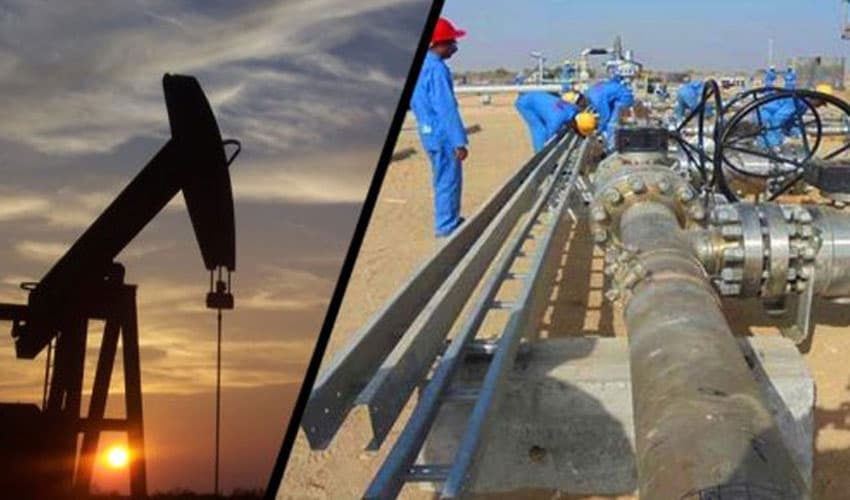
Pakistan has achieved a major breakthrough in offshore oil and gas exploration after 20 years, awarding 23 offshore blocks to four local-led consortia, some partnered with international firms including Turkiye’s national oil company TPAO.
The move marks renewed investor confidence in the country’s upstream energy sector.
In its first offshore bidding round in nearly two decades, the Ministry of Energy announced that bids were awarded for 23 out of 40 offered blocks, covering around 53,510 square kilometers.
According to the Petroleum Division, the initial exploration phase will bring an investment of $80 million, while total investment during the drilling phase could rise to $1 billion. Officials described the development as a major milestone in tapping Pakistan’s untapped offshore energy potential.
Major local and international players win bids
Four consortiums led by Oil and Gas Development Company Limited (OGDCL), Pakistan Petroleum Limited (PPL), Mari Energies, and Prime Energy secured exploration rights. Prime Energy, backed by the Hub Power Company (Hubco), leads one of the consortia.
Among the international participants, Turkiye’s TPAO secured a 25% stake in one of the awarded blocks and will operate it under a joint bidding agreement with PPL. Other partners include United Energy Group (Hong Kong), Orient Petroleum, and Fatima Petroleum, a part of Pakistan’s Fatima Group conglomerate.
Offshore exploration in Indus and Makran basins
The bidding round focused on offshore blocks across the Indus and Makran basins, where the government’s simultaneous exploration strategy has proven effective. Officials said this dual-basin approach enhances geological understanding and accelerates resource mapping.
The ministry stated that this success reflects strong investor confidence in Pakistan’s energy policies and the government’s efforts to create a stable exploration environment.
New phase of exploration and research
Under Phase-I of the agreements, companies will conduct geophysical and geological studies, including seismic data acquisition, processing, and interpretation, to assess hydrocarbon potential in Pakistan’s offshore basins.
Upon completion of these studies, Phase-II will begin, involving the drilling of exploratory wells in promising areas. This phase could significantly expand Pakistan’s domestic energy resources and reduce reliance on costly imports.
Untapped potential in Pakistan’s offshore zone
Pakistan’s offshore zone spans nearly 300,000 square kilometers, bordering energy-rich nations such as Oman, the UAE, and Iran. Despite this vast area, only 18 wells have been drilled since independence — too few to assess the region’s true potential.
A recent basin assessment study by U.S.-based DeGolyer and MacNaughton indicated the presence of significant, yet-to-be-discovered hydrocarbon reserves in Pakistan’s offshore territory.
Pakistan’s last major offshore attempt — the Kekra-1 project in 2019, led by Exxon Mobil — ended unsuccessfully, prompting foreign firms to withdraw. The new successful bidding round, therefore, marks a strong revival of international interest and a fresh opportunity for Pakistan to secure energy independence.