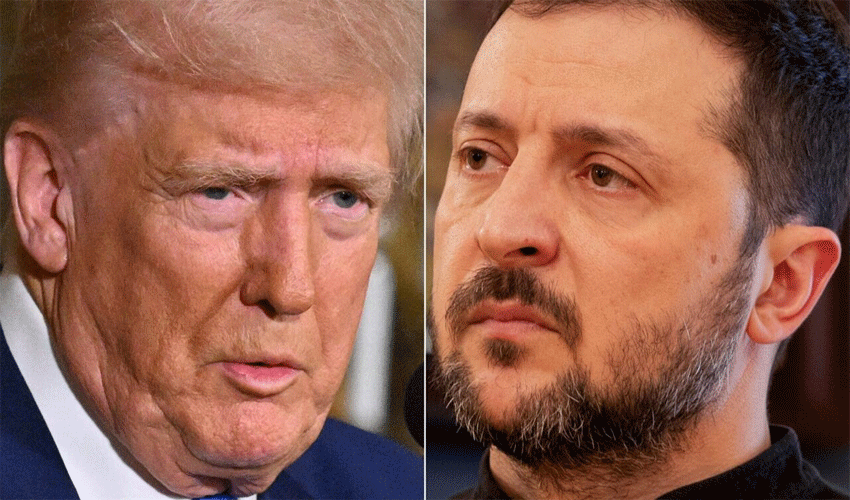
US President Donald Trump has accused Ukrainian President Volodymyr Zelensky of obstructing peace efforts after Kyiv reiterated its refusal to concede Crimea to Russia — a move that could complicate Washington’s evolving peace strategy.
In a post on his social media platform Truth Social, Trump claimed that a deal to end the war in Ukraine was “very close,” but Zelensky’s position “will do nothing but prolong” the conflict. The former president’s remarks came after US Vice-President JD Vance publicly laid out the administration’s emerging framework for a settlement, which includes freezing territorial lines “close to where they are today.”
Zelensky, however, has firmly ruled out relinquishing Crimea — a Ukrainian peninsula illegally annexed by Russia in 2014 — stating that any such concession would be “against our constitution.”
“There’s nothing to talk about here,” Zelensky said, reaffirming Kyiv’s long-standing position on the peninsula. “We cannot legitimise occupation.”
Vice-President Vance suggested that both Ukraine and Russia would be required to make territorial compromises as part of the proposed deal. While specifics remain under wraps, the proposal has already triggered concern in Kyiv and other European capitals.
At a White House briefing, Trump deflected questions on whether his administration was seeking to formally recognise Russian sovereignty over Crimea. “I have no favourites,” he said. “I want to have a deal done. That’s all.”
However, recognising Crimea as Russian territory would represent a seismic shift in US policy and run counter to international legal principles established after World War II, which prohibit territorial changes through the use of force.
Rising tensions and continued assaults
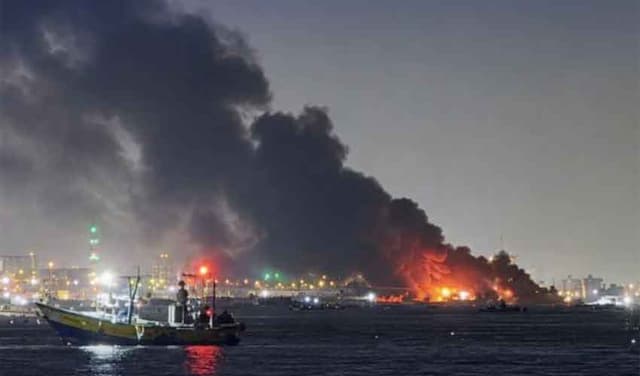
Amid diplomatic uncertainty, Russia intensified its air assaults across Ukraine overnight, striking multiple cities with missiles and drones. In the capital Kyiv, Mayor Vitali Klitschko reported two deaths and 54 injuries — including children and a pregnant woman — after drone wreckage ignited fires in residential areas. Several people were also reported trapped under rubble.
Further east in Marhanets, a Russian drone struck a bus carrying workers, killing nine and injuring dozens more. Explosions were also reported in Kharkiv, in Ukraine’s northeast.
The renewed barrage follows a brief pause over the Easter weekend, during which Moscow claimed to have halted attacks. However, UK Defence Secretary John Healey told Parliament that British military intelligence had found “no evidence of a let-up.”
“While Putin says he declared an Easter truce, he broke it. While Putin says he wants peace, he continues to play for time,” Healey told the House of Commons.
Fractured diplomacy and missed meetings
Tensions between Washington and Kyiv have mounted over recent weeks, with Trump expressing frustration at what he called Ukraine’s intransigence.
“I thought it might be easier to deal with Zelensky,” he said in the Oval Office on Wednesday. “So far, it’s been harder. I think Russia is ready.”
Despite the strain, Trump left open the possibility of meeting Zelensky on the sidelines of Pope Francis’s funeral in Rome on Saturday, where several global leaders are expected to attend.
Meanwhile, cracks appeared in the international diplomatic front after the US unexpectedly downgraded its participation in ceasefire talks in London. Senior officials Marco Rubio and special envoy Steve Witkoff pulled out at the last minute, citing logistical issues. Instead, Gen Keith Kellogg represented Washington in London, while Witkoff is scheduled to travel to Moscow for his fourth meeting with Russian President Vladimir Putin.
British diplomats expressed frustration at the abrupt changes, with one official telling Dawn on condition of anonymity that “it’s still not entirely clear” why the decision was taken.
Ukrainian position unmoved
Ukrainian officials have maintained a firm stance ahead of the upcoming rounds of diplomacy. Yuriy Sak, an adviser to Ukraine’s Ministry of Strategic Industries, told BBC Radio 4 that the delegation would attend the London talks with a “very clear, narrow mandate” focused solely on achieving a ceasefire.
“We are open to discussions,” he said, “but we will not accept any proposal that involves surrendering Ukrainian territory.”
The war in Ukraine, now in its third year, has led to the deaths or injuries of hundreds of thousands and displaced nearly seven million Ukrainians, according to UN estimates.
The roots of the conflict trace back to 2014, when a pro-Russian president was ousted in Kyiv, prompting Moscow to annex Crimea and fuel separatist unrest in the Donbas region — a pattern that ultimately culminated in Russia’s full-scale invasion on February 24, 2022.