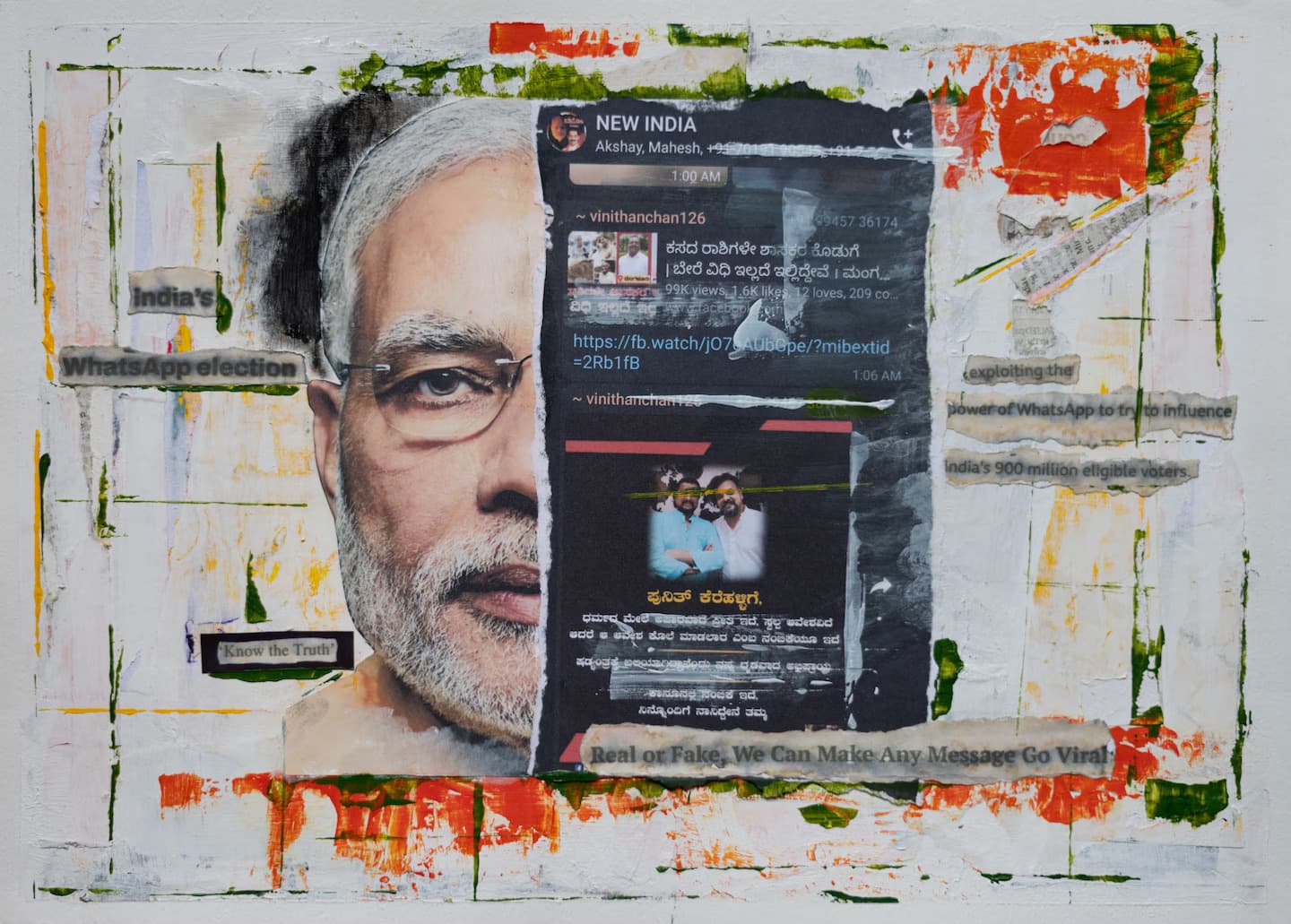
In the lead-up to elections in Karnataka, India, WhatsApp became a battleground for political messaging, with the ruling Bharatiya Janata Party (BJP) using the platform extensively to promote its Hindu nationalist agenda.
Initially, the messages emphasized development and safety, but as the election neared, the tone turned darker.
False narratives about Muslim violence against Hindus, grooming of Hindu girls by Muslims for extremist activities, and appeals to vote for the BJP to ensure the safety of Hindus proliferated.
The BJP has capitalized on social media, leveraging technology to advance its ideology and maintain its grip on power in India.
The party's messaging machine relies heavily on U.S. social media platforms, allowing it to disseminate inflammatory and often false content on a massive scale. Despite attempts by Silicon Valley giants to police such content, they have faced challenges in curbing hate speech and disinformation.
The Biden administration has courted India as a strategic partner against China, even as concerns grow about India's descent into autocracy under Prime Minister Narendra Modi.
A recent allegation by Canada that Indian agents may have assassinated a Sikh separatist on Canadian soil has raised questions about Western countries' approach to India.
The BJP's messaging strategy involves a vast network of social media workers, reaching hundreds of millions through WhatsApp groups.
SAMAA Digital summarizes the main WSJ report into following key sub-topics:
| Election Context | Karnataka, India, elections with a focus on WhatsApp as a political battleground |
| BJP's Messaging Strategy | Utilizes WhatsApp for extensive promotion of Hindu nationalist agenda |
| Message Evolution | Initially positive, later turning towards false narratives about Muslim-Hindu conflicts |
| Use of U.S. Social Media Platforms | BJP relies on these platforms to disseminate inflammatory and false content |
| Challenges for Social Media Giants | Silicon Valley companies struggle to curb hate speech and disinformation |
| Biden Administration's Approach to India | Actively courts India as a strategic partner against China, despite concerns over India's descent into autocracy |
| Canada's Allegation | Canada accuses Indian agents of potentially assassinating a Sikh separatist on Canadian soil |
| BJP's Messaging Infrastructure | Involves a vast network of social media workers and collaboration with content creators |
| False Narratives | False portrayals of Hindu victimization and the BJP as the only solution |
| WhatsApp's Role | WhatsApp is India's largest social media platform with over 500 million users, recognized for its polarizing potential |
| Challenges for Political Opponents | Opposition parties and political scientists struggle to replicate the BJP's digital success |
Additionally, the party collaborates with content creators who specialize in incendiary posts designed to go viral, often painting a false picture of Hindu victimization and promoting the BJP as the only solution.
WhatsApp, with over 500 million users in India, has been recognized as a tool that can fan polarization and incite violence.
The BJP's success in utilizing WhatsApp has remained a mystery to political scientists and opposition parties, who struggle to replicate its digital prowess.