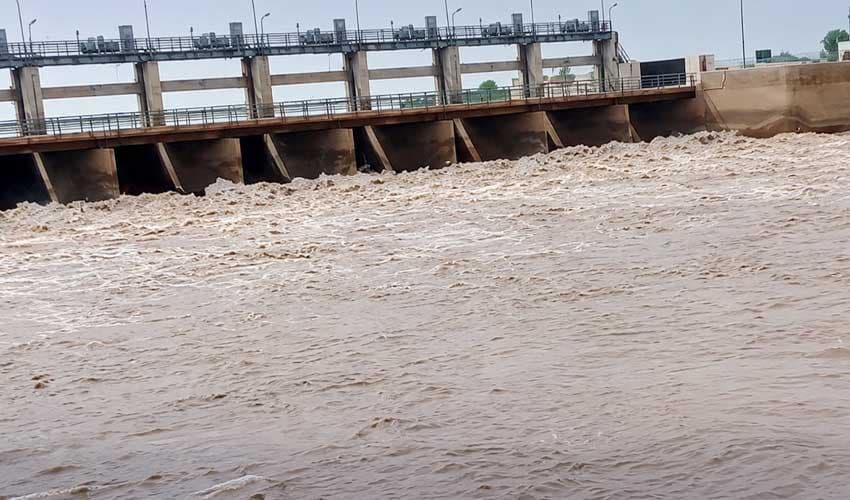
Pakistan's flood monitoring authorities have declared the next 24 hours critical as concerns grow over rising river flows, warning that medium to high-level flooding is likely in several parts of Punjab while southern Balochistan and Sindh also face potential flood risks.
Officials said the latest forecasts point to increasing water levels in major rivers, prompting authorities to closely monitor the evolving situation.
According to the latest flood forecast, medium to high-level flooding is expected at Marala, Khanki and Qadirabad on the River Chenab during the next 24 hours.
Authorities warned that the water level in the Chenab River is likely to rise further, increasing the risk of flooding in downstream areas.
Also Read: Punjab flood alert: Rising water levels displace families
The forecast also indicated a flood situation at Baloki and Sulemanki (Sudhanai), where officials expect water levels to increase over the coming 24 hours.
River conditions remain normal
Despite the flood warning for parts of Punjab, water levels remain within the normal range at Tarbela, Nowshera, Kalabagh, Chashma and Taunsa, according to the latest assessment.
However, a low-level flood is expected at Mangla and Trimmu, prompting authorities to continue monitoring the situation.
A low-level flood continues at Head Trimmu on the Chenab River in Athara Hazari, inundating dozens of villages and disrupting normal life.
Floodwaters have severed communication links between several villages after the link road bridge near Kotla Nek Ahmed was washed away. As a result, many flood-hit communities have been cut off from the city.
Meanwhile, WAPDA authorities have disconnected electricity supply to the affected villages as a precautionary measure amid the worsening flood situation.
Alert issued for Balochistan and Sindh
Flood monitoring authorities have also issued an alert for southern districts of Balochistan and Sindh.
Officials warned that mountain streams could experience flash flooding, while urban flooding is also likely in vulnerable areas. They described the next 24 to 36 hours as particularly important and urged relevant departments to remain on high alert.
Also Read: Lahore monsoon: 3 family members killed as roof collapses
A significant rise in water flow has also been recorded at Head Panjnad.
Officials said the discharge surged suddenly from 17,000 cusecs to 80,000 cusecs, with projections indicating that the flow could exceed 140,000 cusecs by night.
The sharp increase has intensified monitoring efforts as authorities continue to assess downstream conditions and prepare for any further escalation.