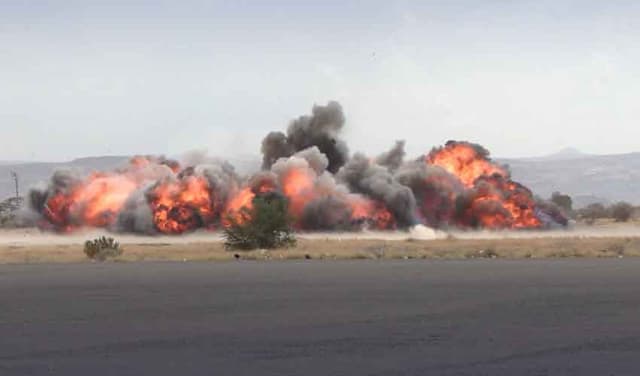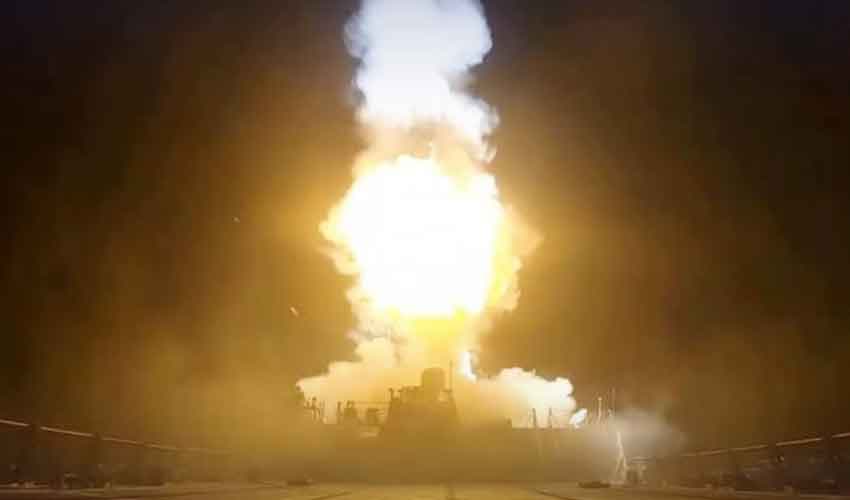
The conflict between the United States and Iran has intensified with fresh US missile strikes on multiple locations in southern Iran, killing military personnel and civilians, while Tehran responded with missile and drone attacks targeting US military facilities in Bahrain, Kuwait and Jordan.
The latest escalation has further raised fears of a wider regional conflict, with Iran insisting the Strait of Hormuz will remain closed and warning that continued US military action could halt regional oil and gas exports.
According to Iranian officials, US forces carried out missile strikes on multiple locations across southern Iran, including Iranshahr district in Sistan and Baluchestan province, Bushehr and Chabahar.
Iranian media reported that 13 missiles struck a military base near Iranshahr, targeting military barracks, a guesthouse, guard posts and accommodation facilities in what the army described as an attack intended to cause maximum casualties.
Also Read: Iran threatens to shut more global energy routes
The strikes reportedly killed seven military personnel, while several others were wounded.
The semi-official Tasnim News Agency quoted the Iranian army as saying the victims died during overnight US strikes on the military base in Bampur, near the southeastern city of Iranshahr.
The army vowed to deliver a "decisive response" to the attack.
Bushehr and Chabahar also targeted
Iranian media reported that three locations in Bushehr province were bombed during the latest US attacks, although no casualties were reported there.
A maritime surveillance tower in Chabahar was also targeted.
Earlier, domestic media had reported additional US air raids on Qeshm Island, Kish Island and Andimeshk, indicating the strikes covered several areas across southern Iran.
Iran reports civilian casualties
Iranian government spokesperson Fatemeh Mohajerani said at least 30 civilians have been killed during recent US attacks in southern Iran.
According to the government, another 260 people were injured, with 222 patients discharged from hospital after receiving treatment.
The civilian casualty figures come alongside reports of military losses at Iranian bases.
The latest attacks came after the US Central Command (CENTCOM) launched another large-scale military operation targeting Iranian military positions.
CENTCOM said US fighter aircraft, drones and naval forces struck dozens of military targets near the Strait of Hormuz, including missile and drone sites, naval assets and coastal defense systems, during a seven-hour operation.
CENTCOM Commander Admiral Brad Cooper accused Iran of targeting civilians and commercial shipping, claiming Tehran had attacked seven commercial vessels over the past week, leaving nearly a dozen civilian crew members dead, injured or missing.
Operation Nasr-2 against US bases
In response, Iran's Islamic Revolutionary Guard Corps (IRGC) announced the third wave of Operation Nasr-2, launching coordinated missile and drone attacks against US military facilities in Bahrain and Kuwait.
According to statements carried by Iranian state media, the operation was conducted jointly by the IRGC's Navy and Aerospace Forces under the code name "Ya Zain al-Abidin."
The IRGC said the attacks were retaliation for US strikes against Iranian coastal military positions earlier in the day.
IRGC claims strikes on Bahrain and Kuwait
The Revolutionary Guards said they targeted Sheikh Isa Air Base in Bahrain, claiming to have destroyed weapons depots as well as storage facilities containing parts for US ships and aircraft.
The IRGC also claimed to have struck the Ali Al Salem Air Base in Kuwait, saying it destroyed or damaged several MQ-9 Reaper drones by attacking their deployment ramp.
In a separate statement, the Guards also claimed they hit command-and-control centers, logistics facilities, fuel depots and military equipment belonging to the US Fifth Fleet in Bahrain.
They further claimed to have set fire to and destroyed a US military logistics and support center at Mina Abdullah in Kuwait.
The United States Central Command did not immediately respond to the Iranian claims.
Iranian state television reported that Iranian forces launched drones toward the Al-Azraq Air Base in Jordan, which hosts US military personnel and operations.
The Iranian army later announced that it had targeted the base for a second time, while state broadcaster IRIB released footage it said showed drones being launched toward Azraq.
There was no immediate comment from the Pentagon, CENTCOM or Jordan regarding the claimed second strike.
Jordan, Kuwait and Bahrain respond
Jordan's military said its air defense systems intercepted and destroyed three ballistic missiles that entered the country's airspace from Iran early Wednesday.
Officials said there were no casualties or material damage.
In Kuwait, military spokesman Saud Abdulaziz Al Atwan said the country's air defense systems intercepted one ballistic missile, five cruise missiles and 33 drones launched from Iran since Tuesday evening.
Authorities said explosions heard across the country were caused by interception operations and urged residents to follow safety instructions.
Earlier, Kuwait reported that firefighters had extinguished a blaze at one of the targeted locations. Officials initially reported no casualties, although they later confirmed four soldiers were wounded during Iranian missile and drone attacks on Tuesday.
Meanwhile, Bahrain's Interior Ministry activated air raid sirens and urged residents to move to safe locations before the Bahrain Defence Force reported intercepting what it described as Iranian aerial attacks.
Strait of Hormuz remains closed
The IRGC reiterated that the Strait of Hormuz would remain closed until what it called "the end of America's evils."
Iran had first announced the closure on Saturday.
The country's recently established Persian Gulf Strait Authority said navigation through the Strait of Hormuz remains impossible because of what it described as recent illegal movements by US military forces.
The authority said shipping permits would only be issued once "stability and calm are restored."
Also Read: Iran declares US MoU void, vows full control of Hormuz
The Revolutionary Guards warned that continued US military operations would prevent the reopening of the Strait of Hormuz.
The IRGC further declared that "as long as America's evils exist in the region, not a single drop of oil or gas will be exported from the region," adding that further US attacks would only delay the reopening of the strategic waterway.
The Guards also warned that retaliation against the United States would continue for as long as Washington maintained military operations against Iran.
Iran accuses US of violating agreement
Iranian officials said the latest US military actions violate the Pakistan-mediated Memorandum of Understanding signed in June.
According to Tehran, the first clause of the agreement required an end to military aggression on all fronts.
Iran also accused Washington of attempting to help commercial vessels bypass the maritime route designated by Tehran for legal navigation through the Strait of Hormuz by escorting ships through what it described as an illegal passage.
Also Read: Trump reimposes Iran blockade, threatens strikes on power plants
Iranian officials insisted that the country's armed forces would continue responding to every violation.
The latest exchange of attacks comes as tensions between Washington and Tehran continue to escalate despite earlier diplomatic efforts aimed at ending the conflict.
With military operations expanding across Iran, Bahrain, Kuwait and Jordan, and the Strait of Hormuz remaining closed, fears continue to grow over regional security, global energy supplies and international shipping.