Iran has warned it could expand its campaign beyond the Strait of Hormuz by closing other key energy export routes that benefit the United States and its allies, escalating tensions in the Gulf and increasing concerns over global oil supplies.
The warning comes after Iran reaffirmed that the Strait of Hormuz will remain closed while the United States continues military operations and enforces a renewed naval blockade on Iranian ports.
Iran's Islamic Revolutionary Guard Corps (IRGC) said regional energy exports would no longer benefit only certain countries if the conflict continued.
"Regional energy exports are either shared by all, or denied to all," the IRGC said in a statement carried by Iran's state news agency IRNA.
The Guards warned they could move beyond the Strait of Hormuz and target "all other export corridors that benefit the U.S. and its allies."
Bab el-Mandeb Strait another potential flashpoint
Analysts say Iran has been signaling that it could rely on its Houthi allies in Yemen to disrupt shipping through the Bab el-Mandeb Strait, another strategic maritime passage linking the Red Sea to the Gulf of Aden.
The waterway is critical for Saudi oil exports and a significant share of global shipping, making any disruption there a major threat to international trade and energy markets.
Earlier this week, a senior Houthi official warned that the group was prepared to shut the Bab el-Mandeb Strait if Saudi Arabia continued military operations in Yemen. According to Iran's Press TV, the official claimed such a move could drive global oil prices as high as $200 per barrel.
Houthis renew attacks
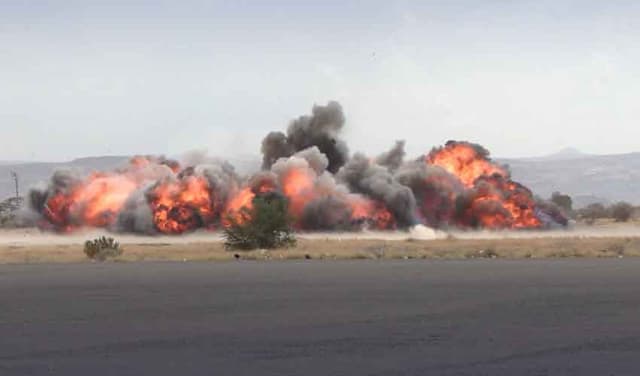
The Houthis fired missiles toward Saudi Arabia on Monday after accusing the kingdom of bombing an airport under their control, ending a four-year truce in the conflict.
The Iran-backed group has previously demonstrated its ability to disrupt global trade. Following the outbreak of the Gaza war in October 2023, the Houthis repeatedly attacked commercial vessels in the Red Sea, saying they were targeting ships linked to Israel in support of Palestinians.
The latest Iranian warning came one day after the United States announced a fresh round of military strikes aimed at degrading Iranian capabilities used to attack commercial shipping in the Strait of Hormuz.
The US military said dozens of military targets near the Strait of Hormuz and along Iran's coastline were struck during a seven-hour operation conducted by US Central Command (CENTCOM).
Washington said the strikes were intended to reduce Iran's ability to threaten commercial vessels operating in the region.
US accuses Iran of attacking commercial ships
The United States also accused Iran of attacking seven commercial ships over the past week, resulting in nearly a dozen crew members being killed, injured or reported missing.
The latest exchange of strikes has intensified concerns over maritime security in one of the world's busiest shipping corridors.
IRGC vows Strait of Hormuz will stay closed
The IRGC declared that the Strait of Hormuz would remain closed until what it described as "the end of America's evils."
Before the conflict began in February, approximately 20% of global oil and gas shipments passed through the strategic waterway each day.
Also Read: Trump reimposes Iran blockade, threatens strikes on power plants
Iran's recently established Persian Gulf Strait Authority also said navigation through the Strait of Hormuz is currently impossible because of what it called "recent illegal movements" by US military forces in the region.
The authority said permits for vessel transit would only be issued once "stability and calm are restored."
Iran first announced the closure of the Strait of Hormuz on Saturday and reaffirmed the decision on Wednesday.
IRGC claims attacks on US military facilities
The Revolutionary Guards said they targeted command-and-control centers, logistics facilities, fuel depots and military equipment belonging to the US Fifth Fleet in Bahrain in retaliation for the latest American strikes.
The IRGC also claimed it destroyed a US logistics facility in Mina Abdullah, Kuwait, and launched strikes against the Azraq Air Base in Jordan, targeting aircraft hangars.
According to the Guards, some recent US attacks against Iran had originated from military bases located in Jordan.
Kuwait's state news agency confirmed that firefighters had brought a blaze under control at a site targeted during Iranian attacks, although officials did not confirm whether it was the same location mentioned by the IRGC.
Meanwhile, Jordan said its air defenses intercepted and destroyed three ballistic missiles that entered its airspace from Iran early Wednesday.
Trump renews military threats against Iran
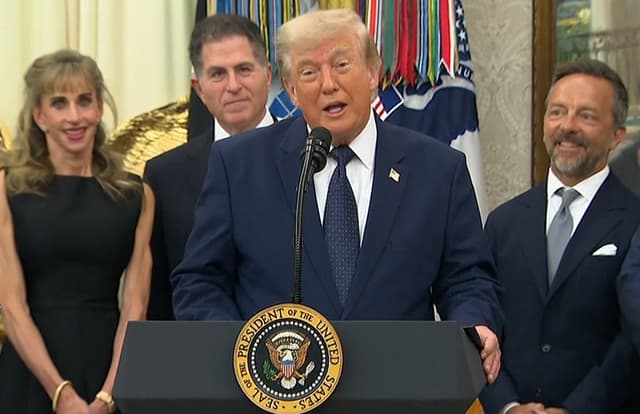
US President Donald Trump escalated pressure on Tehran by threatening to strike Iranian infrastructure if negotiations do not resume.
Speaking to Fox News, Trump said energy facilities would eventually be targeted but warned that bridges and power plants would be attacked first. "I'll save the energy targets for last, but ultimately we'll hit energy targets," Trump said.
He added that US negotiators had warned Iranian officials: "You better make a deal."
Earlier this week, Trump also floated a proposal to impose a 20% transit fee on shipping through the Strait of Hormuz, but later withdrew the idea after criticism from the United Nations shipping agency and other organizations.
Instead, he said Washington would seek investment agreements with Gulf countries, although he provided no further details.
Shipping patterns change
Shipping data from Kpler showed that traffic through the Strait of Hormuz briefly increased on Tuesday before the renewed US naval blockade took effect on Wednesday.
According to the data, nine of the eleven vessels that passed through the strait used the Iranian shipping lane.
Among them were three empty oil tankers—one Aframax vessel and two Very Large Crude Carriers (VLCCs)—that entered the Strait.
Outbound traffic included one VLCC carrying 2 million barrels of crude oil, a medium-range tanker transporting refined petroleum products, two liquefied petroleum gas carriers, a methanol tanker and a dry bulk carrier loaded with iron ore.
The data showed no tanker movements involving other Gulf oil producers on Tuesday.
Shipping slowdown raises supply concerns
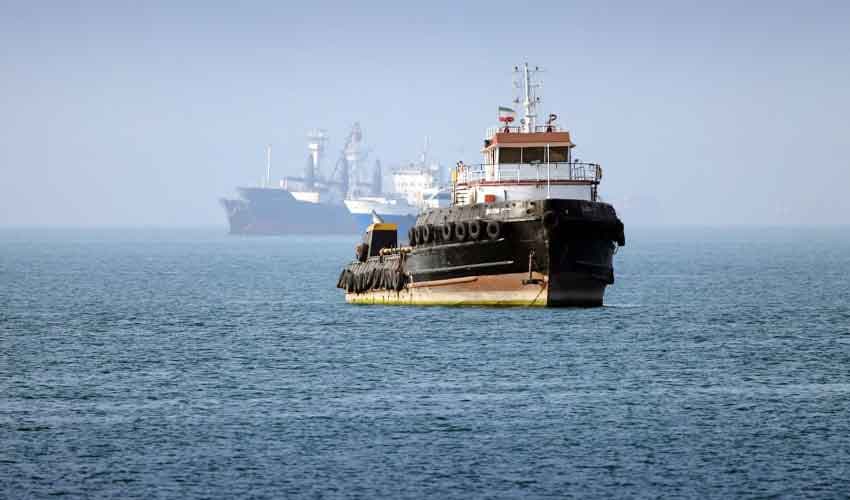
The intensifying conflict between the United States and Iran has sharply reduced commercial shipping through the Strait of Hormuz, where roughly one-fifth of global oil and liquefied natural gas shipments normally transit.
Attacks on Emirati supertankers have strengthened Middle East spot crude prices, with prompt-month contracts now trading above future contracts, signaling tighter near-term supplies.
Goldman Sachs said the recovery in Gulf shipping could take longer than expected even if geopolitical tensions ease.
The bank noted that traffic through Omani and international shipping lanes had fallen sharply after recent tanker attacks, indicating that many shipping companies remain reluctant to use the non-Iranian route through the Strait.
Oil prices continue to climb
Global oil prices extended their gains on Wednesday after rising 2% on Tuesday to a one-month high.
Brent crude closed at its highest level since June 12, while US West Texas Intermediate reached its strongest level since June 15. Both benchmarks continued to rise in early Wednesday trading as concerns over supply disruptions intensified.
Hostilities between the United States and Iran resumed last week, unraveling a fragile ceasefire reached in June after months of fighting that has claimed thousands of lives.
The renewed conflict has once again placed the world's most critical energy shipping routes at the center of a growing geopolitical crisis.