The United States has sharply escalated its confrontation with Iran by reimposing a naval blockade on all Iranian ports, launching another wave of military strikes, and threatening to target Iran's power plants and bridges unless Tehran returns to the negotiating table.
The latest developments come as fighting around the strategically vital Strait of Hormuz intensifies, raising fears of a prolonged regional conflict and further disruption to global energy supplies.
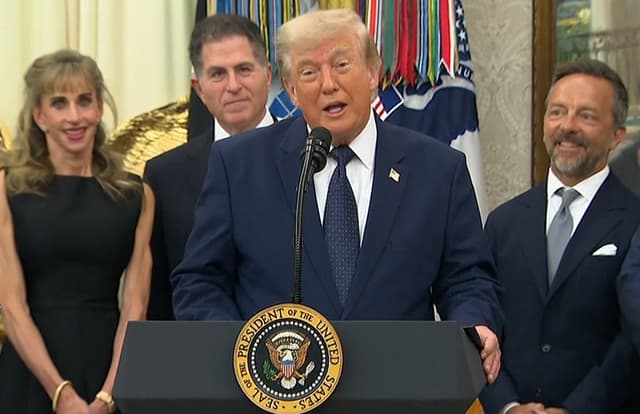
US President Donald Trump announced that the United States has restored a naval blockade on all Iranian ports and vowed to continue military operations against Iran.
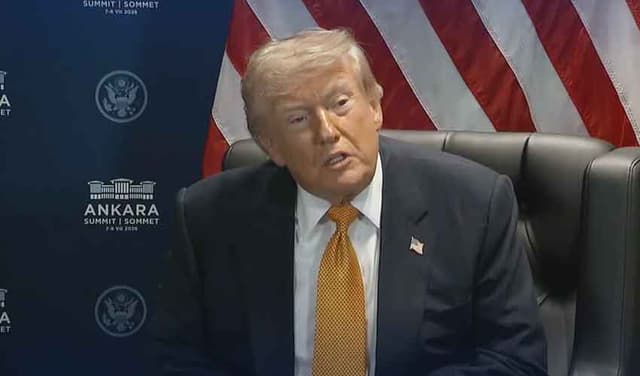
Speaking in an interview with Fox News, Trump said the US had urged Iran to negotiate and confirmed that American officials had remained in contact with Iranian counterparts.
"The US had urged Iran to make a deal," Trump said, adding that negotiations were discussed on Tuesday.
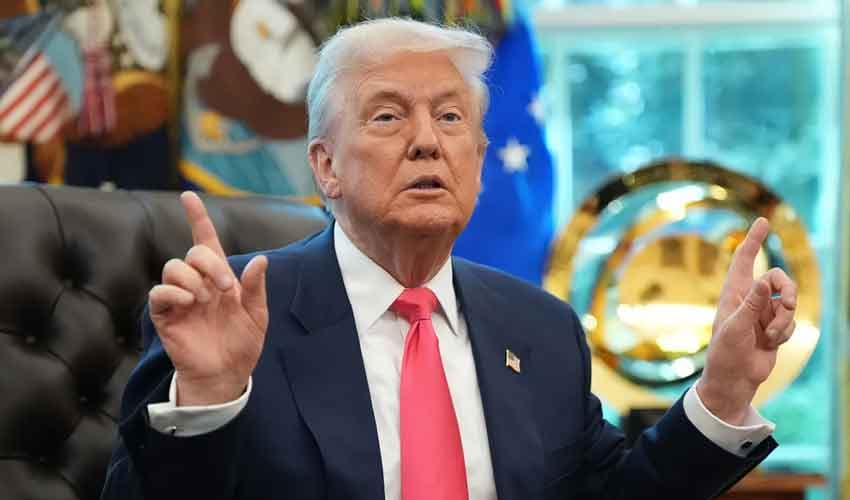
He warned that while energy-related facilities would be targeted later, Iran's infrastructure would face escalating attacks if negotiations did not resume.
"I'll save the energy targets for last, but ultimately we'll hit energy targets," Trump said. "Next week comes the power plants, next week comes the bridges, unless they get to the table and negotiate."
Trump also claimed Iran still possesses some military capability but insisted, "Iran still has some fighting capacity, but not much."
US fresh strikes near Strait of Hormuz
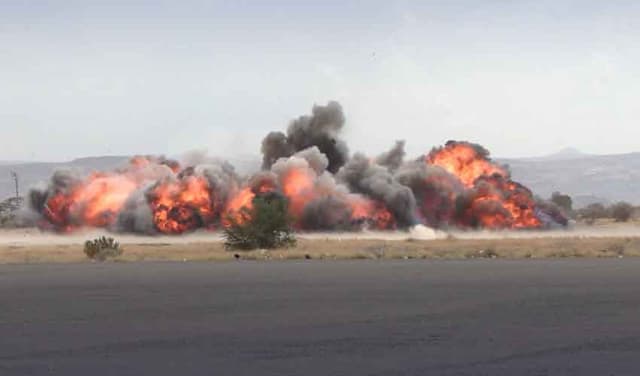
Alongside the renewed blockade, the US military confirmed a new round of air and naval strikes designed to further weaken Iran's military capabilities.
According to the US military, the strikes were intended to continue degrading Iranian assets used to attack commercial shipping in the Strait of Hormuz.
Later, the US Central Command (CENTCOM) announced that it had completed another wave of military operations that ended around 10pm Washington time (0200 GMT Wednesday).
CENTCOM said US fighter aircraft, drones and naval vessels fired precision-guided munitions at dozens of military targets near the Strait of Hormuz, including Iranian missile and drone positions, naval capabilities and coastal defense systems.
The command did not disclose specific targets or provide an assessment of the damage but reiterated that the mission aimed to reduce Iran's ability to threaten commercial shipping and civilian crews.
Naval blockade resumes after June suspension
The US military said the naval blockade on ships traveling to and from Iranian ports and coastal areas officially resumed at 2000 GMT (1600 EDT) Tuesday after having been lifted in June following an interim US-Iran agreement.
According to CENTCOM, more than 20 US Navy warships and hundreds of military aircraft are currently deployed across the Middle East.
"American forces remain vigilant, lethal, and ready," CENTCOM said in a statement posted on X.
The renewed blockade effectively bars ships from entering or leaving Iranian ports, while Trump said the Strait of Hormuz remains open to international shipping except for Iran.
New US sanctions on Tehran
Alongside military action, the US Treasury Department imposed a fresh round of sanctions on Iran as Washington increased economic pressure on Tehran.
The latest sanctions accompany the renewed naval blockade and expanding military campaign.
Iran says Strait of Hormuz closed again
Tehran says it has once again closed the Strait of Hormuz after hostilities with the United States reignited last week, shattering an already fragile truce reached in June following months of fighting.
Before the conflict began in February, nearly 20% of global oil and gas shipments passed through the strategic waterway each day, making it one of the world's most important energy corridors.
The latest escalation has fueled concerns about global energy security and shipping.
Iran responds with regional attacks
Iranian officials rejected Washington's pressure campaign.
Deputy Foreign Minister Kazem Gharibabadi said tightening sanctions, military action and an economic blockade would not force Tehran back into negotiations.
"If the US thinks that by tightening its measures against us, its military actions and its economic blockade, we will return to negotiations, it is making a mistake," Gharibabadi told state television.
Iran's army also claimed it launched drone attacks against US forces stationed at Jordan's Azraq Air Base, although there was no immediate confirmation from the Pentagon.
Meanwhile, Iran's Islamic Revolutionary Guard Corps (IRGC) said it targeted weapons depots and storage facilities in Bahrain and Kuwait.
Kuwait's military said its air defenses intercepted Iranian drones, while the country's state news agency reported that a fire had been brought under control.
Reuters said it could not independently verify the Iranian claims.
US and Iran exchange strikes
Iranian state media reported that American projectiles struck areas near Bandar Abbas, Sirik, and Qeshm Island, all located near the Strait of Hormuz.
The governor's office in Bandar Abbas confirmed strikes around the city, while IRNA reported attacks near Sirik in southern Iran.
Authorities on Qeshm Island also said the island was struck by a US projectile at around 7pm Tuesday.
The United States accused Iran of attacking seven commercial vessels over the past week, resulting in nearly a dozen crew members being killed, injured or reported missing.
Earlier, the United Arab Emirates said one Indian sailor was killed and eight others injured after two Emirati oil tankers were struck by Iranian cruise missiles in the Strait of Hormuz.
The IRGC claimed it disabled two "offending" supertankers after they ignored repeated warnings, although it did not identify the vessels.
Trump drops proposed transit fee
Earlier this week, Trump suggested imposing a 20% transit fee on ships passing through the Strait of Hormuz. The proposal drew criticism from the United Nations shipping agency and other international organizations.
On Tuesday, Trump withdrew the proposal and instead said he would seek investment agreements with Gulf countries, although he did not identify any specific commitments or participating states.
He also said several countries had informed him they preferred investing in the United States rather than paying transit charges.
Oil prices climb as conflict deepens
The renewed fighting has pushed global oil prices sharply higher.
Benchmark Brent crude has surged 15% over the past week to around $85 per barrel, its highest level since mid-June.
The conflict has also become increasingly unpopular within the United States as rising gasoline prices coincide with congressional elections scheduled for November.
The current war began on February 28 with joint US-Israeli strikes on Iran and has since expanded across the Gulf region as Iran retaliated against neighboring countries.
The fighting has killed thousands, primarily in Iran and Lebanon, while drawing additional Gulf states into the conflict.
The International Monetary Fund (IMF) warned last month that extending the war beyond mid-July could pose significant risks to the global economy, particularly because many countries have already depleted much of their strategic oil reserves to cushion energy price shocks.
A recent Reuters poll also found that roughly half of respondents believe the war has not been worth its cost.
Nuclear dispute remains unresolved
Washington continues to insist that Iran must never acquire a nuclear weapon, an accusation Tehran has repeatedly denied.
Iran, meanwhile, continues to demand the removal of international sanctions and recognition of its authority over the Strait of Hormuz, leaving prospects for a negotiated settlement increasingly uncertain.