US President Donald Trump has warned that Iran will face severe military strikes while simultaneously leaving the door open for negotiations, saying Washington is taking control of the Strait of Hormuz and expects payment for protecting the strategic waterway.
Trump said Tehran had failed to honour a memorandum of understanding with the United States and argued that American military action had prevented Iran from acquiring nuclear weapons, which he claimed would have threatened Israel’s survival.
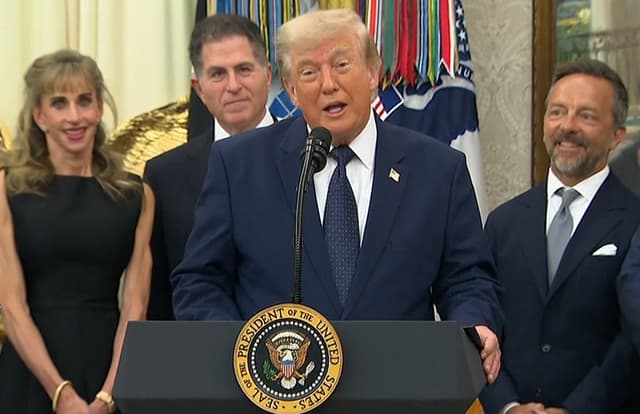
Speaking on Monday during an interview with political commentator and radio host Hugh Hewitt, Trump said the United States would intensify its attacks against Iran.
“We’re going to hit them very hard tonight, and we’re going to hit them hard tomorrow. And there’s not a damn thing they can do about it,” Trump said.
“They have nothing. They have nothing going other than they have big mouths,” he added.
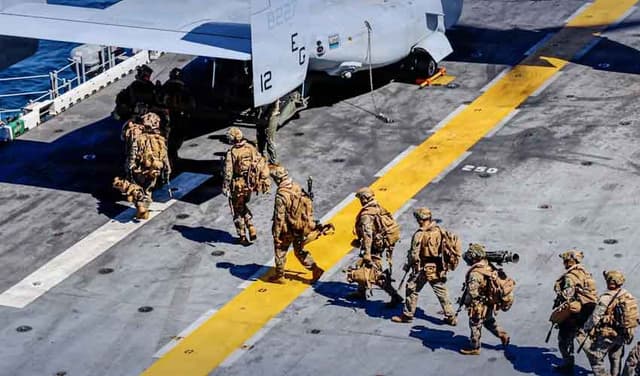
Shortly after the interview, US Central Command announced on X that it had begun launching a third consecutive night of strikes against Iran on the instructions of the commander-in-chief.
Heavy explosions were subsequently reported in several parts of Iran. Iranian semi-official Mehr News said multiple areas of the southwestern city of Omidiyeh were struck by US projectiles, while blasts were also heard in other regions.
Trump suggested that the renewed US military campaign could continue for another two to three weeks.
MoU a failed ‘test’
Trump dismissed the memorandum of understanding previously reached with Iran, describing it as a test of Tehran’s willingness to comply. He said he had questioned why Washington entered into a ceasefire memorandum rather than first securing a broader and more comprehensive agreement.
“They didn’t honour the test,” Trump said.
The US president maintained that Tehran had failed to follow the terms of the understanding, prompting Washington to resume military operations.
The full-scale exchange of attacks entered its third night after Trump declared the memorandum a failed test and announced renewed strikes against the Islamic Republic.
Trump says Iran could still reach deal
Despite threatening further attacks, Trump said a diplomatic agreement with Iran remained possible.
“They have been stalling for 47 years, but I still think an agreement is possible,” he said.
His comments presented two contrasting messages at the same time: a warning of severe military action and an indication that talks with Tehran could still resume.
Trump did not provide details about the terms of any potential agreement or whether formal negotiations were underway.
Pickaxe Mountain identified as possible target
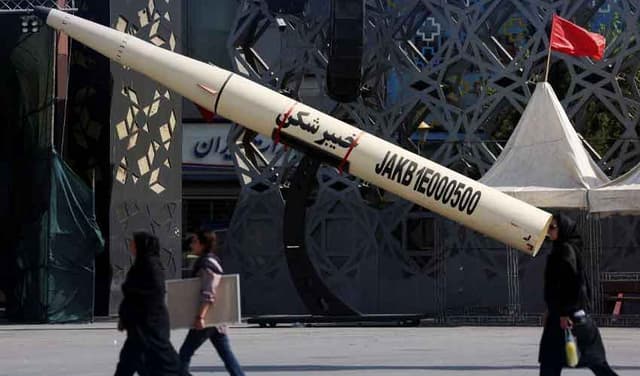
Trump also raised the possibility of striking an underground Iranian facility known as Pickaxe Mountain, located near the heavily damaged Natanz uranium enrichment complex.
“Pickaxe is a possible target for a nice big fat shot right near the front door,” Trump said.
He added that the United States was closely monitoring the site but currently saw “no activity” there.
“They’re not doing well with their nuclear situation. Every time we hear about it, we blow it up. So they don’t like talking about it. But we’ll probably give Pickaxe a shot relatively soon,” Trump said.
“We’re going to take out Pickaxe Mountain. Tell the Iranians to be ready,” he added.
Pickaxe Mountain is located about one mile south of the Natanz nuclear complex and contains two deeply buried tunnel systems.
Experts assess that the fortified complexes may be beyond the reach of even the most powerful bunker-buster bombs in the US arsenal.
Trump says strikes prevented nuclear-armed Iran
Trump argued that US attacks had prevented Iran from developing nuclear weapons. He said that without American bombardment, Tehran would have acquired a nuclear bomb and Israel might no longer exist.
According to Trump, every time the United States receives information about renewed Iranian nuclear activity, it attacks the relevant facilities.
The president said Iran was now struggling with its nuclear programme because of repeated US strikes.
US says taking control of Strait of Hormuz
Trump said Washington was “taking over” the Strait of Hormuz, one of the world’s most important energy supply routes. He said the United States was re-establishing its blockade of Iranian ports and would ensure that the waterway remained open.
Trump argued that the United States was protecting one of the wealthiest regions in the world and spending significant resources on regional security.
“We are protecting the richest region in the world,” he said, adding that Washington should receive payment in return for security and protection.
The US president proposed charging vessels a fee equal to 20% of all cargo passing through the strait. He also said vessels belonging to Iran, or ships linked to countries and companies conducting business with Tehran, would not be allowed to pass through the waterway.
Washington reinstates blockade of Iranian shipping
Trump said the United States would restore its blockade of Iranian shipping in the Gulf. The measure would target Iranian ports, commercial vessels and ships belonging to customers conducting business with Tehran.
Trump’s announcement followed further missile and drone exchanges between the United States and Iran. He said Washington would ensure the Strait of Hormuz remained open, but only in return for payment from vessels benefiting from US protection.
Trump said the United States had played a decisive role in protecting Israel during the conflict. He claimed that without Washington’s military and political support, “Israel would not be around today.”
The president said he maintained a good relationship with Israeli Prime Minister Benjamin Netanyahu. However, he said he was “not interested in answering” when asked whether Israel would participate in the latest round of strikes against Iran.
His remarks suggested that protecting Israel remained one of the key considerations behind US military operations against Tehran.
Trump formally notifies Congress
Trump has formally notified the US Congress that hostilities against Iran resumed on July 7.
In a letter dated July 10, the president said he had authorised military action to protect Americans and advance US national security and foreign policy interests.
“I directed this military action consistent with my responsibility to protect Americans and United States’ national security and foreign policy interests,” Trump wrote in the letter.
The notification was seen by Reuters on Monday. The White House reportedly considers the renewed notice as opening a fresh 60-day period during which the administration can continue military operations without additional congressional approval.
The letter was also reported by the New York Times, Politico and other US media outlets.
The latest exchange of strikes has entered its third consecutive night, with the United States targeting sites across Iran and Tehran carrying out retaliatory attacks.
CENTCOM confirmed that renewed operations began shortly after Trump’s radio interview.
The escalation has increased concerns over regional stability, Iran’s nuclear programme, the security of Israel and the future of international shipping through the Strait of Hormuz.
While Trump has promised heavier attacks and threatened one of Iran’s most fortified underground facilities, he has also insisted that a diplomatic settlement remains possible.