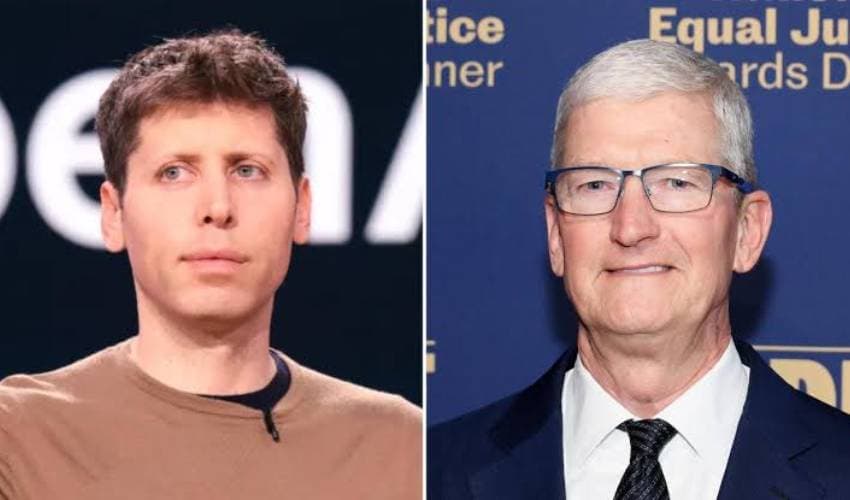
Apple has filed a lawsuit against OpenAI, alleging that a former Apple engineer exploited a previously unknown security vulnerability to access and download confidential company files after leaving the iPhone maker to join the artificial intelligence firm.
According to the complaint filed in the US District Court for the Northern District of California, former Apple system electrical engineer Chang Liu allegedly used a "rare" authentication flaw to gain unauthorised access to Apple's internal network weeks after beginning work at OpenAI.
Apple described the flaw as a zero-day vulnerability, meaning it was unknown to the company before it was allegedly exploited.
The company said it has since patched the vulnerability and terminated Liu's access after discovering what it described as a security breach.
Apple alleges Liu downloaded dozens of confidential hardware-related files containing information about unreleased products, engineering presentations, technical specifications and proprietary project data.
The lawsuit also claims Liu failed to return his Apple-issued laptop after leaving the company and retained software that allegedly enabled access to Apple's internal systems.
According to the complaint, Liu also allegedly used the Apple-issued laptop of another employee, Yu-Ting Peng, while she was still employed at Apple and before she later joined OpenAI.
Apple further alleges that after discovering he could still access the company's network, Liu sent Peng a message saying, "LOL, I found out I can access the [network storage], so funny."
The company claims Liu did not report the security flaw despite contractual obligations requiring employees to disclose vulnerabilities affecting Apple's systems.
Apple said an internal review of server logs indicated that while a small number of people could potentially have exploited the vulnerability, only Liu was found to have accessed confidential data after leaving the company.
The lawsuit seeks damages and a jury trial.
OpenAI has previously denied any interest in competitors' trade secrets, stating that it has "no interest in other companies' trade secrets."
The case could proceed later this year if it is not settled.