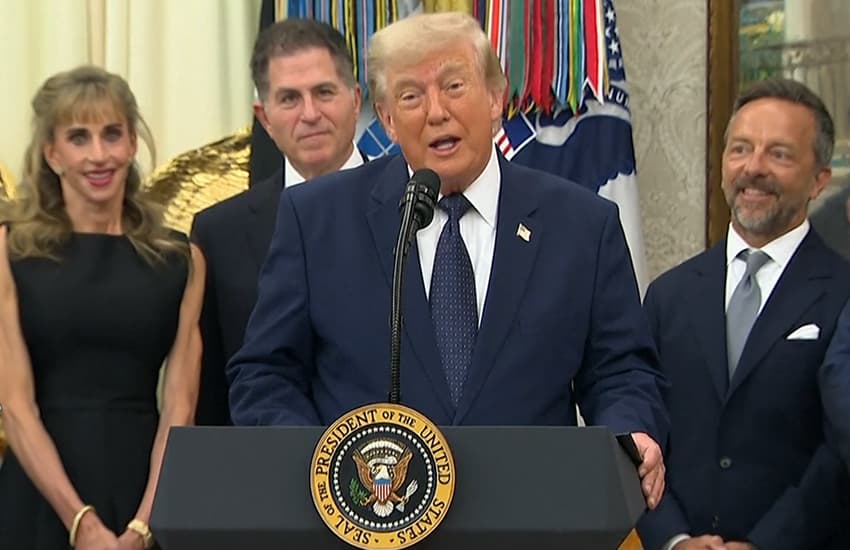
US President Donald Trump has announced the reimposition of a naval blockade on Iran in the Persian Gulf.
In a social media statement, Trump said the blockade would take effect immediately and that the necessary administrative arrangements would begin without delay.
He also announced that the United States would require a 20% payment on all commercial cargo passing through the Strait of Hormuz.
Trump said the US would now be known as the “guardian of the Strait of Hormuz,” adding that the strategic waterway was open and would remain open.
Washington had previously restricted shipping traffic to and from Iranian ports in April before lifting the blockade in June following an interim US-Iran agreement.
Trump did not provide further details on how the 20% charge would be collected or enforced.
Earlier, Trump had said that the United States would probably take control of the Strait of Hormuz and demand compensation for protecting the strategic waterway amid renewed fighting with Iran.
Speaking by telephone to Fox News’ Fox & Friends, Trump said Washington would become the strait’s guardian and would no longer provide maritime security without being paid.

Trump said the United States intended to keep the Strait of Hormuz open and could assume responsibility for running and monitoring it.
“We’re going to keep the strait, and we’ll probably run it,” Trump said, suggesting the US could become what he called the waterway’s “guardian angel.”
The president said Washington should be reimbursed for the cost of safeguarding commercial traffic through the route. He argued that countries relying on the strait included wealthy US partners and that America should not be expected to continue protecting global shipping free of charge.
Trump said the United States would receive “a lot of money” for guarding the maritime corridor.
US should not provide security for free
The US president said America had provided security services around the world for decades without receiving adequate compensation. He maintained that the countries benefiting from safe passage through the Strait of Hormuz should contribute financially to the operation.
“We’re going to guard it. We’re going to get paid for guarding it,” Trump said.
Also Read: Strait of Hormuz traffic slows to multi-week low
His remarks echoed an earlier warning that Washington could impose its own charges for services provided as the “guardian angel” of Middle Eastern countries if diplomacy with Iran failed.
Trump says Iran broke completed agreement
Trump said Washington and Tehran had reached an agreement that was effectively complete before Iran broke its commitments. He claimed the deal was not widely known but had been fully negotiated.
“We had a deal. It was a done deal, and then they broke it,” he said.
Trump accused Iran of repeatedly violating agreements, claiming his administration had reached as many as 10 understandings with Tehran that were later broken.
The president said the alleged breach would result in stronger US military action against Iran. “We’re just going to hit them very hard,” he said.
Interim US-Iran agreement under threat
The latest escalation has placed the future of an interim US-Iran agreement signed last month in serious doubt.
The arrangement was intended to reopen the Strait of Hormuz, halt hostilities and provide another 60 days for negotiations between Washington and Tehran. Both countries now accuse the other of violating the deal.
Also Read: Iran says Islamabad MoU over, blames US
Trump has declared the ceasefire effectively over, while Iran says US military attacks and Washington’s actions in the strait have undermined the agreement.
Iran says strait remains closed
Iran announced the closure of the Strait of Hormuz on Saturday after saying that a vessel had travelled along an unauthorised route and was struck.
Tehran said on Sunday that commercial passage remained suspended and that permits would be issued only after stability and calm had been restored.
Also Read: Trump says Strait of Hormuz remains open
The United States rejects Iran’s claim of control and insists that the strait is an international waterway open to lawful commercial transit.
US Central Command has said American forces are positioned to preserve freedom of navigation despite Iranian threats, harassment and closure declarations.
Iran warns against continued US intervention
Iran’s Revolutionary Guards said regular shipping could be restored only if US military involvement in the Strait of Hormuz ended.
The force warned that continued American interference could lead to more serious incidents affecting the global oil and gas industry.
Iran maintains that it has the right to manage shipping through the strait and prevent vessels from using routes that threaten its national security.
Washington, however, says Iran has no authority to close the passage or impose unilateral controls on international shipping.
US and Iran exchange heavy attacks
Trump’s comments came after US and Iranian forces exchanged intense missile and drone attacks over the weekend and into Monday.
US forces struck dozens of Iranian military targets, including air-defence systems, radar facilities, missile and drone capabilities and small naval vessels. Iran responded by claiming strikes against US-linked military facilities across Bahrain, Kuwait, Qatar, Oman and Jordan.
Also Read: Iran expands attacks on Gulf states, says Strait of Hormuz closed
The renewed attacks marked a significant escalation in both the pace and geographical range of the conflict.
Control of the Strait of Hormuz has become one of the primary points of confrontation in the US-Iran conflict. The narrow passage is a critical route for global energy supplies, and disruption to maritime traffic has raised fears of shortages and higher inflation.
Before the war, around one-fifth of globally traded seaborne oil passed through the strait.
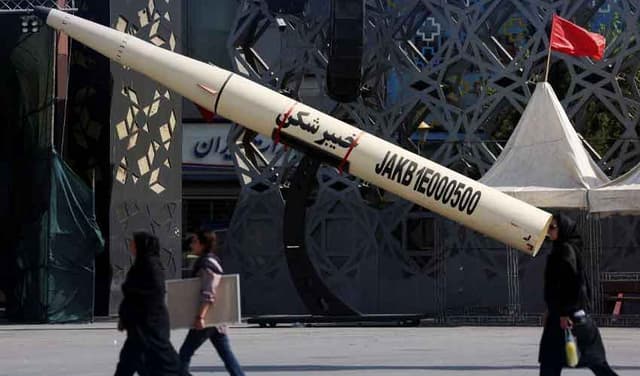
Iran’s restrictions and attacks on shipping have reduced vessel traffic, while uncertainty over the waterway has pushed global crude prices higher.
Oil and inflation concerns grow
Iran’s effective blockade of the strait has increased concerns about energy security in countries dependent on Gulf oil and liquefied natural gas.
Oil prices rose as markets reacted to renewed US-Iran hostilities and the possibility of a more severe interruption to shipping. Any prolonged closure or military struggle for control of the passage could further raise transport, fuel and consumer costs worldwide.
Trump’s proposal to charge countries for American protection could also create new diplomatic and legal questions over how such payments or fees would be imposed.
No formal US takeover announced
Although Trump said the United States would probably run and guard the Strait of Hormuz, no formal military, administrative or legal mechanism for an American takeover was announced.
His comments represented a declaration of intent rather than confirmation that control of the international waterway had already transferred to Washington.
The situation remains fluid as US forces continue operations in the region, Iran maintains its closure claim and international mediators seek to prevent a broader conflict.