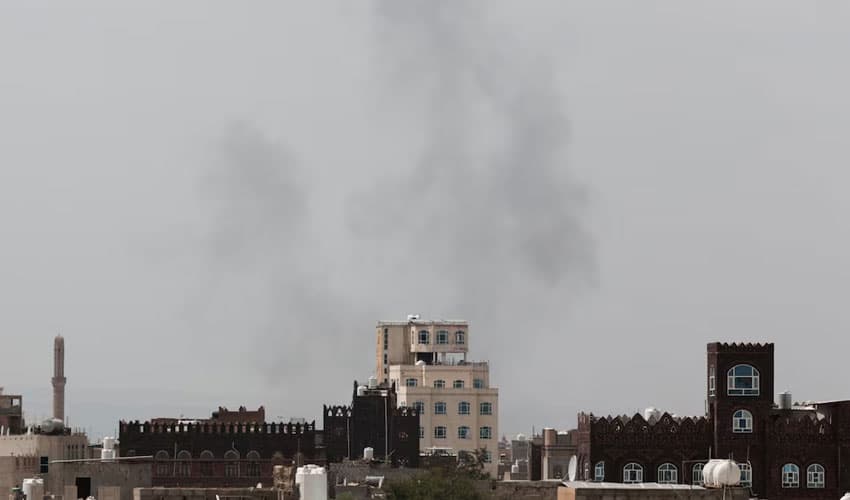
Yemen's internationally recognised government said on Monday that its forces carried out a strike on Sanaa International Airport to prevent an Iranian aircraft from landing, further escalating tensions with the Iran-aligned Houthi movement.
In a statement, the government said the Houthis had prevented Yemeni national aircraft from using the airport and insisted on allowing an Iranian aircraft to enter Yemeni airspace.
"The airport runway was targeted to prevent the Iranian aircraft from landing," the statement said.
Earlier, Yemen's Ministry of Defence had warned civilians, airport workers, diplomatic missions and humanitarian organisations to evacuate the airport and its surrounding areas until further notice.
The Houthis, who control Sanaa and much of northern Yemen, condemned the strike and accused Saudi Arabia of carrying it out, although they did not provide evidence to support the claim.
Houthi military spokesperson Yahya Saree warned that the attack "will not go unanswered or unpunished."
The latest escalation follows growing tensions after the Houthis accused Saudi Arabia earlier this month of targeting an Iranian aircraft that had transported a Houthi delegation to and from Sanaa. At the time, the group threatened to target Saudi airports and key infrastructure if similar incidents occurred again.
Meanwhile, Yemen's Information Minister Moammar bin Mutahar Al-Eryan alleged that the Houthis had detained an aircraft belonging to the International Committee of the Red Cross (ICRC) at Sanaa airport and were holding its pilot and co-pilot.
Earlier in the day, Yemen's defence minister said diplomatic efforts to stop what he described as Iranian violations of Yemeni airspace had failed, warning that any hostile aircraft entering the country's airspace would be dealt with "by all available means."
The conflict in Yemen began after the Houthis seized Sanaa in 2014, prompting a Saudi-led military intervention in 2015 in support of the internationally recognised government. Despite a UN-backed truce significantly reducing large-scale fighting in recent years, the conflict remains one of the world's worst humanitarian crises.