Iran has declared that the Islamabad Memorandum of Understanding (MoU) has entered a terminal crisis, accusing the United States of systematically dismantling the agreement and preventing Tehran from implementing arrangements for the Strait of Hormuz.
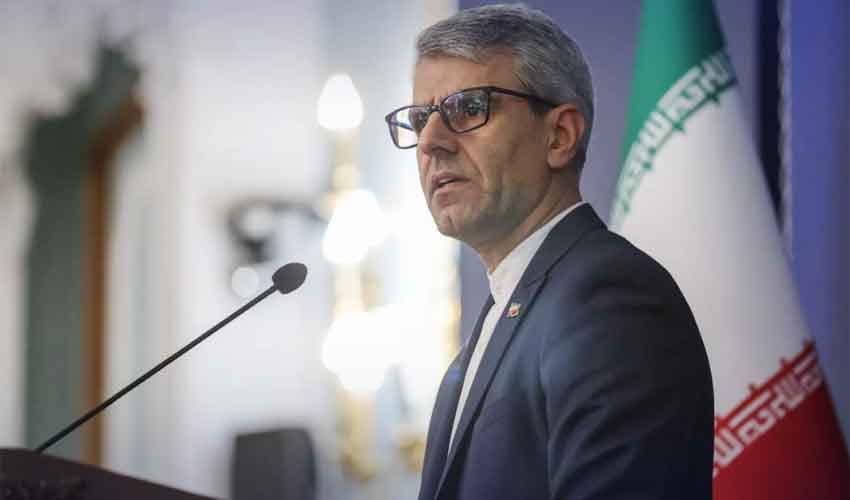
Foreign Ministry spokesperson Esmaeil Baghaei said Iran would no longer fulfil its obligations unless Washington returned to what Tehran describes as a policy of reciprocal compliance.
Speaking at his weekly news conference, Baghaei said there was “no doubt” that the Islamabad Memorandum had entered a crisis and, in practical terms, had been brought to an end by repeated US violations. He maintained that Iran had never been the first party to breach its commitments and had entered negotiations seriously, carefully and in good faith while protecting its national interests.
According to Baghaei, the United States failed to implement promises made under the agreement and began retreating from its commitments almost immediately. He accused Washington of rendering different parts of the 14-clause memorandum inoperative within a short period.
Baghaei said Iran had made its position clear from the beginning: obligations would be implemented only on a reciprocal basis.
Under what he described as Iran’s “commitment for commitment” policy, Tehran would continue complying only while the other party fulfilled its own responsibilities.
He argued that no one could reasonably accuse Iran of violating the memorandum because, in Tehran’s view, Washington had repeatedly acted first to undermine it.
“As long as the other side continues to violate its obligations, Iran will also refrain from implementing its commitments,” he said.
US did not allow 30-day Hormuz period to end
Baghaei focused much of his briefing on Article Five of the Islamabad Memorandum, which Iran says provided a 30-day period for establishing arrangements to reopen and manage the Strait of Hormuz.
He said the United States did not allow that one-month implementation period to run its course and began challenging the provision from the memorandum’s earliest days.
According to the Iranian interpretation, Article Five required Tehran to adopt measures concerning the strait in cooperation and consultation with Oman, the other coastal state.
Baghaei said Iran had been holding multiple meetings with Omani officials and actively working on the agreed process when the United States intervened.
Also Read: Iran expands attacks on Gulf states, says Strait of Hormuz closed
He accused Washington of preventing Iran from completing the necessary arrangements and said direct responsibility for the current situation in the Strait of Hormuz rested with the US.
Iran’s priority, he maintained, remained ensuring the safe and secure passage of vessels through the vital maritime route.
Iran says Article 5 not open to interpretation
Baghaei rejected American interpretations of Article Five that differ from Tehran’s reading of the memorandum. He said interpreting a provision in a way that contradicted its explicit text was unacceptable.
According to the spokesperson, Iran’s deep mistrust of the United States had led negotiators to draft the memorandum in precise and straightforward language, leaving no room for arbitrary reinterpretation.
He urged observers to examine both the Persian and English versions of the article and determine whether its wording was genuinely ambiguous.
Baghaei said the provision was included because, during the war, the Strait of Hormuz and areas along its southern shores had allegedly been used to undermine Iran’s security and interests.
As the country with the longest coastline along the Persian Gulf and Gulf of Oman, Iran had both the right and responsibility to protect its national security, he argued.
Tehran would not allow the strait to be used by the United States or Israel for activities it considered threatening to Iranian sovereignty, he added.
Safe-passage mechanism with Oman
Baghaei said Iran had been trying to agree on a joint mechanism with Oman to manage shipping and guarantee safe passage through the Strait of Hormuz.
However, he accused the United States of applying overt and covert pressure on Muscat, preventing the two coastal states from reaching an agreement. He said Iran had expected Oman to provide the necessary cooperation in support of the national security and shared interests of both littoral countries.
Also Read: US troops say senior military leaders ignored warnings in Iranian attack
The spokesperson maintained that the Muscat discussions were strictly limited to arrangements for the strait under Article Five of the Islamabad Memorandum. No nuclear, regional or other issues were discussed during the talks, he said.
Iran rejects Trump’s account of Muscat talks
Baghaei rejected US President Donald Trump’s assertion that Iran had agreed to all outstanding matters in Oman, including nuclear issues and the Strait of Hormuz, before attacking ships shortly afterwards. He accused US officials of making false claims and said dishonesty had become part of the administration’s political behaviour.
According to Baghaei, Saturday’s negotiations in Muscat were devoted exclusively to the management of the Strait of Hormuz.
Iran had sought to establish a mechanism with Oman that would protect maritime navigation, but the talks failed because of US pressure, he said. Baghaei described reports that broader issues had been addressed or agreed upon as entirely false.
Iran accuses US of creating parallel shipping routes
Baghaei also accused Washington of encouraging regional states, with the cooperation of some governments, to bypass the maritime route being coordinated with Iran.
He claimed the creation of parallel shipping corridors violated Article Five and created additional dangers for commercial navigation.
According to Baghaei, some vessels had been forced to deactivate their tracking systems, increasing the possibility of maritime collisions, environmental damage and other security incidents. He said the alternative routes had also increased tensions and the risk of direct confrontation in the region.
Also Read: Trump says Strait of Hormuz remains open
Responding to reports that the US military had escorted 20 vessels through the Strait of Hormuz during the previous 24 hours, Baghaei said Washington’s actions reflected a determination to prolong regional instability.
He argued that US military escorts would not increase confidence among international shipping companies and would instead worsen insecurity.
Regional security without foreign forces
Baghaei said the region would not achieve lasting security until neighbouring countries established collective arrangements through consultation and without foreign military intervention.
He argued that events during the previous four months had demonstrated the destabilising consequences of the US military presence.
The spokesperson expressed hope that regional governments would draw lessons from the escalation.
Iran, he said, would not permit the Strait of Hormuz to become a platform for threats against its national security. At the same time, he maintained that Tehran had acted responsibly and sincerely to protect the safety of maritime navigation.
Mediation efforts remain active
Despite declaring the Islamabad Memorandum to be in crisis, Baghaei said diplomatic and mediation efforts between Iran and the United States were continuing.
Pakistan remained in regular contact with Oman and Qatar as part of efforts to prevent further escalation, according to the briefing.
Baghaei said rapidly changing circumstances meant Iran could not remain fixed on one diplomatic or military approach. The art of governance, he said, involved identifying the most effective tools and opportunities for protecting the country’s supreme national interests.
Iran would use military means whenever necessary to defend itself but would also turn to diplomacy when conditions and national interests required it.
Iran describes attacks as self-defence
Baghaei said Iran’s military actions against US-linked facilities in the Gulf had been conducted under its right to self-defence. He rejected attempts to hold Tehran responsible for the escalation, saying countries that permitted the US to use bases and infrastructure on their territory also had responsibilities.
Iran had repeatedly urged regional governments not to allow the United States or Israel to use their land, facilities or airspace to prepare or launch attacks against Iran, he said.
Also Read: Oil jumps 4% as new military strikes threaten shipments
Baghaei described that request as consistent with good-neighbourly relations and established principles of international law. Any territory or facility used for military operations against Iran could become subject to Iranian defensive measures, he warned.
Decisions on the timing, manner, scope and location of such operations would be made by Iran’s armed forces according to national interests.
Tehran says Gulf countries were not the targets
Baghaei rejected suggestions that Iran had attacked specific Gulf countries while sparing others. He said Iran had not attacked and would not attack any regional state.
According to the spokesperson, Iranian strikes were directed solely at US bases, military positions, logistical sites and other infrastructure used to support attacks against Iran.
He said terminology should be used carefully to distinguish between targeting a country and striking a foreign military facility located within that country.
Iran’s actions against installations in the region were aimed only at US military capabilities, he maintained.
Baghaei calls for justice over Iranian deaths
The spokesperson also addressed demands for accountability over the death of Iran’s “martyred Leader of the Revolution,” Ayatollah Ali Khamenei, and other Iranians killed during US and Israeli military operations.
Baghaei said seeking justice and avenging the leader’s death was a common and serious demand of the Iranian nation. He argued that pursuing accountability was a political, legal and moral obligation under domestic and international standards.
The crimes committed over the previous 40 days, as well as during an earlier 12-day period of US and Israeli attacks, could not be subject to any statute of limitations, he said.
Combating impunity for those responsible for war crimes was a recognised principle of international law, Baghaei added.
Iran plans international and domestic legal action
Baghaei said the Foreign Ministry formed part of a wider national effort to identify and hold responsible those involved in attacks on Iranian citizens, officials and leaders.
The ministry would use all available diplomatic and international legal instruments to document the incidents and seek accountability. Iran’s judiciary would also pursue domestic legal measures, including filing cases on behalf of the families of people killed or injured.
Baghaei said responsibility extended from senior decision-makers to those who directly carried out the attacks. He argued that the pursuit of justice did not depend on any one official and would remain a lasting national commitment.
The spokesperson accused Iran’s opponents of attempting to portray themselves as victims despite openly taking responsibility for the killings of Iranian citizens and leaders.
He said such publicity and psychological campaigns would not make the international community forget who Iran considered to be the perpetrators.
Baghaei praised those who participated in funeral, burial and condolence ceremonies for Ayatollah Khamenei. He highlighted gatherings in Iran, Iraq, Najaf, Karbala and other parts of the world, saying they demonstrated that solidarity and grief crossed national borders.
The spokesperson praised what he called the “free people of the world” for showing loyalty and respect. He also commended the Iranian public, saying people had endured pain without losing hope and had remained steadfast and dignified.
Iran refuses IAEA access to damaged nuclear sites
Asked whether Iran would allow inspectors from the International Atomic Energy Agency to return and examine damaged nuclear facilities, Baghaei gave a categorical rejection. He said Tehran would not agree to a request from IAEA Director General Rafael Grossi for access to the affected locations.
Baghaei did not provide further details about the facilities or the conditions under which any future inspections might be considered.
Responding separately to US media reports carrying satellite images that allegedly showed the reconstruction of Iranian nuclear sites, he said he had not seen the images and could not comment.
Alleged Trump assassination plot not discussed
Baghaei denied that reports of an alleged Iranian plot to assassinate President Trump had been raised in messages exchanged between Washington and Tehran through mediators. He said the matter had never formed part of the negotiations.
The spokesperson added that various parties were attempting to exploit developments to advance what he described as destructive political agendas.
Iran defends Lebanon provision in memorandum
Baghaei also addressed questions about the inclusion of Lebanon in the Islamabad Memorandum. He said the reference reflected Iran’s stated commitment to international peace and security.
According to him, the first article did not call for Lebanon’s occupation or interference in its domestic affairs but instead emphasised respect for Lebanese sovereignty.
There was no question of another country making decisions on Lebanon’s behalf, he said, adding that such choices belonged solely to the Lebanese people.
Asked whether pressure to disarm groups in Lebanon had been discussed during Foreign Minister Abbas Araghchi’s meeting with the UN Special Coordinator for Lebanon, Baghaei said Iran’s position was already clear.
He argued that the Lebanese people understood better than anyone the importance of what he called the “weapons of the resistance” in defending the country’s sovereignty. Recent developments had shown that states needed sufficient defensive capabilities to preserve their territorial integrity, he said.
As long as a country remained under attack or occupation, its citizens had the right to defend their territory, Baghaei added.
Iran rejects UK, France and Germany statement
Baghaei dismissed a joint statement by Britain, France and Germany condemning Iranian actions in the Strait of Hormuz and Gulf states. He said the statement lacked legitimacy and accused the three European governments of reversing the facts.
According to Baghaei, the current regional crisis resulted from military actions by the United States and Israel and the continuation of the same approach.
He argued that European countries could have played a constructive and responsible role but lacked the political will because of their tendency to follow Washington.
One-sided European statements would neither help resolve the crisis nor improve Europe’s international standing, he said.
Baghaei criticises wider European policies
Responding to remarks by Luxembourg’s foreign minister that the United States pursued “win-lose” relationships that Europe found unacceptable, Baghaei said Iran had moved beyond what he described as simplistic politics.
It was up to European governments whether they chose to resist US pressure, he said, but Iran would not tolerate coercion because it undermined international peace and security.
Baghaei said Tehran’s position was based on principle as well as national sentiment. He also accused European countries of portraying aggressors as victims and continuing policies of appeasement.
Europe should instead remain committed to international law, the rule of law and the principles of the United Nations, he added.
Baghaei also urged the United Nations to use the name “Persian Gulf,” reflecting Tehran’s longstanding position on the waterway’s terminology.
French nuclear comments dismissed
The spokesperson criticised comments by the French foreign minister concerning Iran’s nuclear programme. He said France should not expect a role in matters from which it had excluded itself through what he called inappropriate conduct.
Baghaei described the French statements as a repetition of positions that Iran had never accepted as a basis for discussions on its nuclear programme, sovereignty or national security.
Baghaei expressed surprise at remarks by Turkish Foreign Minister Hakan Fidan comparing Iran’s regional security policy with Israel’s actions. He said Turkey had itself repeatedly faced threats from Israel and understood what Tehran considered Israel’s expansionist policies.
According to Baghaei, those policies threatened the security of the entire region, including Turkey. He called on Turkish officials to explain how they had reached such a comparison.
Tehran denies operating proxy forces
Baghaei said Iran did not have proxy forces in the region. He claimed Israel was the only proxy operating there, pointing to its actions in Gaza, Lebanon, Syria, Iran and other countries.
The spokesperson urged Turkish officials to align their assessments with what he described as realities on the ground. He warned against repeating narratives that could be used to justify Israeli military and expansionist policies.
Baghaei announced that Iran’s deputy foreign minister for consular affairs would travel to Afghanistan for discussions on bilateral cooperation and people-to-people ties. He identified the official as Jalali and said the visit would focus on consular matters.
Iran and Afghanistan share more than 900 kilometres of border and have longstanding social, economic and cultural relations, he said.
Trade, the presence of Afghan nationals in Iran and border security required continued engagement at different levels.
Baghaei said Iran had deliberately separated practical bilateral cooperation from the question of formally recognising Afghanistan’s government.
Recognition was a legal and political process that would be announced whenever the necessary conditions had been met, he said.
In the meantime, cooperation in essential areas would not be delayed because of the recognition issue.
Baghaei comments on US political divisions
The Iranian spokesperson said conflicting interests within the United States had produced confusion and contradictory public statements. He argued that disagreements among different branches and factions of the US establishment were increasingly influencing American foreign policy.
Iran would remain focused on protecting its national interests rather than reacting to every internal US dispute, he said.
Asked whether Washington had used the ceasefire and memorandum to change battlefield conditions before resuming the conflict, Baghaei said observers were free to reach their own conclusions.
However, he stressed that the United States was not the only decision-maker.
Iran says it entered diplomacy with ‘full awareness’
Baghaei said Iran had pursued diplomacy based on its own interests despite being aware of Washington’s record of breaking commitments.
Tehran had entered the process with full awareness and vigilance rather than acting blindly, he said.
Iran had used negotiations to advance and protect its interests and would continue to determine its future policy according to changing circumstances and the behaviour of other parties.
Question about Lindsey Graham
Responding to a question framed around the reported death of US Senator Lindsey Graham, Baghaei used sharply critical language about the American politician’s record.
He said no one in Iran, the region or among what he called the world’s “free people” would mourn a person whose political career Tehran associated with war, violence, intimidation and support for regional bloodshed.
Baghaei said Graham would be remembered in Iran for supporting military aggression and civilian deaths.
He also invoked religious imagery involving the angel of death while arguing that the senator’s reported passing would not grieve those opposed to war.
Iran says diplomacy remains possible despite crisis
Although Baghaei declared the Islamabad Memorandum to be severely damaged, he did not rule out future diplomacy.
He said Iran would continue assessing the best military, diplomatic, political and legal tools available under rapidly changing conditions.
Tehran would decide its next steps according to its national interests and the conduct of the United States and other parties, he added.
For now, Iran’s position remained that the memorandum would not be implemented on a unilateral basis and that Washington bore direct responsibility for the breakdown of the Strait of Hormuz arrangements.