Western allies will seek new air-defence commitments for Ukraine at a high-level meeting in Paris on Monday, as dwindling interceptor supplies leave Kyiv increasingly vulnerable to Russian ballistic missile attacks.
The talks come as Germany funds the purchase of 50,000 Ukrainian-made attack drones in a deal worth about €90 million, highlighting broader efforts to strengthen Kyiv’s battlefield capabilities and domestic defence industry.
Ukrainian President Volodymyr Zelenskyy will be joined by at least 25 leaders for a meeting of the Coalition of the Willing. The group is working to establish a common diplomatic position that could eventually be presented to Russia, while also preparing security guarantees to support any future peace agreement.
Monday’s gathering follows a NATO summit that sought to demonstrate transatlantic unity and reaffirm long-term military and political support for Ukraine.
The Paris talks will take place days after Russia launched missile and drone attacks across Ukraine on Saturday, killing eight people and injuring dozens more.
Following the strikes, Zelenskyy urged Ukraine’s allies to accelerate weapons deliveries, particularly air-defence ammunition needed to protect cities and critical infrastructure.
Ukraine struggles to intercept ballistic missiles
French Foreign Minister Jean-Noel Barrot said Russian ballistic missiles were deliberately striking civilian areas and described June as one of the deadliest months since the war began.
Russia maintains that it attacks only militarily relevant targets and denies intentionally targeting civilians.
A French presidency official said anti-ballistic missile cooperation would be one of the central subjects at the Paris meeting.
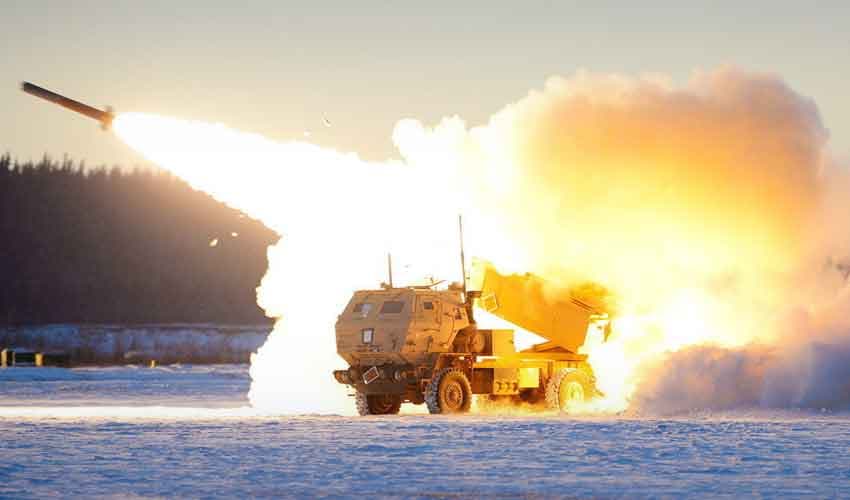
Discussions will include obtaining additional US-made Patriot interceptors and accelerating the deployment of the Franco-Italian SAMP-T air-defence system.
The allies will also examine how European and Ukrainian defence companies could jointly develop alternatives to existing anti-ballistic missile systems.
One option under consideration would involve several European countries cooperating on a new system that could complement Patriot and SAMP-T batteries.
Ukraine could be given a significant role in the development and production of such a system, supporting Kyiv’s efforts to expand its domestic defence industry.
Ukraine is critically short of ammunition for its existing air-defence platforms and has been largely unable to intercept Russian ballistic missiles during the past month.
Ballistic missiles travel at several times the speed of sound, making them more difficult to detect and destroy than many cruise missiles and drones.
Kyiv has repeatedly appealed to its Western partners for more Patriot interceptors and other advanced air-defence weapons.
It has also urged European countries to work with Ukrainian manufacturers on a domestically produced anti-ballistic missile system.
Kyiv expands strikes inside Russia
As Russian attacks on Ukrainian cities and infrastructure have intensified, Kyiv has increased its own long-range drone operations inside Russia.
Ukrainian forces have targeted oil facilities, weapons factories and other strategically important sites in an attempt to weaken Moscow’s economic and industrial ability to continue the war.
Ukraine now conducts thousands of drone strikes each day using a broad range of unmanned aerial and ground systems.
The country also produces millions of drones annually, making unmanned weapons a central feature of its defence strategy.
Allies consider further pressure on Russian revenues
Leaders in Paris will also discuss measures aimed at reducing the revenue Russia uses to finance its military campaign.
A key focus will be Moscow’s so-called shadow fleet, a network of tankers with unclear ownership and insurance structures that is used to transport Russian oil while avoiding sanctions and regulatory oversight.
The European Union is expected to adopt its 21st package of sanctions against Russia next week.
The measures are likely to complement wider Western efforts to restrict Russia’s energy revenues, military supply chains and access to technologies used in weapons production.
Macron promises new announcements
French President Emmanuel Macron has promised several announcements during Monday’s meeting. Some measures are expected to be bilateral and could include agreements on the joint production of weapons and military equipment.
Macron has also indicated that coalition members could announce joint military exercises intended to make plans for a future Multinational Force for Ukraine more credible and operational.
The proposed force, known as the MNFU, would form part of the security arrangements intended to support Ukraine after any eventual peace settlement.
A French presidency official said the force would include land, air, naval and training components.
All four pillars would be tested continuously and at different levels by participating countries to ensure that the proposed multinational force remained credible.
The official stressed that the planned exercises would not take place inside Ukraine.
Germany funds 50,000 attack drones
Germany is financing the purchase of 50,000 attack drones for Ukraine, according to a source familiar with the agreement. The order is believed to be one of the largest known drone purchases for Kyiv funded by a Western government.
It involves Shrike first-person-view drones manufactured by SkyFall, one of Ukraine’s leading drone producers. The drones will be equipped with technology developed by US defence company Auterion.
Auterion’s software enables the drones to autonomously track and strike moving targets during the final stage of their flight.
The autonomous capability is intended to allow the drones to continue identifying and approaching a target even when communication with the operator is disrupted.
Auterion chief executive Lorenz Meier confirmed that the contract covered 50,000 drones and was worth approximately €90 million, or $103 million.
Meier initially said the order was being funded by a European country. SkyFall later confirmed Germany’s involvement but said it could not discuss the details of the purchase.
Germany’s Defence Ministry declined to comment, citing operational security. Ukraine’s Defence Ministry also declined to provide details.
Meier said some of the drones had already been delivered to the Ukrainian government. The remaining units are expected to be dispatched during the current year.
Shrike drones gain international attention
The Shrike is a relatively low-cost attack drone that has been deployed by Ukrainian forces since 2023. It has recently gained greater attention outside Ukraine as Western militaries examine lessons from the extensive use of unmanned weapons during the conflict.
A version known as the Shrike 10-F, developed by SkyFall in partnership with British company Skycutter, recently topped the leaderboard during the first stage of a competition organised by the Pentagon.
The contest forms part of a $1.1 billion US initiative to acquire hundreds of thousands of one-way attack drones. One-way attack drones are designed to strike a target directly rather than return after completing a mission.
Auterion said its software was being used in several entries participating in the Pentagon-run competition.
Western govts fund 100,000 Auterion-equipped drones
Meier said Auterion was helping deliver a total of 100,000 drones to Ukraine this year in cooperation with several hardware manufacturers. The purchases are being financed by a number of Western governments.
The overall programme includes a $50 million Pentagon contract covering 33,000 drones.
Meier said all 33,000 drones purchased under the US contract had already been delivered to Ukraine. The German-funded order represents another major component of the wider 100,000-drone supply effort.
Germany’s purchase follows a major British commitment announced last month. Britain said it would supply 150,000 drones to Ukraine during the year.
The drones form part of a broader £752 million military assistance package, equivalent to approximately $1.01 billion.
The British and German commitments reflect the growing importance of inexpensive, rapidly produced drones in Ukraine’s effort to counter a larger Russian military.
They also demonstrate an increasing Western focus on buying weapons made by Ukrainian companies, allowing allies to support the country’s armed forces while strengthening its domestic manufacturing capacity.
Air-defence shortages remain urgent
Despite Ukraine’s expanding drone arsenal and recent shifts in battlefield momentum, its shortage of anti-ballistic missile interceptors remains one of its most urgent military challenges.
Patriot and SAMP-T systems are among the few Western platforms capable of intercepting certain types of Russian ballistic missiles.
However, the effectiveness of those systems depends on a steady supply of expensive interceptor missiles.
The Paris meeting is expected to test whether Ukraine’s partners are prepared to make additional commitments as Russia increases missile production and conducts increasingly complex combined attacks involving ballistic missiles, cruise missiles and drones.
Alongside efforts to develop new European systems, Kyiv is seeking immediate deliveries that could strengthen its defences before longer-term projects become operational.