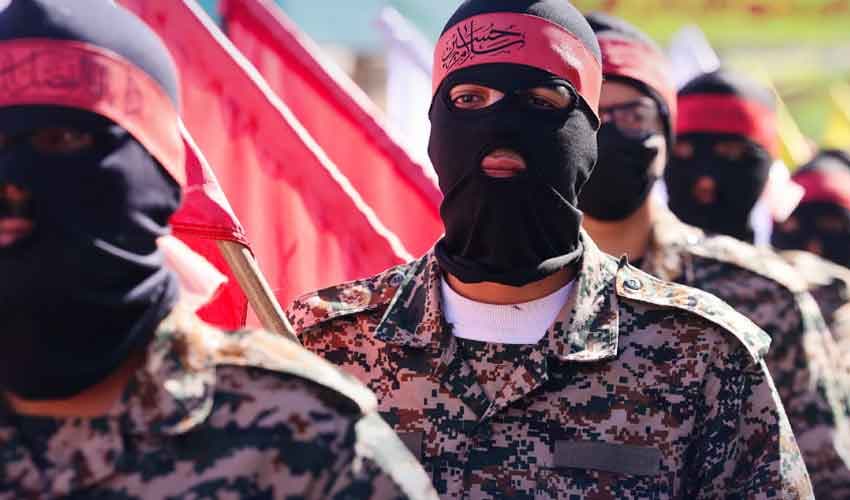
Britain banned support for Iran's Islamic Revolutionary Guard Corps and a linked group on Monday following a series of antisemitic attacks, using new powers designed to stop the use of state-sponsored proxies.
The government and intelligence agencies have become increasingly concerned about foreign powers paying organised crime groups or low-level criminals for surveillance, sabotage or other activities on their behalf.
The ban follows attacks on Jewish-linked sites in London, including the torching of four Jewish community ambulances.
"These new powers will make it easier to prosecute and lock up anyone carrying out their dirty work here in Britain," Prime Minister Keir Starmer said in a statement.
Britain said it had identified activity linked to the IRGC involving threats to life and intimidation on British soil, and that the group used proxy actors to advance Iranian state objectives overseas.
The government said the IRGC had "almost certainly" directed another group, The Islamic Movement of Companions of the Right, which Britain said had claimed seven attacks at locations in Britain linked to Jewish and Israeli communities, and Persian-language media.
Also Read: UK unveils £250m plan to protect Jewish communities
Iran, which is at war with the United States and Israel, has previously denied using proxies. The Iranian embassy in London did not immediately respond to a Reuters request for comment on the British government's latest action.
The new powers, similar to proscription, seek to close a gap in existing laws around state-linked actors and make it illegal to show support for those groups.
If the designations are approved by parliament, police and intelligence agencies will have new powers to tackle any threats linked to the groups and introduce new criminal offences. Anyone involved in acts of sabotage on behalf of designated groups could face life imprisonment.
Britain also designated the volunteer wing of Russia's GRU military intelligence service under the new powers. It said Russia was combining conventional military capabilities with "irregular and deniable forces" to project power abroad and undermine European and NATO security.
Russia did not immediately comment on the decision.