




Pakistan on Wednesday strongly condemned recent remarks made by Indian Prime Minister Narendra Modi, terming his speech as “provocative, irresponsible and a blatant violation of international norms.”
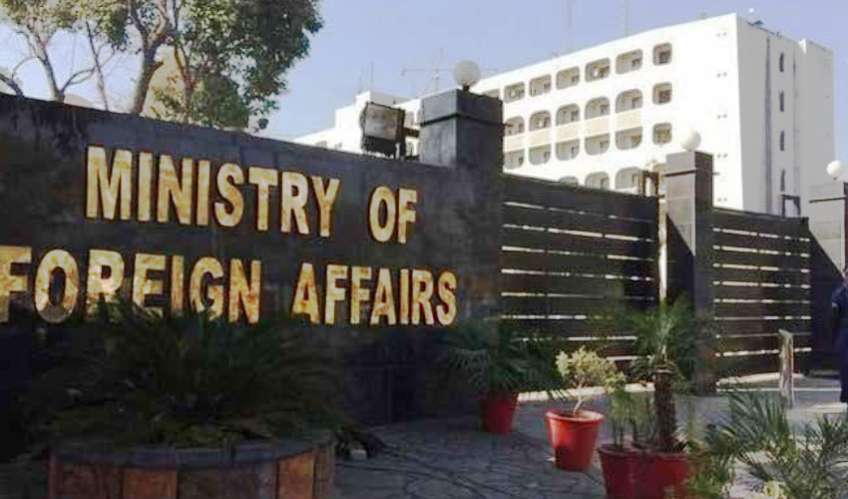
According to a statement issued by the Foreign Office, Spokesperson Shafqat Ali Khan said that Prime Minister Modi’s comments during a rally in Gujarat not only reflected “a dangerous mindset rooted in extremism” but also posed serious threats to regional peace and stability.
“The Indian Prime Minister’s speech is yet another reflection of India’s belligerent posture and expansionist ambitions. His comments about weaponising water are in direct violation of the Indus Waters Treaty and international law,” the spokesperson said.
He further stated that India should “examine its conscience” before pursuing global ambitions, alleging that New Delhi is engaged in extrajudicial killings and interference abroad, while continuing “state repression” in occupied Jammu and Kashmir.
The Foreign Office accused the Modi-led government of “promoting hatred against minorities” and “glorifying violence” for domestic political gains. “Such incendiary rhetoric from the Indian leadership has grave implications for regional security. The international community must take note of India’s increasingly aggressive behaviour,” the statement added.
During a campaign rally held in Chandigarh, Gujarat on Monday, Prime Minister Modi accused Pakistan of waging a proxy war against India and hinted at a harsher response. “India defeated Pakistan in three wars. But then it started a proxy war. Wherever it got the opportunity, it kept hitting us—and we tolerated it,” Modi told a charged crowd.
Raising the temperature further, the Indian premier rhetorically asked: “Should we respond to a bullet with a bullet? A brick with a stone? Should we not uproot this thorn?” He went on to suggest that the events of May 6, in which alleged militants were killed, marked a turning point. Modi claimed Pakistan gave state honours to the deceased, calling it an open declaration of war rather than a proxy conflict.
However, it was Modi’s comments on the Indus Waters Treaty that sparked alarm in Islamabad. He claimed that the Treaty signed in 1960 had severely constrained India’s rights over water usage and accused Pakistan of benefitting unfairly.
He further stated that Indian dams in occupied Jammu and Kashmir were deliberately not cleaned due to the treaty’s restrictions. “I’ve not done much yet. I’ve just said a few things and they [Pakistan] are already sweating,” Modi said, adding that India had begun cleaning its dams and would ensure its citizens receive their “rightful share of water.”
The Indus Waters Treaty, brokered by the World Bank in 1960, allocates the waters of the eastern rivers (Ravi, Beas, and Sutlej) to India and the western rivers (Indus, Jhelum, and Chenab) to Pakistan. The agreement is widely regarded as one of the most successful water-sharing accords in the world, having survived multiple wars and periods of heightened tension between the two nuclear-armed neighbours.
“India’s open threat to use water as a weapon and tamper with the Treaty is alarming,” the Foreign Office said, adding that Pakistan reserves the right to respond through diplomatic and legal channels. “We urge the international community and guarantors of the Indus Waters Treaty to hold India accountable.”
The spokesperson also warned that India’s brand of ultra-nationalist politics was endangering the future of its own youth. “By feeding the new generation a narrative of hate and militarism, India is not only destabilising the region but also destroying the prospects of peace and cooperation.”
The Foreign Office reiterated Pakistan’s commitment to peace and dialogue but stressed that “such overt threats cannot go unanswered.”