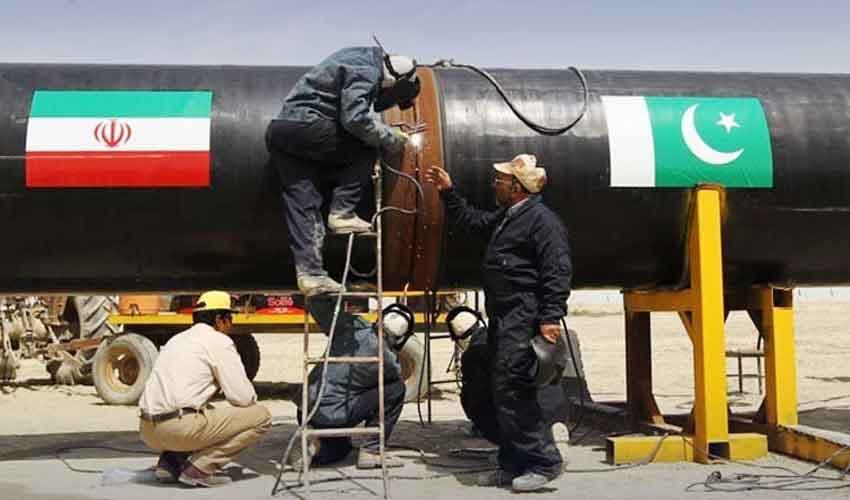
Pakistan and Iran have reaffirmed their commitment to raising bilateral trade to $10 billion, while agreeing to accelerate efforts to finalize a long-awaited Pakistan-Iran Free Trade Agreement (FTA).
The commitment came during the 10th meeting of the Pakistan-Iran Joint Trade Committee in Islamabad, where both countries also pledged to strengthen investment, connectivity, logistics, and private-sector cooperation.
The meeting was co-chaired by Federal Minister for Commerce Jam Kamal Khan and Iranian Minister for Industry, Mine and Trade Dr. Mohammad Atabak.
Senior officials from both countries reviewed the current state of bilateral trade and discussed practical measures to unlock the full economic potential of Pakistan-Iran relations.
Both countries reaffirm $10bn trade goal
During the meeting, Pakistan and Iran reiterated their commitment to increasing bilateral trade volume to $10 billion, underscoring their shared ambition to build a stronger and more sustainable economic partnership.
The two sides also reaffirmed their resolve to further enhance trade, investment, regional connectivity, and private-sector cooperation.
Jam Kamal said transforming Pakistan-Iran relations into a strong economic partnership is the need of the hour.
He stressed that both countries should move beyond traditional trade and work together to establish long-term economic cooperation based on mutual trust and shared opportunities.
Pakistan urges early completion of Free Trade Agreement
Jam Kamal emphasized the importance of finalizing the Pakistan-Iran Free Trade Agreement at the earliest, saying the agreement would help unlock new avenues for trade and investment.
He said early implementation of the FTA would further strengthen commercial relations and provide greater certainty for businesses on both sides of the border.
Removing trade barriers key priority
The commerce minister said obstacles related to border logistics, customs procedures, and cargo movement must be removed to facilitate smoother cross-border trade.
According to Jam Kamal, reducing these bottlenecks would improve efficiency, lower trade costs, and encourage greater business activity between the neighbouring countries.
He also said bilateral trade could grow significantly through the establishment of joint border markets and the introduction of electronic data interchange (EDI) systems. He noted that these measures would streamline customs procedures, improve transparency, and make cross-border trade more efficient.
Private sector ready to expand bilateral trade
The commerce minister said the private sectors of Pakistan and Iran are fully prepared to expand mutual trade.
He added that it is now the responsibility of both governments to provide a conducive, reliable, and business-friendly environment that enables companies and investors to strengthen commercial partnerships.
Jam Kamal expressed confidence that the Joint Trade Committee would prepare a workable roadmap to further deepen bilateral economic cooperation.
He said the roadmap would help both countries take their economic partnership to new heights through practical and result-oriented initiatives.
Iran calls Pakistan strategic long-term partner
Speaking at the meeting, Dr Atabak described Pakistan as Iran's long-term strategic trade partner, highlighting the importance Tehran places on strengthening economic relations with Islamabad.
He also expressed Iran's desire to expand regional trade and logistics cooperation through Karachi and Gwadar ports, calling them important gateways for future regional commerce.
The Iranian minister expressed hope that the Pakistan-Iran Free Trade Agreement would be completed soon, saying it would open new opportunities for businesses in both countries.
Dr. Atabak also highlighted electricity trade and regional connectivity as key sectors capable of creating new economic opportunities and strengthening bilateral cooperation in the years ahead.