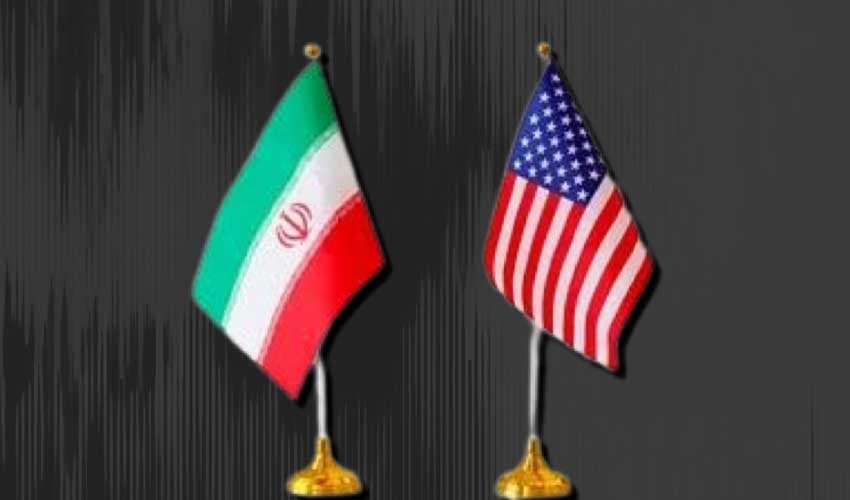
Iran has said it is not seeking to escalate tensions in the Middle East but will use all its capabilities to defend its national security, territorial integrity, and strategic interests, even as it rejected US claims that negotiations between the two countries have resumed.
The statements come after US President Donald Trump said he had paused planned military strikes against Iran and claimed fresh talks were underway, assertions that Tehran has firmly denied.
Iranian President Masoud Pezeshkian said the Islamic Republic does not want to fuel instability in the region but remains fully prepared to defend the country if threatened.
"The Islamic Republic of Iran does not seek to escalate tensions or instability in the region. However, it will act with its full capabilities to defend the country's security, national interests, and territorial integrity," Pezeshkian said in remarks carried by Iranian state media.
He made the comments as tensions remain high across the Middle East following months of military confrontation involving Iran, the United States and Israel.
Trump's claim of renewed negotiations
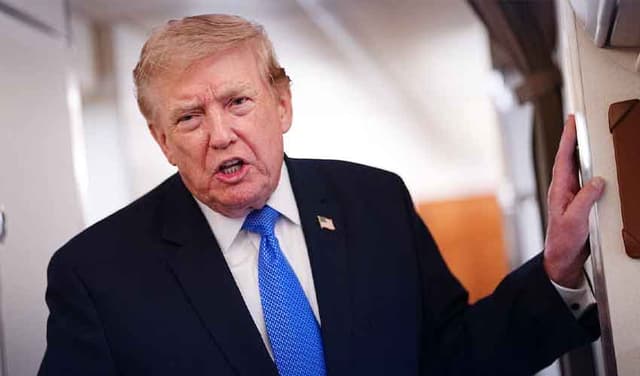
President Donald Trump recently said he had postponed new US airstrikes against Iran after requests from Tehran and Persian Gulf countries, including Saudi Arabia, Qatar and the United Arab Emirates, to allow more time for diplomacy.
Trump also claimed negotiations with Iran had resumed and described them as Tehran's "last chance" before further military action.
However, Iranian Foreign Ministry spokesman Esmail Baghaei dismissed the claim, saying no negotiations are taking place with the United States.
He said no American delegation is travelling to Tehran, no Iranian delegation is heading to Washington, and Iran's negotiating team remains inside the country.
Baghaei also clarified that the United States is not participating in any discussions regarding the Strait of Hormuz, adding that the only ongoing talks are with Oman over establishing a safe and temporary maritime route through the strategic waterway.
According to Baghaei, no new mediators have emerged, although regional countries continue efforts to reduce tensions.
Strait of Hormuz remains central issue
The Strait of Hormuz continues to dominate the dispute between Tehran and Washington.
Iran says it has maintained control of the strategic waterway since the early days of the US-Israeli military campaign and insists that discussions on Hormuz involve only Oman.
President Trump, meanwhile, has claimed that the US controls the Strait of Hormuz and has vowed not to allow Iran to charge ships for passing through the route.
The conflicting claims have added uncertainty to global energy markets, as the strait carries a significant share of the world's oil and liquefied natural gas shipments.
Araghchi warns of decisive response
Iranian Foreign Minister Abbas Araghchi also warned that Tehran would deliver a "decisive and proportionate" response to any future hostile actions by the United States or Israel.
He further warned that any regional country participating or cooperating in military action against Iran would also face consequences.
According to the Iranian account of events, the United States and Israel launched military attacks against Iran on February 28, targeting senior military commanders and Supreme Leader Ayatollah Ali Khamenei.
Iran says the conflict continued until April 8, when its military operations and continued control of the Strait of Hormuz forced its adversaries to accept a ceasefire.
Following the ceasefire, Tehran and Washington signed the Pakistan-mediated Islamabad Memorandum of Understanding on June 17, aimed at ending the conflict and establishing a lasting peace agreement.
However, Iran says Washington later violated the agreement by launching fresh strikes, triggering nearly two weeks of renewed exchanges of attacks between the two sides.
Iranian officials say the country's armed forces have since carried out heavy retaliatory strikes against strategic US targets across West Asia.
Pezeshkian discusses Gaza with Hamas chief
Separately, President Pezeshkian held a telephone conversation with newly elected Hamas leader Khalil al-Hayya.
According to Hamas, the two leaders discussed developments in Gaza and the occupied West Bank.
Pezeshkian reaffirmed Iran's continued support for the Palestinian people and congratulated Hayya on his election following the death of Yahya Sinwar, who was killed during fighting in southern Gaza in October 2024.
Hayya reiterated the Palestinian people's commitment to pursuing what Hamas described as their legitimate rights and expressed hope that attacks on Iran would end and regional stability would return.
The conversation came after the Board of Peace released a draft agreement outlining the next phase of President Trump's Gaza plan, covering security, governance and transitional arrangements for the enclave.
Mohsen Rezaei claims Iran prepared strikes on Ukraine
Former Islamic Revolutionary Guard Corps (IRGC) commander Major General Mohsen Rezaei said Iran had prepared to launch strikes against three locations in Ukraine following an attack on an Iranian vessel.
According to Rezaei, the operation was suspended after Kyiv said the attack had been a mistake and Tehran decided to examine Ukraine's explanation.
He said Iran still expects compensation, even if the incident proves to have been accidental.
US suffered setbacks
Rezaei claimed the United States suffered major military setbacks during what he described as Trump's third war against Iran.
He alleged that Washington planned a ground operation aimed at opening the Strait of Hormuz and targeting Iran's nuclear facilities by striking bridges, radar systems and military infrastructure.
According to Rezaei, US President Donald Trump ordered heavier attacks but American commanders informed him that maximum available military capabilities had already been used without achieving the desired objectives.
He also claimed Iran's missile and drone attacks forced the United States to relocate its regional command structure from Qatar to Jordan and later to Israel.
While he acknowledged Washington could still carry out limited military operations, Rezaei argued that any large-scale ground invasion had effectively become impossible.
Iran warns against new Hormuz corridor
Rezaei said Iran has consistently acted responsibly in the Strait of Hormuz but warned that Tehran would not permit the establishment of any second maritime corridor outside Iran's designated route.
He said any hostile naval vessel attempting to use what Iran considers an illegal passage would become a target.
According to Rezaei, increasing US naval deployments in the Persian Gulf could place American warships at greater risk.
Rezaei claimed Saudi Arabia had informed Tehran it was not involved in attacks against Iraq, adding that Iranian authorities are reviewing the matter.
He also warned that continued US military pressure in West Asia could increase the risk of a broader international conflict, arguing that the region now carries greater escalation potential than Europe before the Second World War.
Despite his warnings, Rezaei insisted Iran is not seeking to expand the conflict and remains committed to diplomacy if the United States changes its approach and honours its commitments.
Call for economic reforms
Alongside security issues, Rezaei urged greater public participation in Iran's economy.
He argued that sanctions relief alone would not deliver economic growth and called for structural reforms, fewer state controls and stronger private-sector involvement.
According to Rezaei, Iran could generate nearly $100 billion annually through improved efficiency and better use of domestic resources, provided the public plays a larger role in economic development.