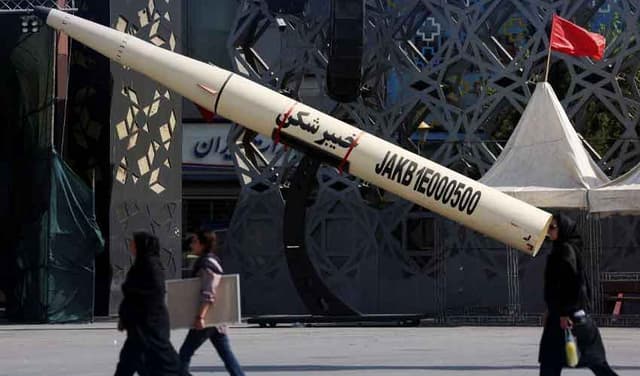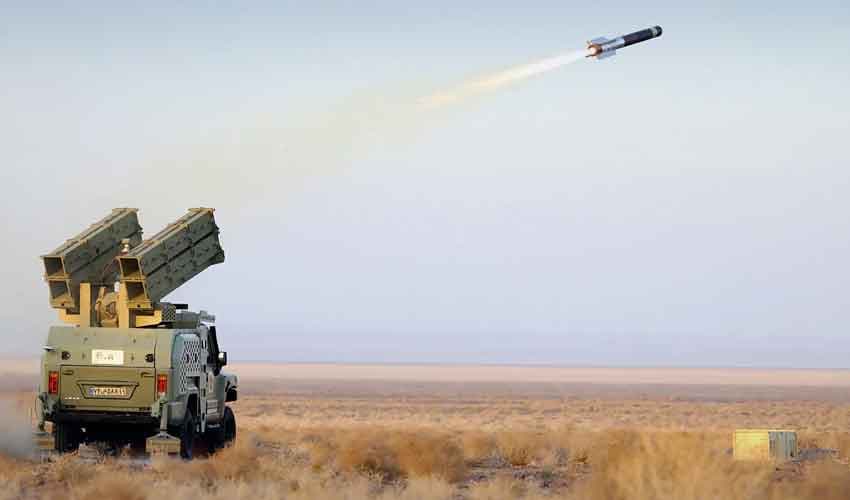
Iran’s Islamic Revolutionary Guard Corps said it targeted a US airbase in Jordan with ballistic missiles on Tuesday, marking another expansion of the regional conflict as American forces completed a third consecutive night of strikes against Iran.
Jordan’s armed forces said they intercepted and destroyed four missiles that entered the kingdom’s airspace from Iranian territory.
The IRGC said ballistic missiles were launched at an airbase in Jordan that hosts American military personnel.
In a statement carried by Iran’s Fars News Agency, the Revolutionary Guards stressed that their target was not Jordan or its people, but US military facilities located inside the kingdom.
Iran said the attack was carried out in response to recent actions by American forces.
The IRGC called on Jordanians to raise their voices against the presence of US military bases and demand their removal from the country.
Jordan intercepts four Iranian missiles
Jordan’s armed forces said on Tuesday that its air defences intercepted and shot down four missiles that entered Jordanian airspace from Iranian territory.
The announcement was reported by Jordan’s state news agency.
No casualties or damage were immediately reported, and it was not clear whether any of the missiles reached their intended target.
IRGC addresses Jordanian people
In its message, the Revolutionary Guards said Iran had no hostility towards Jordan or the Jordanian people.
“You know very well that not only do we not have any enmity with your country, but we also love you, the noble people, who understand the pain and oppression of the Palestinian people more than any other nation,” the statement said.
The IRGC said it held the Jordanian people in the highest regard and wished for the prosperity and dignity of the kingdom.
“Our target is not the people of Jordan, but the American military bases,” the group said.
Iran links attack to Gaza war
The Revolutionary Guards praised Jordanians for expressing solidarity with Palestinians during the Gaza conflict. The IRGC claimed that more than 70,000 Palestinians, including 20,000 children, had been killed in Gaza.
Also Read: US renews strikes on Iran as tankers attacked in Strait of Hormuz
It accused Israel and the United States of being equally responsible for what it described as the massacre of Palestinians.
The group said the Jordanian public had repeatedly demonstrated in support of Gaza and understood Palestinian suffering better than many other nations.
IRGC urges removal of US bases
The Iranian force called on Jordanians to demand the dismantling of American bases on their soil. It argued that removing US military facilities would help the Palestinian people and contribute to peace and stability across the region.
According to the statement, public pressure from Jordanians could make it possible to support Palestinians and help restore regional peace.
“The glory of Jordan is our desire,” the IRGC said.
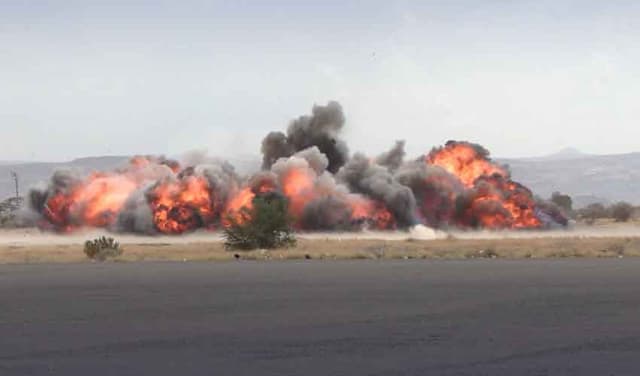
The Iranian missile launch came as US forces completed their latest wave of attacks against Iran.
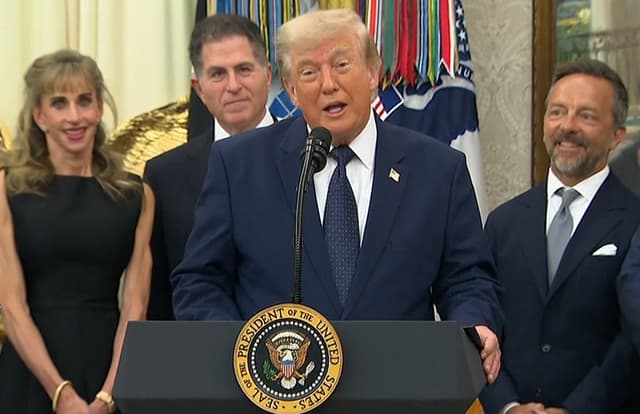
US Central Command said the five-hour operation began earlier on Tuesday at the direction of President Donald Trump. It marked the third consecutive night of American strikes against Iranian targets.
Iranian media reported attacks on several cities and said four people had been wounded. Rescue operations were said to be underway.
Also Read: Iran calls Hormuz management a red line
Trump had warned in a Monday interview with radio host Hugh Hewitt that Iran would face further intense military action.
“We’re going to hit them very hard tonight, and we’re going to hit them hard tomorrow. And there’s not a damn thing they can do about it,” Trump said.
The US president maintained that Tehran lacked the capability to stop the attacks.
The escalation followed Iran’s weekend announcement that it was closing the Strait of Hormuz, casting further doubt on an interim agreement intended to halt the war.
Trump reinstates Iranian shipping blockade
Trump also announced that Washington was reinstating its blockade of Iranian shipping.
“The Hormuz Strait is OPEN, and will remain OPEN, with or without Iran. We are reinstating THE IRANIAN BLOCKADE,” he wrote on Truth Social.
Trump declared that the United States would become the “guardian” of the Strait of Hormuz.
“The U.S.A. will be, from this point forward, known as ‘THE GUARDIAN OF THE HORMUZ STRAIT’, but as such, and as a matter of FAIRNESS, will be reimbursed, at the rate of 20% on all cargo shipped,” he said.
Also Read: Trump warns of hitting Iran 'hard'
Iran’s top joint military command rejected Trump’s statement and said the United States had no role in determining the future of the strategic waterway.
Iranian Foreign Minister Abbas Araqchi wrote on X that Tehran was the true guardian of the strait and would remain so “forever”.
Responding to Trump’s proposed 20% fee, Araqchi said: “20% is of course too much. We will be fair.”
UN agency opposes proposed Hormuz fee
The United Nations shipping agency opposed Trump’s proposed fee on vessels passing through the Strait of Hormuz. It said there was no legal basis for imposing mandatory tolls on ships using straits designated for international navigation.
Before the conflict began in February, around one-fifth of the world’s oil and gas traffic passed through Hormuz each day.
More than 15 million barrels of fuel, worth at least $1.2 billion, moved through the waterway daily.
A 20% US fee could generate approximately $240 million each day, although it remains unclear how Washington would impose or collect the charge.
Oil prices rise amid supply fears
Oil prices rose nearly 3% on Tuesday, reaching their highest level in four weeks. The increase followed the reinstatement of the US naval blockade and fresh attacks in and around the Strait of Hormuz.
The renewed violence added to uncertainty over energy supplies and the safety of commercial shipping through the strategic passage.
UAE says Iranian missiles struck two tankers
The UAE Ministry of Defence said Iranian cruise missiles struck two Emirati oil tankers while they were travelling through the southern lane of the Strait of Hormuz in Omani territorial waters.
The ministry did not provide additional details in the report about casualties or damage.
Separately, the United Kingdom Maritime Trade Operations agency said a tanker had been struck by an unknown projectile about 40 nautical miles northeast of Qalhat, Oman.
Also Read: One killed as UAE says Iran struck oil tankers in Strait of Hormuz
Reuters could not immediately determine whether the UKMTO report concerned the same incident reported by the UAE.
The Revolutionary Guards said two “offending” supertankers had been struck and disabled in the Strait of Hormuz.
Iranian media cited the IRGC as saying that the vessels ignored repeated warnings, switched off their navigation systems and attempted to use a route described by Tehran as illegal.
The statement did not identify the tankers or clarify whether they were the same vessels mentioned by the UAE.
The Guards accused the United States of encouraging ships to use an “illegal route”.
They warned that cooperation with the “aggressor enemy” would result in damage, delays in reopening the strait and a global energy crisis.
US blockade covers Iranian coastline
The US Navy-led Joint Maritime Information Center said the blockade of Iran would take effect at 2000 GMT on Tuesday. It said the measure would apply to vessels of all flags and cover Iran’s entire coastline, including ports and oil terminals.
The centre said neutral vessels travelling through the Strait of Hormuz to or from non-Iranian destinations would not be prevented from passing.
Humanitarian shipments would also be permitted, although they would be subject to inspection.
The current war began on February 28, when the United States and Israel launched attacks against Iran. Iran responded with strikes against Israel and Gulf countries hosting American military bases.
US-Israeli attacks on Iran and Israeli strikes in Lebanon have killed thousands of people and displaced millions during the conflict.
The Iranian missile launch towards Jordan signals that the confrontation is spreading further across the region, with American bases in multiple countries increasingly becoming targets.