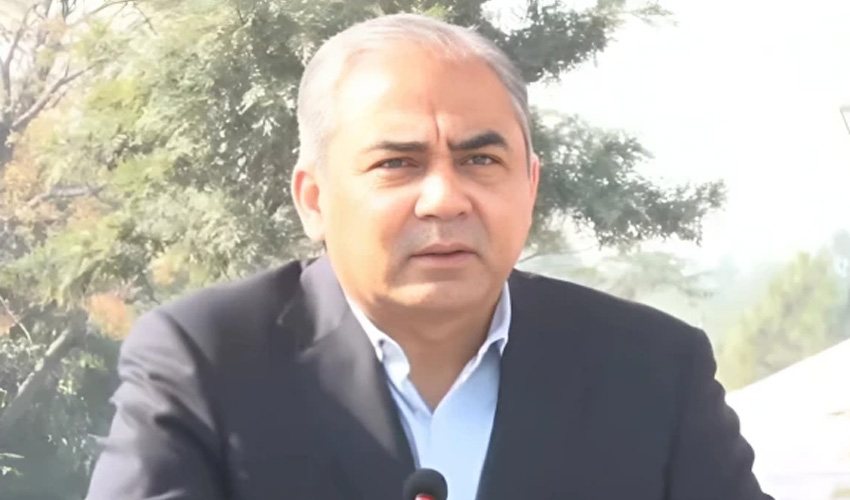





Pakistan’s former foreign minister and head of the diplomatic mission, Bilawal Bhutto-Zardari, has called for cooperation between Pakistan and India to combat terrorism, suggesting that intelligence agencies from both countries should work together to significantly reduce terrorist threats in the region.
Speaking at a press conference at the United Nations Headquarters, Bilawal emphasized that the future of 1.5 billion people in South Asia should not be left at the mercy of non-state actors and extremists.
“If ISI and RAW sit together, terrorism can be reduced significantly,” he said, adding that Pakistan is still willing to cooperate with India in fighting terrorism.
In a strongly worded critique, Bilawal also referred to Indian Prime Minister Narendra Modi as a "cheap copy of Netanyahu", accusing the Indian government of mimicking the aggressive policies of the Israeli leadership.
“Unfortunately, India is imitating everything that’s wrong,” Bilawal remarked, claiming that India is following in the footsteps of the Israeli government.
Bilawal further made a passionate appeal to the international community to intervene for peace as tensions rise dangerously between Pakistan and India.
"Every responsible country must play its role to preserve peace. Peace in the world is in everyone's interest. War between Pakistan and India brings loss to all." He condemned recent Indian aggression and described statements by Indian Prime Minister Narendra Modi as “irresponsible, condemnable, and a sign of political desperation.”
"Modi’s statements are condemnable. No world leader speaks in this manner. His remarks reflect pettiness and frustration. At this point, everyone in the world is a superpower. Modi is the first Indian prime minister to lose a war. We have shot down six Indian aircraft," he remarked.
Bilawal highlighted Pakistan’s success in combating terrorism at home, stating: "We have achieved major victories against terrorism within our borders. We have decided there should be no place for such organizations and will defeat terrorist organizations once again." He added that the unchecked spread of weapons left behind by the US in Afghanistan had fuelled instability in the region.
On the second day of the diplomatic outreach, @BBhuttoZardari, former Foreign Minister and head of the high-level parliamentary delegation, interacted with the New York-based Pakistani media. He apprised them of his meetings with the UN leadership as well as permanent… pic.twitter.com/byyq73z8F9
— Permanent Mission of Pakistan to the UN (@PakistanUN_NY) June 4, 2025
He also pointed to the evidence of Indian involvement in sponsoring terrorism inside Pakistan. The former minister said Pakistan was a responsible state and that no Pakistani would ever support terrorism against India. He stressed Pakistan’s moral clarity on terrorism: "We condemn terrorist attacks in India too. We've suffered more than most in fighting terrorism."
Bilawal criticized India for its aggressive posture, stating, “One country is calling for talks, while the other threatens to cut off water. India has been exposed before the international community.”
Referring to India’s recent threats, the head of Pakistan’s diplomatic mission said, “We are ready. If India wants to fulfill its aggressive ambitions, let it try. Our armed forces will respond in the same decisive manner as before.”
Bilawal strongly condemned India’s actions regarding the Indus Waters Treaty, saying, “India is the one violating the treaty, not Pakistan. Water scarcity causes immense damage, and India will be morally compelled to implement the treaty in good faith.”
He questioned the global silence over Indian violations: “Which country will hold India accountable on the water issue and take the right stand?”
Addressing Pakistan’s internal efforts, he said, “We are presenting the government's stance with a united front. Members of parliament, including the opposition, will be part of the delegation. We aim to engage India in dialogue on both water issues and terrorism.”
Rising tensions after Pahalgam attack
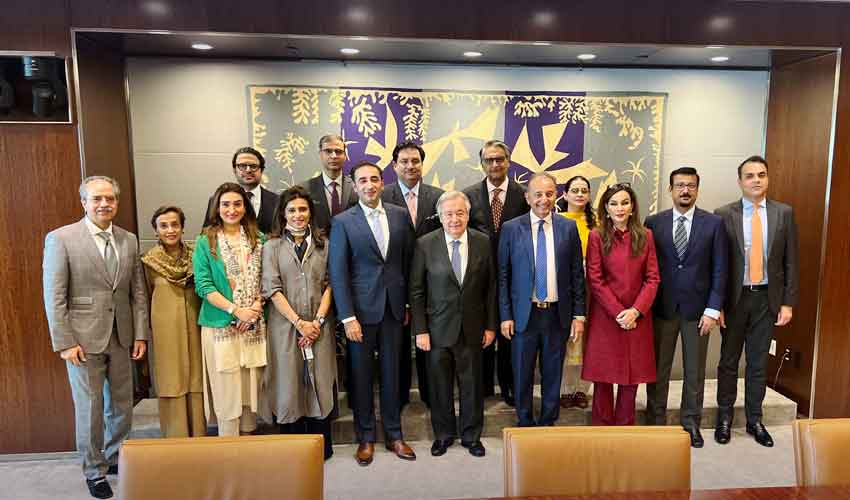
Earlier, Bilawal led a parliamentary delegation to meet UN Secretary-General António Guterres, where he formally handed over a letter from the prime minister of Pakistan detailing the country’s position following the Pahalgam attack.
He strongly rejected India’s baseless and premature accusations against Pakistan without any credible investigation and cautioned that India’s unilateral military posturing could threaten regional stability, especially in a nuclearized South Asia.
“We are committed to the principles of the UN Charter, the right to self-defense, and the respect for international law,” Bilawal stressed. “India’s behaviour risks escalating into a major conflict,” he warned.
Press Release
— Permanent Mission of Pakistan to the UN (@PakistanUN_NY) June 4, 2025
High-Level Parliamentary Delegation of Pakistan Meets UN Secretary-General to Advance Peace and Stability in South Asia
United Nations, June 3, 2025 — The high-level parliamentary delegation of Pakistan, led by Chairman of the Pakistan People’s Party and former… pic.twitter.com/GP5ywlc3GZ
He also requested the UN secretary general to take an active role in restoring the Indus Waters Treaty, terming India’s actions as the imposition of a water war on Pakistan.
'Pakistan wants peace, dialogue, not conflict'
Bilawal reiterated Pakistan’s firm stance on pursuing peace and dialogue with India, saying, “Pakistan’s position is clear — we seek peace and negotiations.”
Reaffirming Pakistan’s commitment to international law and the UN Charter, Bilawal said, “But peace is impossible without resolving the Kashmir issue. The right of Kashmiris to self-determination must be respected.” He also emphasized that Pakistan’s forces are ready to respond decisively if provoked, but insisted that “diplomacy must remain the first option.”
International community responds
Secretary General António Guterres welcomed Pakistan’s desire for peace and reaffirmed the United Nations’ full commitment to promoting peace and stability in South Asia. “The UN will continue to support all efforts aimed at reducing tensions and pursuing peaceful conflict resolution,” Guterres stated.
Pleased to meet with the delegation from Pakistan, led by Mr. Bilawal Bhutto Zardari, former Foreign Minister of Pakistan.
— UN GA President (@UN_PGA) June 3, 2025
I stressed the importance of dialogue and negotiations to resolve conflicts peacefully in line with the UN Charter and international law. pic.twitter.com/4b0YMzBr5K
Meeting with UNGA president
Bilawal also met with the president of the United Nations General Assembly, Philemon Yang, in New York, where he raised serious concerns over India’s increasing aggression and negative propaganda campaign against Pakistan.
He urged the international community to play an active role in restoring the Indus Waters Treaty, warning that its suspension could lead to grave humanitarian consequences and potentially spark future water wars in the region. “Suspending the treaty sets a dangerous precedent,” he said, adding that dialogue and diplomacy are the only path to peace.
Philemon Yang reaffirmed the UN’s stance, emphasizing the importance of upholding the UN Charter and international law as guiding principles for global peace.