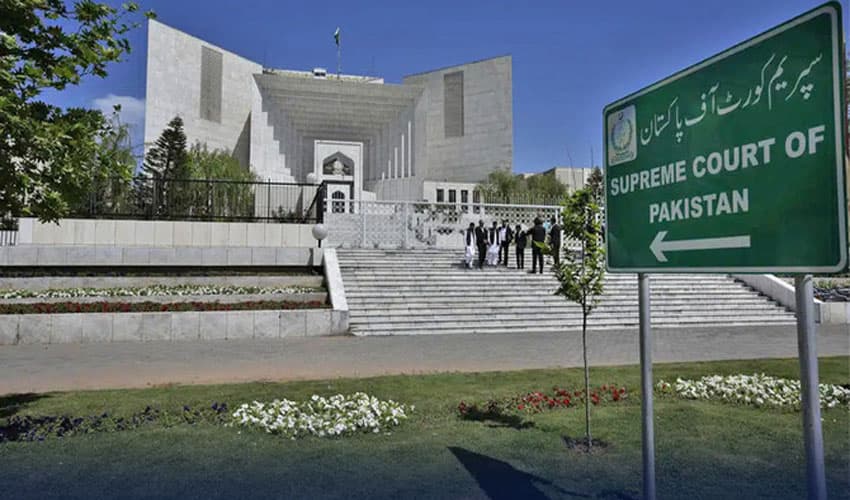
The Supreme Court has set aside a Sindh High Court decision in a case involving the employment of children of deceased employees of the National Bank of Pakistan, calling delays and policy violations unjust.
The Supreme Court nullified the ruling issued by the Sindh High Court, which had earlier rejected the constitutional petition.
The apex court held that the High Court decision was not sustainable in light of the facts and applicable policy framework.
The court directed the president of the National Bank of Pakistan to decide the pending petitions within three months. It ordered that the petitions filed in 2019 and 2022 must be considered strictly under the policy that was in force at the time they were submitted.
Delay in deciding petitions criticised
The Supreme Court noted that the petitions had remained pending for years without any decision or response from the bank.
Such prolonged inaction, the court observed, amounted to a denial of justice to the affected families.
The court clarified that unless a judgement expressly states otherwise, judicial decisions apply prospectively, not retrospectively. Since the 2011 policy governing employment of children of deceased employees was in force at the time of filing, decisions must be made accordingly.
Violation of justice principles
The apex court ruled that failure to follow the relevant policy regarding children of deceased employees runs contrary to the principles of justice. It emphasised that dependents of deceased employees cannot be denied consideration through administrative delays or misapplication of later policies.
The Sindh High Court had earlier dismissed the constitutional petition by relying on the General Post Office case. However, the Supreme Court found that this reliance did not justify ignoring the applicable policy and prolonged inaction.
Bench and judgement details
The verdict was delivered by a three-member bench headed by Justice Muhammad Ali Mazhar. The ruling provides clear guidance on timely decision-making and adherence to policies in compassionate employment cases.