




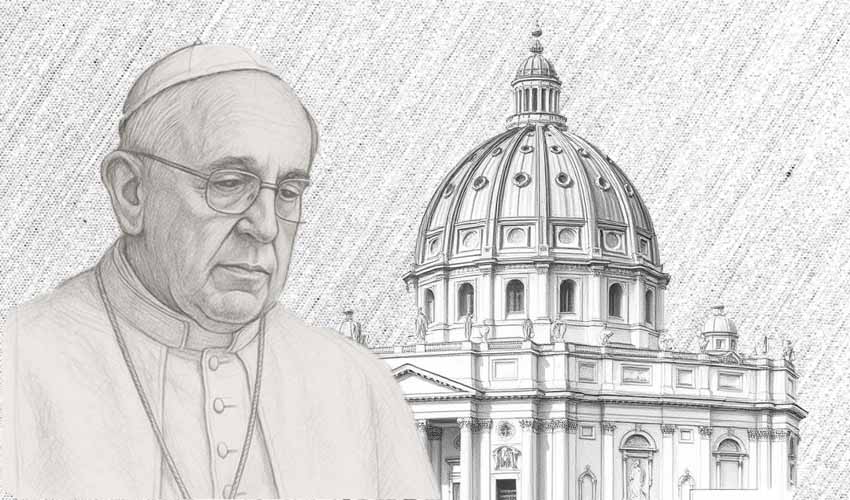
Pope Francis is gone. His demise is indeed a great loss not only for the Catholic community but for the entire world, especially Muslims. He was unlike any pope before him in more ways than one can count, and set precedents that might be difficult to match in times to come.
Throughout 4,422 days of his pontificate, Pope Francis remained down-to-earth and spread among the masses the message of closeness – not just to God but also to His people, especially the poor and displaced. His approach was rooted in humility and bridge-building, which allowed him to achieve what most of his predecessors could not.
Hailing from Argentina, he broke the Eurocentric tradition of the papacy by becoming the first non-European Pope in more than 12 centuries. Another beautiful thing about him was that he was more a listener than a speaker. While others before him looked at the world from Rome, he looked at Rome from the world. He was the first in a long time to admit Church failings.
Being the first Jesuit pope, he dispelled the impression that members of the Order are mere scholars and activists who have no role in Church politics. His humility could be gauged by the fact that instead of living in the Apostolic Palace, he chose to reside in the Casa Santa Marta guesthouse.
No pope before him had ever spoken so bluntly about the hypocrisy of the powerful, for he criticized capitalism, Western nationalism, and environmental destruction. Most importantly, where his predecessors policed morality, Pope Francis prioritized mercy and interfaith harmony
Another thing that set him apart was that he considered himself the “bishop of Rome” and not the “supreme pontiff”. He called injustice by its name. No pope before him had ever spoken so bluntly about the hypocrisy of the powerful, for he criticized capitalism, Western nationalism, and environmental destruction. Most importantly, where his predecessors policed morality, Pope Francis prioritized mercy and interfaith harmony.
Francis was the first pope to visit Iraq. His meeting with Grand Ayatollah Ali al-Sistani in Najaf sent a powerful message of Shia-Catholic respect. Over in Egypt, he stood with Al-Azhar Grand Imam Ahmed el-Tayyeb to revive interfaith ties. Earlier, in the UAE, he signed the Document on Human Fraternity, which marked a rare joint stand against extremism and sectarianism. He also visited several other Muslim countries not only to promote the message of peace but to defend Islam as a religion of peace – something unusual for a pope and even more difficult when Islamophobia was prevalent. As the world began to slide back into religious polarization, digital hate, and ideological warfare, he was a much-needed pause.
Pope Francis leaves behind a legacy of mercy, tolerance, and Islamophilia. With his departure, the world has lost yet another voice in the West that Muslims could trust.
It is doubtful that the next pope would carry forward his mission with the same clarity. He was indeed the manifestation of moral courage, and his absence will be felt. Not just in Rome but across the Muslim world.