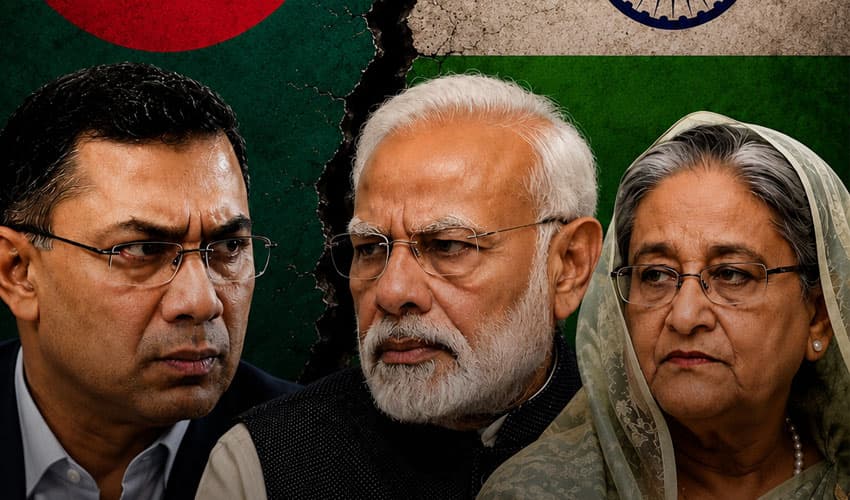
Bangladesh has lodged a strong protest with India after former prime minister Sheikh Hasina addressed a media gathering in New Delhi, describing the move as an affront to its sovereignty and a potential source of tension in bilateral relations.
In a statement issued on Wednesday, Bangladesh's Ministry of Foreign Affairs said it was deeply disappointed that Sheikh Hasina, whom it described as a fugitive former prime minister, was allowed to speak publicly despite Dhaka having conveyed its objections to the Indian government beforehand.
The reaction followed a media session hosted by the Foreign Correspondents' Club of South Asia in New Delhi, where Sheikh Hasina addressed journalists.
According to the ministry, Hasina made what it described as "venomous remarks" against Bangladesh, its people and state institutions during the event.
Government rejects Hasina's claims
The Bangladeshi government noted that the media event coincided with the second anniversary of the July Revolution, saying Hasina's appearance in India was an insult to those who lost their lives during the anti-government movement.
Dhaka also rejected Hasina's account of the July and August 2024 crackdown, saying her claims contradicted the findings of a United Nations investigation and other established facts.
The ministry said the people of Bangladesh had rejected the previous political order and would not allow the country to return to that era.
Extradition issue raised
Bangladesh also criticised India for not responding to its requests to extradite Sheikh Hasina under the 2013 extradition agreement between the two countries.
The statement said Bangladesh remained committed to maintaining positive relations with India based on mutual respect, equality, non-interference and respect for sovereignty, but warned that such developments could negatively affect bilateral ties.
Sheikh Hasina has been living in India since leaving Bangladesh following the collapse of her government in August 2024.
Bangladesh says she has since been convicted in cases related to crimes against humanity. According to the United Nations, around 1,400 people were killed and thousands more injured during the 2024 mass protests.