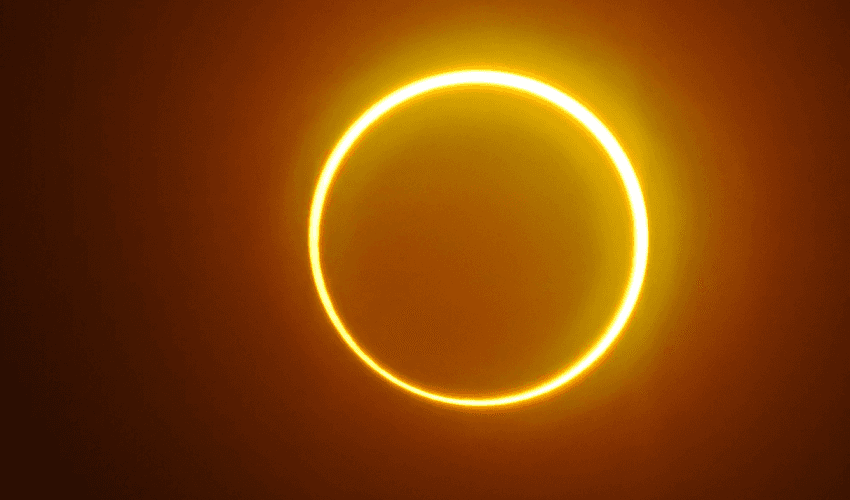
Skywatchers across parts of the Northern Hemisphere are set to witness a spectacular total solar eclipse on August 12, when the Moon will pass directly between the Earth and the Sun, temporarily plunging parts of the world into daytime darkness.
The eclipse's path of totality will stretch across eastern Greenland, western Iceland, northern Russia, the Atlantic Ocean, northern Spain and a small part of Portugal. At its maximum, totality will last up to two minutes and 18 seconds.
During totality, observers along the eclipse's path will experience darkened skies, a noticeable drop in temperature and a rare opportunity to view the Sun's outer atmosphere, or corona.
Where will the eclipse be visible?
Outside the path of totality, millions will still witness a partial solar eclipse.
People in Ireland and the United Kingdom are expected to see up to 96% of the Sun obscured by the Moon.
Large parts of Europe, including Belgium, France, northern Italy and Switzerland, will also experience a dramatic partial eclipse, with up to 95% of the Sun covered.
Observers in Morocco, Algeria and neighbouring parts of North Africa will see a significant partial eclipse, while parts of northern Canada, Alaska and the northeastern United States will witness a smaller partial event.
How to watch online
For viewers outside the eclipse visibility zone, NASA will livestream the event through its official digital platforms beginning at approximately 1:15 p.m. EDT (5:15 p.m. UTC) on August 12.
Safety precautions
Experts warn that looking directly at the Sun without proper eye protection can cause permanent eye damage.
Observers should wear ISO 12312-2 certified solar eclipse glasses throughout the eclipse, except during the brief period of totality if they are located directly within the path of total eclipse.
Ordinary sunglasses do not provide adequate protection.
Anyone using cameras, telescopes or binoculars should ensure the equipment is fitted with approved solar filters.
For those without eclipse glasses, NASA recommends indirect viewing methods, such as using a pinhole projector, to safely observe the event.