The conflict between the United States and Iran appears set for another dangerous escalation after President Donald Trump reportedly ordered fresh military strikes that could begin as soon as this weekend.
As Washington signals tougher action, Iran has warned it is prepared to respond with force across the region.
US President Donald Trump has ordered the American military to launch a fresh round of attacks on Iran that could begin as early as this weekend and continue for several days, according to The Wall Street Journal, which cited unnamed US officials.
The report said the planned strikes are intended to pressure Tehran into returning to negotiations and accepting US demands, particularly regarding its nuclear program.
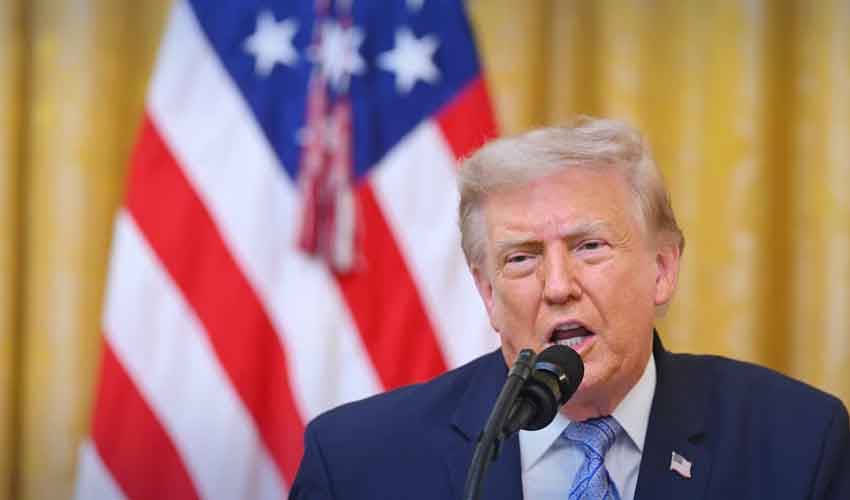
During a Cabinet meeting at the Camp David presidential retreat in Maryland on Friday, Trump signaled that more military action was imminent.
"We'll be hitting them very hard," Trump told reporters, adding that if Iran came under enough pressure, the leadership would eventually conclude, "We just can't take it anymore."
He also said the United States would continue striking until Iran agreed to abandon its nuclear ambitions, arguing that the Iranian government would eventually "peter out" under sustained military pressure.
Trump questions diplomacy with Tehran
Trump cast further doubt on the future of negotiations with Iran, saying he was losing confidence in Tehran.
"I’m losing faith in them because they do lie and do misrepresent," the US president said, while maintaining that a deal with Iran remains possible despite deteriorating trust.
He also claimed that the United States currently has the upper hand in the conflict and announced that military operations would continue.
According to Trump, Iran is facing severe difficulties, making this an opportunity to increase pressure on the country.
The latest reported military plans come after an Iranian attack on US troops stationed in Jordan and a subsequent American retaliatory strike carried out earlier this week.
Also Read: Trump claims Iran’s military capabilities 'severely weakened'
The Wall Street Journal said the new campaign could begin before the weekend ends, while another US official told Axios that Trump is seriously considering attacks on Iranian energy infrastructure but has not yet issued final authorization.
According to Axios, the objective of targeting energy and infrastructure facilities would be to force Iran to accept US terms in ongoing ceasefire negotiations.
Energy infrastructure among potential targets
CBS News separately reported that Washington is considering strikes on oil refineries, power plants and other energy infrastructure, marking a significant escalation in the military campaign.
The report added that Israel could participate in the operation for the first time in several weeks, raising the possibility of coordinated US-Israeli military action against Iran.
If carried out, such attacks would likely trigger Iranian missile strikes against Israel, according to Axios.
CBS also reported that some White House aides expressed strong objections to the proposed military campaign during Friday's Cabinet meeting.
Advocacy groups have warned that deliberate attacks on civilian infrastructure could constitute war crimes under international law.
Also Read: Iraq operation targeted Iran-backed armed groups: Saudi Arabia
The Pentagon refused to comment directly on reports of imminent strikes.
A Defense Department spokesperson said the military would not discuss potential targets before President Trump makes a final decision but stressed that US forces are prepared to act immediately upon presidential orders.
White House Press Secretary Karoline Leavitt also declined to confirm reports of an impending assault. However, she reiterated that "Iran will continue to pay until they come to the table in what President Trump deems a meaningful way."
She later added that, as Trump told his Cabinet, "The United States will win, and Iran will not have a nuclear weapon under his watch."
Trump highlights broader foreign policy issues
During the same Cabinet meeting, Trump described the agreement to disarm Hamas as an important step for the Middle East.
He also addressed the war in Ukraine, saying both sides would need to make concessions if peace efforts were to succeed.
US Treasury Secretary said Washington is continuing efforts to locate Iranian assets around the world. According to the Treasury chief, any recovered funds would ultimately be used for the welfare of the Iranian people.
Iran warns of sweeping retaliation
Iran's response has been equally forceful. The Islamic Revolutionary Guard Corps (IRGC) pledged further retaliation following recent US attacks, signaling that prospects for a political settlement have become increasingly remote.
Tasnim News Agency, which is affiliated with the IRGC, quoted a senior Iranian security official as calling potential US strikes on Iranian infrastructure "an act of madness."
The official warned that Tehran has prepared a comprehensive retaliation plan that includes attacks on Israel's critical infrastructure and US energy facilities across the region.
Tehran says regional targets within missile range
Mohammad Baqer Zolqader, Secretary of Iran's Supreme National Security Council, warned that if the United States and Israel launch fresh attacks, Iran will respond with full force. He said American military installations in Arab countries, along with Israel's energy infrastructure, would become targets.
Also Read: Ghalibaf accuses US over Qeshm attack: 'Will pay the price'
According to Zolqader, sites in Saudi Arabia, the United Arab Emirates, Qatar, Kuwait and Israel are all within range of Iranian missiles. He specifically identified Israel's Leviathan and Tamar gas fields as potential targets.
"We are people like you. We will do whatever you do," he said, emphasizing Iran's readiness to respond in kind.
Iran threatens tighter Strait of Hormuz restrictions
Iran also warned that further American military action would lead to even tighter restrictions around the Strait of Hormuz.
Zolqader said a prolonged US blockade would affect other major international waterways as well. He cautioned that disruptions to maritime trade would have serious consequences for the global economy and even impact American voters.
Meanwhile, the US Central Command (CENTCOM) said its forces continue to enforce the naval blockade on Iranian ports introduced in mid-July.
According to CENTCOM, as of July 31, US forces had rerouted 30 commercial vessels, disabled two ships and boarded two others to verify compliance with blockade measures.
The command added that approximately 30 vessels had been allowed through the blockade zone to deliver humanitarian assistance.
Oil prices rise on escalation fears
Financial markets reacted quickly to reports of possible attacks on Iranian energy infrastructure.
US benchmark West Texas Intermediate (WTI) crude rose above $86 per barrel in post-settlement trading after CBS reported Washington was weighing strikes on Iran's oil and power facilities.
The war, which began on February 28 with large-scale US and Israeli airstrikes on Iran, has now entered its sixth month with no clear end in sight.
The conflict has depleted US military stockpiles, particularly air-defense interceptors used to protect American bases. It has also triggered unintended regional consequences.
Iran effectively sealed much of the Strait of Hormuz, disrupting shipments of oil, natural gas and fertilizers, while missile and drone attacks on Gulf countries have interrupted business activity and daily life throughout the region.
Israeli Prime Minister Benjamin Netanyahu's recent visit to Washington, where he met President Trump and US Defense Secretary Pete Hegseth, has further fueled speculation about closer military coordination between the United States and Israel.