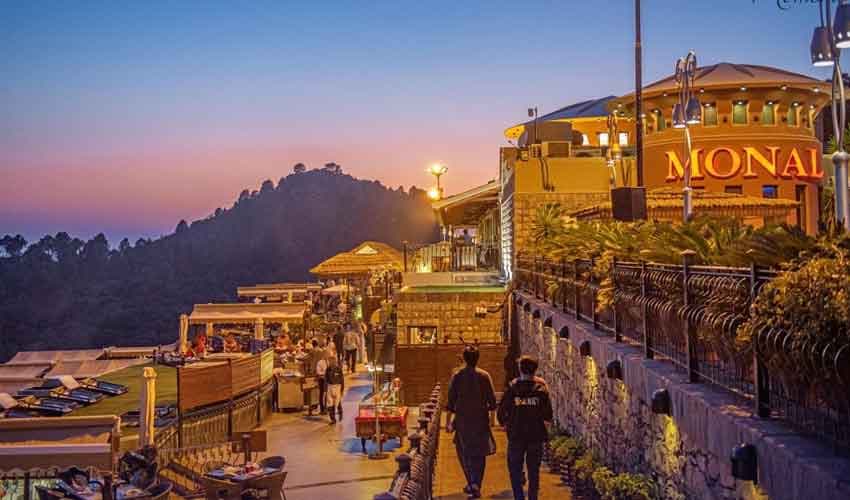
The Federal Constitutional Court has set aside the Supreme Court ruling that led to the closure and demolition of Monal Restaurant in Islamabad’s Margalla Hills National Park.
The court accepted appeals filed by the Capital Development Authority and Metropolitan Corporation Islamabad, directing the trial courts to decide the disputed land’s ownership independently and without being influenced by earlier judicial observations.
The latest judgement has revived the Monal dispute on the legal record, but it does not automatically reopen the restaurant or authorise reconstruction at the site.
Monal’s building was demolished in 2024, and parts of the debris reportedly remain at the location. Islamabad wildlife authorities also carried out plantation work after the land was reclaimed.
The FCC ruled that ownership questions pending before the civil courts must be decided on their merits.
It also directed the trial courts to resolve the pending cases expeditiously, while administrative and regulatory questions will be handled by the relevant government bodies.
FCC questions scope of previous judgement
During the proceedings, Justice Syed Hasan Azhar Rizvi observed that several important legal issues had not been considered in the previous Supreme Court judgement.
He said the Constitutional Court would not decide the matter emotionally and would instead follow the law and the available judicial record.
Justice Rizvi remarked that the new ruling would not read like an “Alif Laila story,” suggesting that the judgement would remain confined to the issues and evidence formally placed before the court.
He further observed that the earlier decision contained extensive discussion of matters that had not formed part of the underlying proceedings.
The FCC had previously noted that Monal’s lease-related dispute remained pending before a civil court, while cases involving other restaurants were also pending before the Islamabad High Court.
The court accepted the challenges filed by the CDA and MCI against the earlier directions concerning the restaurant. The federal government had also supported the review proceedings, arguing that the demolition order was not legally sustainable.
During an earlier hearing, the government informed the bench that numerous other structures continued to exist in the Margalla Hills, raising questions about the selective implementation of the previous judgement.
The FCC has now left the land ownership controversy for the relevant trial court to determine after hearing the parties and examining the evidence.
Monal received CDA lease in 2006
The Monal Restaurant site was leased out in 2006 and later became the subject of a prolonged dispute involving the CDA, defence authorities, wildlife regulators and the restaurant’s management.
The controversy centred on ownership of the land, the authority to grant or renew a commercial lease and the legality of running restaurants inside the protected Margalla Hills National Park.
The Islamabad High Court ruled in 2022 that the area was protected under wildlife and environmental laws and that the CDA did not have the authority to permit commercial construction there.
The IHC held that Monal and other food outlets were located within the protected national park and declared the relevant commercial arrangements unlawful.
That ruling was subsequently challenged before the Supreme Court.
SC ordered restaurants to vacate in 2024
On June 11, 2024, a three-member Supreme Court bench headed by then-chief justice Qazi Faez Isa ordered Monal and other restaurants operating inside the national park to close and vacate their premises.
The bench upheld the environmental protections applicable to Margalla Hills and ruled against commercial restaurant operations within the protected area.
In August 2024, proceedings were also initiated over the alleged failure to implement the closure order.
On August 21, the Supreme Court issued a detailed 25-page judgement directing the Islamabad Wildlife Management Board to take possession of Monal, La Montana and Gloria Jeans on September 11, 2024.
The CDA and Islamabad police were ordered to assist the wildlife board, while the entrances were to be barricaded before the buildings were demolished with minimal disturbance to wildlife and trees.
Review petitions rejected in Sept
Monal and other affected businesses filed review petitions against the Supreme Court’s decision. However, the Supreme Court dismissed the pleas in September 2024 and maintained its earlier directions.
The court had held that the restaurant operators had no legal right to remain in possession of the national park land and that their commercial activities conflicted with the applicable wildlife laws.
The restaurants were closed the same month as the authorities moved to implement the ruling.
By October 2024, the CDA had demolished the restaurant structures and reclaimed the land. The demolition physically removed Monal from its prominent location overlooking Islamabad, where it had operated for years as one of the capital’s best-known dining destinations.
After the buildings were removed, wildlife authorities planted trees at the site as part of efforts to restore the national park area.
Some construction debris reportedly remains on the Margalla Hills site despite the demolition and subsequent plantation.
Final ruling issued after June hearings
The Federal Constitutional Court began examining the review challenge during hearings in June 2026.
The final ruling setting aside the Supreme Court’s demolition decision was issued on Monday, July 13, 2026 — not in June — after the bench considered the appeals filed by the civic authorities.
The court concluded that the pending civil litigation over ownership should not have been determined through observations made in separate constitutional proceedings.
What happens to the Monal site now?
The ruling does not, by itself, restore Monal’s building, lease or restaurant operations.
Instead, it removes the binding effect of the earlier demolition decision and allows the civil courts to determine who owns the disputed land and what rights, if any, the parties hold.
Any future construction, lease arrangement or commercial activity would remain subject to the outcome of the ownership cases and decisions by the relevant environmental, wildlife, municipal and regulatory authorities.
The judgment, therefore, represents a major legal reversal, but the physical restoration or reopening of Monal remains dependent on further court decisions and regulatory approvals.