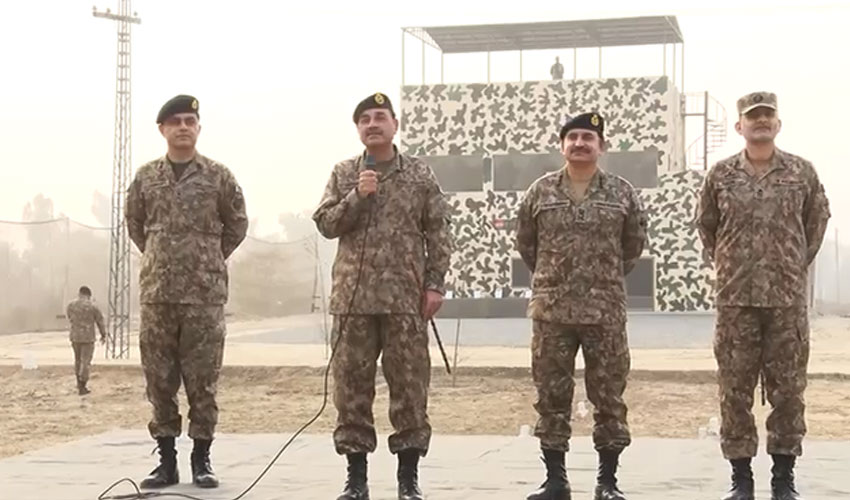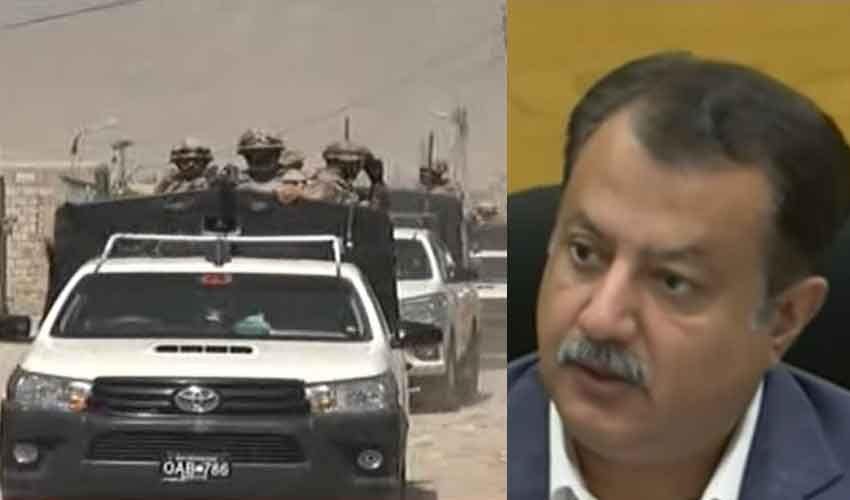





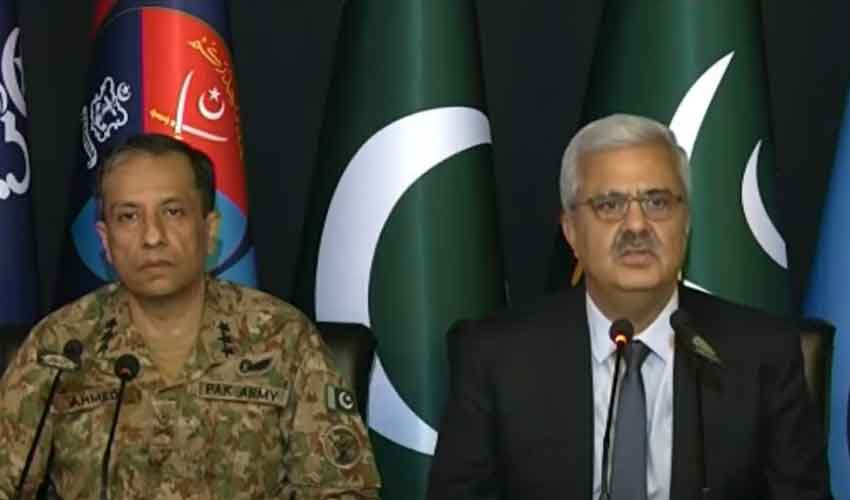
In a joint press conference held on Friday, Inter-Services Public Relations (ISPR) Director General Lt Gen Ahmed Sharif Chaudhry and Interior Secretary Capt (retd) Khurram Agha strongly condemned the recent wave of terrorist attacks in Balochistan, accusing India of sponsoring terrorism in Pakistan for over two decades.
The ISPR DG, while addressing the media, said India has been pursuing a consistent policy of state-sponsored terrorism aimed at destabilizing Pakistan and sabotaging regional peace. "For 20 years, India has been actively funding and facilitating terrorist activities inside Pakistan," he said.
He recalled that in 2009, Pakistan had submitted a detailed dossier exposing India’s involvement in terrorist activities in Balochistan. Similar evidence was again presented in 2016, which included proof of Indian support to banned outfits and terror networks operating in Pakistan.
Recent attacks and Indian involvement
The ISPR DG listed a series of recent terrorist incidents across Balochistan, all allegedly linked to an India-backed terror group named Fitna-ul-Hindustan. He said the group was behind the tragic attack in Khuzdar that resulted in the martyrdom of school children. “This was not just an attack on children but an attack on our values,” the interior secretary added.
“Eight people, including six children, have been killed, and 51 people injured in the Khuzdar attack. Many are still undergoing treatment in hospitals,” said the military spokesperson.
The spokesperson also blamed Fitna-ul-Hindustan for other attacks:
-
April 12: Labourers martyred in Panjgur
- Oct 11,2024: More than 20 coal miners martyred in Dukki
-
February 14: Ten civilians martyred in Harnai
- Seven passengers martyred after being evicted from a bus in Barkhan
-
March 11: Innocent passengers targeted in Jaffar Express
-
March 26: Labourers martyred in Gwadar
-
May 9: Three labourers killed in Lasbela
-
Nushki: Four labourers martyred
-
Barkhan: Seven passengers crushed to death
"Even the Baloch are asking what Balochism has to do with terrorism. Fitna-ul-Hindustan has nothing to do with Balochism," the military spokesperson remarked, adding that the world is asking which Pakistani was involved in the Pahalgam attack.
Confessions and evidence
DG ISPR mentioned that several arrested terrorists have confessed to receiving financial and logistical support from India. He referred to Indian spy Kulbhushan Jadhav’s confessional statement as undeniable proof of Indian interference in Pakistan’s internal affairs.
He also revealed that terrorists arrested by security forces were equipped with American-made weapons and night vision devices, often smuggled in via Afghanistan.
Global reaction and hypocrisy
The ISPR DG criticized the international double standards, saying, “While Pakistan is blamed for terrorism, the world is silent on Indian-funded barbarism in Balochistan.” He also pointed to Indian social media platforms celebrating attacks like the one on the Jaffar Express that the world was condemning, questioning which civilized nation rejoices in acts of terror. He added that the security forces saved hundreds of people in that attack.
Referring to the October 6, 2024 attack on Chinese nationals in Karachi, the spokesperson highlighted how such incidents aim to damage Pakistan’s foreign partnerships and development projects.
Firm response and national resolve
“The enemy is using missiles and drones, but the morale of the Pakistani nation remains unshaken. Our security forces are standing firm,” DG ISPR asserted. He said 71 terrorists from a group of over 100 were neutralized recently by Pakistani forces.
The interior secretary echoed similar sentiments, vowing that all those involved in the Khuzdar attack and other such incidents would be brought to justice. “This is not just a fight against terrorists, but a fight for our national values and future.”
Both officials stressed that India-backed Fitna-ul-Hindustan has no ties to Kabul and is solely working to sabotage peace in Pakistan. “The world is watching, but the drama of blaming Pakistan for terrorism no longer holds weight,” DG ISPR concluded.
Lt Gen Chaudhry maintained that the Indian media is entirely under state control and lacks independence. He emphasised that the world is increasingly aware of India's involvement in terrorism inside Pakistan.
The ISPR chief revealed that India granted visas and entry to known terrorists such as Bashir Zeb and Aslam Achu. “There exists a clear nexus between Fitna-ul-Hindustan and Fitna-ul-Kharij,” he said.
“Terrorists injured in operations are often treated in India,” he added, highlighting cross-border facilitation of militants. The spokesperson also disclosed that Adila Baloch was blackmailed and coerced into becoming a suicide bomber.
During the press conference, the DG played an intercepted audio recording of an Indian Army officer, Major Sandeep, as further evidence of India’s involvement in sponsoring unrest in Pakistan.
India’s disinformation campaign
He pointed to India's massive disinformation campaign, stating that thousands of fake accounts are being operated under India's disinformation lab to malign Pakistan globally:
- In 2024, over 1,018 terrorists were eliminated.
- So far in 2025, more than 700 terrorists have been killed.
- Over 200 of those killed in 2025 were active in Balochistan alone.
The Pakistani security forces have started to crack down on terrorism and terror financing by shutting down illegal funding channels. “There was an agenda to provide operational space to military proxy groups, but they are now under increasing pressure and frustration,” the spokesperson added.
The ISPR chief underscored the unity of the Pakistani nation in the fight against terrorism. “They know the people of Pakistan stand united,” he said.
He highlighted progress in education and development, particularly in Balochistan:
- 73,000 Baloch students are currently studying on government-funded scholarships.
- Balochistan is now witnessing notable economic development, including a major share in the mineral resources sector.
- “Terrorist groups and their facilitators are unable to digest this economic progress,” he added.
The spokesperson concluded by saying that both the government of Pakistan and the Balochistan administration are focused on promoting peace and prosperity, not just within Balochistan but also in their engagement with neighboring regions like Kabul. “The Balochistan government has a big stake in mines revenue,” said the spokesperson.
More details to follow...