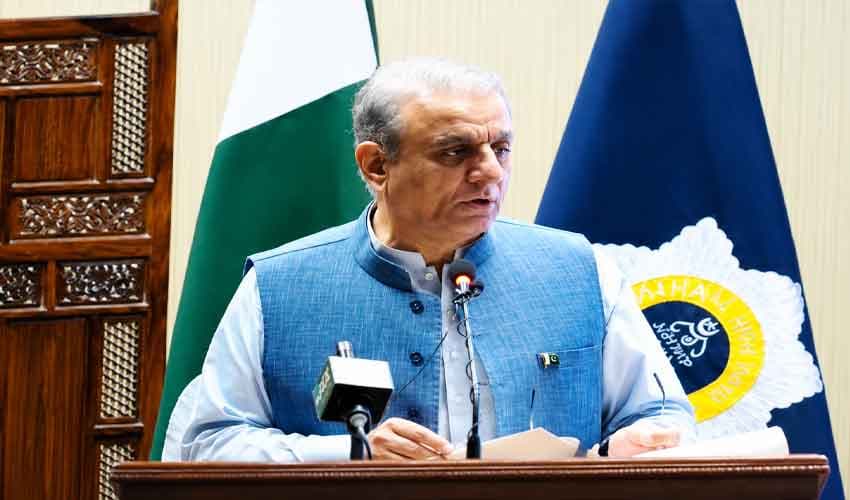
Federal Minister for Communications Abdul Aleem Khan paid tribute to the sacrifices of police martyrs on Police Martyrs' Day, describing August 4 as a proud day in Pakistan's national history while reaffirming the government's commitment to supporting the families of fallen personnel.
Speaking at a National Highways and Motorways Police Martyrs' Day ceremony in Islamabad, the minister also announced progress on major road infrastructure projects, record financial gains by the National Highway Authority (NHA), and plans to further expand Pakistan's motorway network.
Abdul Aleem Khan said August 4 represents a bright and dignified chapter in the country's history and serves as a day to renew the nation's commitment to those who laid down their lives in the line of duty.
He said police officers and National Highways and Motorways Police personnel sacrificed their lives to protect citizens, maintain law and order, and ensure peace across the country.
According to the minister, giving one's life in the line of duty is not only a professional obligation but also an expression of faith.
"Our forces have stood like a lead-lined wall against terrorism," he said, adding that the state and security institutions remain committed to standing beside the families of martyrs.
Tribute to motorway police personnel
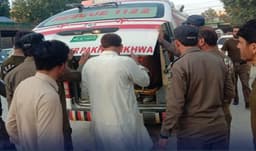
Abdul Aleem Khan recalled the martyrdom of a Motorway Police officer on the Faisalabad Motorway, saying the incident prompted authorities to strengthen safety measures for personnel.
He said he had directed all patrolling officers not to park their vehicles off the roadway to better protect their lives while performing their duties.
The minister also praised the National Highways and Motorways Police for setting an example of professionalism, discipline and public service, congratulating the Inspector General and the entire force for organising the Martyrs' Day ceremony.
NHA revenue nearly doubles in two years
Highlighting the financial performance of the National Highway Authority (NHA), Abdul Aleem Khan said the organisation's national revenue increased from Rs66 billion in 2024 to Rs127 billion in 2026.
He said many people, including several federal ministers, were unaware of this achievement.
According to the minister, the record increase has enabled the NHA to finance the construction, expansion and maintenance of highways and motorways using its own resources, reducing dependence on external financial assistance.
Massive highway expansion underway
Abdul Aleem Khan said Pakistan is witnessing historic infrastructure development stretching from the mountains of Gilgit-Baltistan to the highways of Sindh, Balochistan and Punjab.
He noted that as the motorway network expands, the responsibilities of the National Highways and Motorways Police will also continue to grow.
The minister said the Murree Expressway has been transformed into a model road with international-standard rest areas and improved public facilities.
He announced that work is underway to extend the expressway towards Muzaffarabad, enabling residents of Azad Jammu and Kashmir to benefit from the improved road network.
Major focus on northern connectivity
Abdul Aleem Khan described the Mansehra–Naran–Jalkhad–Chilas Motorway as one of his most important projects.
He said the motorway is intended not only to promote tourism but also to serve as an alternative route to the Karakoram Highway (KKH) connecting Pakistan with China.
According to the minister, improved connectivity could attract significant cargo traffic destined for the Arabian Sea, making it a transformational economic project for the country.
The communications minister said the Lyari Expressway is being developed into a model road for Karachi. He also announced that work is beginning on the important highway corridor linking Sukkur, Hyderabad and Karachi, calling it one of Pakistan's most significant transport routes.
Progress on M-16 and central Punjab
Abdul Aleem Khan said construction activity on the M-16 Motorway will become visible this year.
He explained that the existing motorway network connecting Lahore and Sialkot will be extended through Kharian to Rawalpindi, reducing the travel distance between Lahore and Islamabad from 380 kilometres to 280 kilometres.
The project is expected to cut travel time by approximately one hour while connecting key cities across Central Punjab.
Guru Nanak Expressway for religious tourism
The minister announced plans to construct a motorway linking Kartarpur and Nankana Sahib, which will be named the Guru Nanak Expressway. He said the project aims to connect important Sikh religious sites, making travel easier for pilgrims and encouraging religious tourism.
According to Abdul Aleem Khan, the motorway could attract a large number of Sikh visitors from around the world and provide a significant boost to Pakistan's tourism industry.
Referring to tourism in northern Pakistan, the minister said millions of tourists visit Gilgit-Baltistan every year. He revealed that a year ago he had requested the Gilgit-Baltistan government to hand over the region's busiest tourist roads to the NHA.
After nearly a year of discussions, the roads have now been transferred, allowing the NHA to upgrade existing infrastructure, build new roads and improve facilities for tourists.
Balochistan highway projects on track
Abdul Aleem Khan said construction of the N-25 highway from Karachi to Quetta is progressing steadily and is expected to be completed by the end of next year.
He also announced that work on the M-8 Motorway is advancing rapidly and is likewise scheduled for completion next year.
The minister expressed confidence that Pakistan's expanding motorway network would strengthen national connectivity while placing greater responsibility on the Motorway Police to maintain safety and service standards.