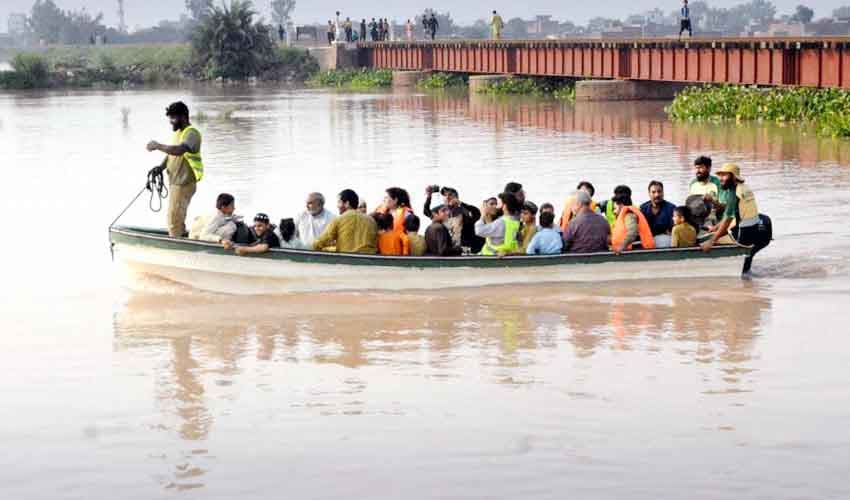
Recent rains and floodwaters have left several parts of Punjab facing new challenges, with residents warning of weakened embankments, destroyed crops and an increased risk of fresh flooding if preventive measures are not taken immediately.
From Shakargarh to Athara Hazari and Rajanpur, local communities are calling for urgent intervention to strengthen flood protection infrastructure and assist affected families.
The protective dam along Nullah Auj in Shakargarh has come under serious threat after recent rains weakened the structure at dozens of locations.
According to local residents, continuous soil erosion has created deep holes and cracks in several sections of the embankment, raising fears that the dam could fail if immediate repairs are not carried out.
Sandbags and soil proving insufficient
Residents say the available sandbags and soil are not enough to stop further land erosion or reinforce the vulnerable sections of the protective dam.
They warned that if timely measures are not taken, the dam could breach, putting dozens of nearby villages at risk of flooding.
Flood-hit farmers struggle
Although floodwaters in the Chenab River have receded, the aftermath continues to create serious difficulties for residents of Athara Hazari, particularly those living in low-lying areas.
Farmers have suffered heavy losses after standing crops were destroyed by floodwaters, with a large agricultural area affected.
The destruction of crops has also created environmental and public health concerns.
Residents say rotting vegetation has caused a severe foul smell and pollution across affected areas, while stagnant floodwater has become a breeding ground for mosquitoes and flies, increasing the risk of epidemic diseases.
Flood-affected families, meanwhile, continue to wait for government assistance as they struggle to recover from the losses.
Rajanpur faces renewed flood fears
Fresh rainfall over the Koh Suleman mountain range has increased concerns about possible hill torrent flooding in Rajanpur.
Residents say the danger has grown because breaches in the Kachhi Canal and sem-nullahs (artificial drainage) have not been repaired despite the ongoing monsoon season.
People in the area have accused the administration of failing to take timely preventive measures, alleging that officials remain occupied with paperwork instead of completing essential flood protection work.
They urged authorities to immediately repair the canal breaches before heavy rainfall triggers another disaster.
Memories of 2022 floods remain fresh
Residents warned that Rajanpur suffered devastating losses during the 2022 flash floods, and a similar situation could emerge if the damaged embankments are not repaired quickly.
According to local figures, the 2022 disaster affected 372,000 crops, impacted 116,000 people, damaged 34,000 houses, and claimed 47 lives.
Locals say completing the remaining flood protection work before further rainfall is essential to prevent another humanitarian and agricultural crisis.