With the second phase of the Azad Jammu and Kashmir (AJK) Legislative Assembly elections just around the corner, the Istehkam-e-Pakistan Party (IPP) has accelerated its election campaign across refugee constituencies.
Party leaders are sharpening their strategy, expanding voter outreach and calling for transparent polling ahead of the August 2 elections.
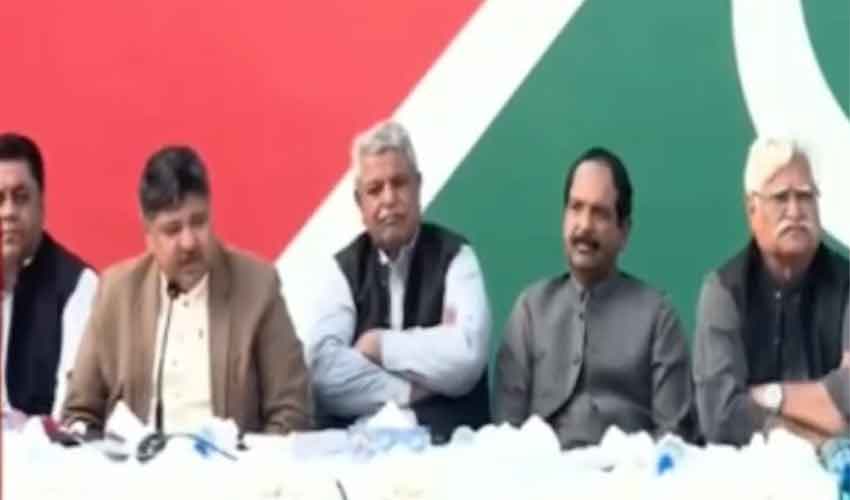
An important consultative meeting of the IPP Punjab chapter was held in Lahore under the chairmanship of Punjab General Secretary Shoaib Siddiqui to review preparations for the second phase of the Azad Kashmir elections.
The meeting was attended by party leaders, including nominated candidates Saeed Ahmed Dar and Bilal Mukhtar Butt. In line with the directions of IPP President Abdul Aleem Khan, various election responsibilities were assigned to party leaders and workers.
Shoaib Siddiqui urged party workers to play an active role in ensuring the success of IPP candidates and directed them to further intensify the party's door-to-door election campaign.
Also Read: AJK elections 2026: Over 1.7m voters to cast ballots in second phase on Aug 2
He said the party's candidates represent public service, merit and positive politics. Participants also reviewed the party's election preparations and agreed to make campaign activities more effective in the final days before polling.
Bilal Butt promises change for Kashmiri refugees
The IPP's election campaign is also in full swing in LA-41 Valley-3 in Multan, where candidate Bilal Butt is actively canvassing voters.
He said his decision to contest the election is driven by a desire to work for the welfare of Kashmiri refugees, adding that previous governments had failed to address their concerns.
"All the parties that have come before us have only given lollipops to Kashmiris," Bilal Butt said, accusing traditional political parties of making promises without delivering meaningful results.
He also alleged that some parties were trying to influence voters through gifts and incentives. Describing the IPP as "a new party with a new mindset," Bilal Butt appealed to voters to support the party in the upcoming election.
"If you give new people a chance, they may prove to be better," he told supporters during his campaign.
Tahir Khokhar calls for Pakistan Army deployment
Meanwhile, IPP candidate Tahir Khokhar, contesting from LA-39 Jammu-6, has called for the deployment of the Pakistan Army to ensure transparent polling during the second phase of the elections.
He alleged that political opponents were pressuring voters to influence the outcome and expressed concerns about the fairness of the electoral process following the first phase of polling.
Also Read: AJK elections: PPP candidates raise rigging concerns before second phase
According to Khokhar, there are fears of rigging attempts at polling stations, making additional security measures essential.
Refugee issues dominate campaign
Khokhar said education, healthcare, employment and the resettlement of Kashmiri refugees remain the most pressing issues facing the constituency.
He criticised his rival from the Pakistan Muslim League-Nawaz (PML-N), claiming the opposing candidate had remained disconnected from the constituency for the past 20 years.
The IPP candidate also highlighted his own political record, saying he had previously served as a minister a decade ago.
"No one has been able to do in 70 years what I accomplished in the last 10 years," he claimed while defending his performance in public office.
Khokhar said he was continuing an extensive door-to-door campaign and expressed confidence that the IPP would emerge victorious in the August 2 polls.
He reiterated his demand for free, fair and transparent elections, insisting that the deployment of the Pakistan Army would help strengthen public confidence in the voting process.
Campaign enters decisive phase
With polling for the second phase of the Azad Jammu and Kashmir Legislative Assembly elections scheduled for August 2, political parties have intensified campaigning across Muzaffarabad Division and the 12 refugee constituencies.
As candidates make their final appeals to voters, issues such as refugee resettlement, employment, education, healthcare and election transparency continue to dominate the campaign, setting the stage for a closely watched electoral contest.