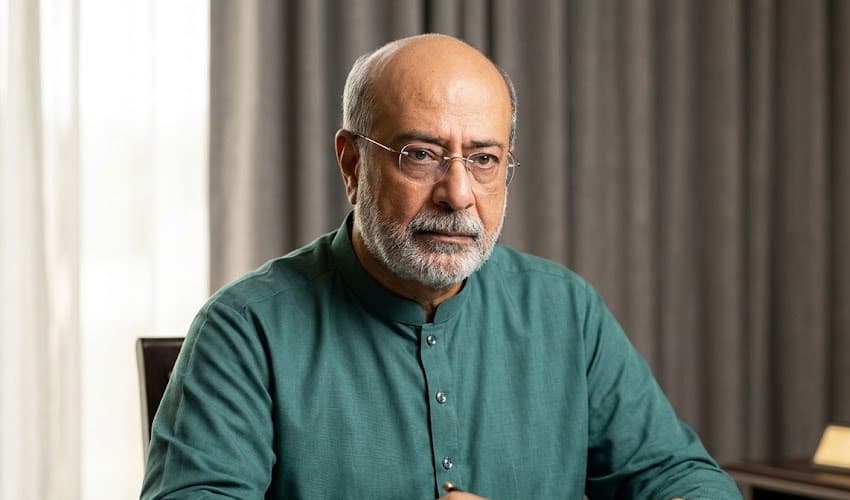
Veteran Pakistani actor and writer Syed Mohammed Ahmed has claimed that some writers in the country's television industry are using artificial intelligence (AI) to produce entire 26-episode drama serials, warning that the trend is affecting originality and cultural authenticity.
Speaking on Sheeba Khan's Dareecha podcast, Ahmed said AI-generated scripts often fail to reflect Pakistan's language, culture and everyday social interactions.
He questioned how some writers manage to complete multiple television scripts within a short period.
"It takes me around 10 to 11 months to write a quality drama. It is not humanly possible to write several dramas at the same time," he said.
Producers changing original scripts
Ahmed also criticised producers for making extensive changes to original scripts in pursuit of ratings and viral content.
View this post on Instagram
Recalling one of his own projects, he said he had completed 17 episodes before being asked to remove everything after the 11th episode.
He said writers often lose creative control once a script is handed over for production.
"If producers cannot understand the writer's vision despite repeated explanations, they simply modify the script themselves," he said.
AI-generated dialogue lacks local flavour
According to Ahmed, some AI-assisted scripts contain dialogue that sounds unnatural because they do not accurately capture Pakistani language, culture or social behaviour.
While acknowledging the growing role of technology, he suggested AI-generated content still struggles to reproduce the nuances of authentic local storytelling.
His comments come as AI tools are increasingly being used across creative industries worldwide, prompting debate over their impact on originality and human creativity.
Uncredited work in the industry
Ahmed also alleged that many scriptwriters receive assistance from students or content teams who edit AI-generated drafts, but these contributors rarely receive proper credit.
Instead, he said, production houses often prioritise established names over recognising the work of those who actually contribute to the writing process.
He attributed the practice partly to financial pressures within the industry, saying many writers accept such arrangements because of economic constraints.
Stepping away from screenwriting
The veteran writer said he has decided to reduce his work as a screenwriter because he no longer wants to produce stories centred on repetitive family conflicts and negative themes.
He also revealed that one of his socially driven scripts aimed at women's empowerment failed to gain support from producers.


.jpg&w=256&q=75 "PML-N wins 9, PPP secures 4 seats in first phase of AJK elections")