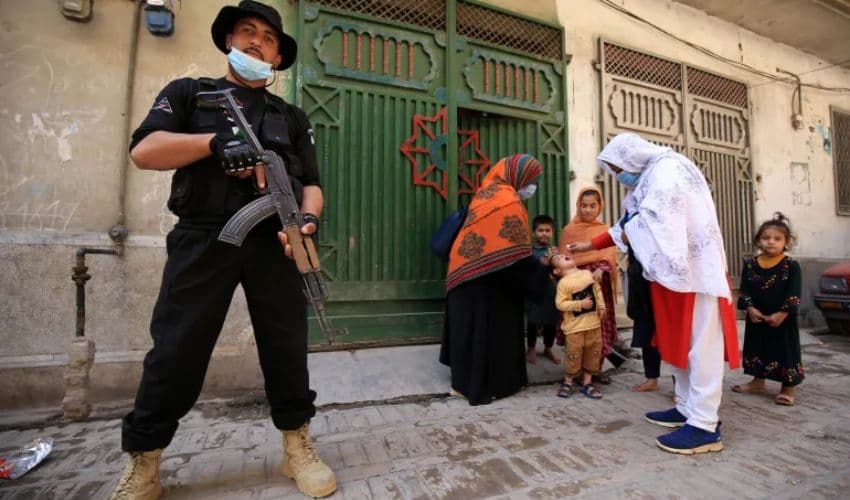
Pakistan has recorded a decline in the presence of the polio virus in environmental samples, according to the latest laboratory report from the National Emergency Operations Centre (NEOC).
Fewer positive samples detected
Out of 127 sewage samples collected from 87 districts, only 42 tested positive for the virus, while 75 samples were polio-free. Results for 10 samples are still awaited.
The NEOC report highlights progress in several provinces:
-
Balochistan: 22 out of 23 samples were negative, with one testing positive.
- Khyber Pakhtunkhwa: 24 samples were polio-free, seven tested positive.
-
Punjab: 15 samples were negative, 12 tested positive.
-
Sindh: 10 negative, 19 positive.
-
Islamabad: One negative sample, three virus-free samples reported.
-
AJK & Gilgit-Baltistan: All samples tested negative for polio.
Testing and surveillance
All tests were conducted at the National Institute of Health’s Polio Regional Laboratory in Islamabad, which plays a key role in monitoring environmental surveillance to detect poliovirus circulation.
Also Read: Pakistan confirms 19th polio case: Latest victim in Lakki Marwat
As of now, the total number of polio cases in the country has risen to 19 in 2025.
NIH confirms new polio case
Last week, the regional laboratory of the National Institute of Health (NIH) had confirmed the presence of poliovirus in a young child. This was the 12th case reported in Khyber Pakhtunkhwa (KP) this year.
Growing concern in Khyber Pakhtunkhwa
Khyber Pakhtunkhwa remains one of the hardest-hit provinces in the fight against polio. Out of the 19 total cases confirmed across the country in 2025, more than 60% are from KP — indicating persistent gaps in immunization coverage, accessibility, and awareness.



.jpg&w=256&q=75 "Holiday announced on July 22")