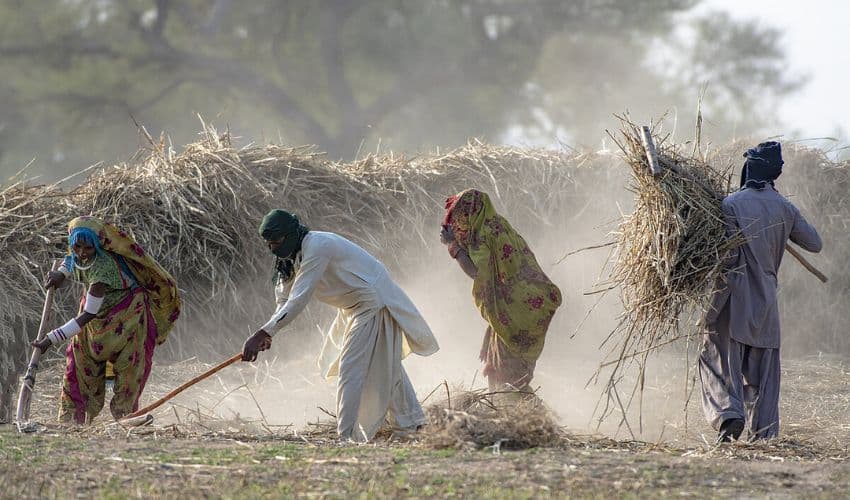
Despite constitutional guarantees and labour protection laws, millions of workers in Pakistan continue to face unsafe working conditions and inadequate wages.
Recent reports reveal alarming workplace fatalities, widespread violations of minimum wage laws, and growing unemployment across the country.
Worker safety continues to be a serious challenge across Pakistan, with reports indicating that 97 workers lost their lives over the past year due to inadequate safety measures at workplaces.
The figures underscore ongoing concerns about poor occupational safety standards and the lack of effective enforcement of labour protection laws.
Despite existing legal provisions, safety arrangements are still not being adequately ensured in many workplaces.
Minimum wage laws widely ignored
Reports show that the implementation of Pakistan's minimum wage law remains weak.
According to findings, more than 80% of workplaces are not paying the officially prescribed minimum wage.
The Human Rights Commission of Pakistan further stated that 95% of factories are violating the country's minimum wage law, highlighting the gap between legal requirements and actual practices.
The minimum monthly wage in Pakistan has been fixed between Rs37,000 and Rs40,000, but many workers reportedly continue to receive less than the legally mandated amount.
Millions depend on daily wages
Pakistan's labour force continues to rely heavily on informal and daily wage employment.
According to the report, around 80 million people in the country are associated with the labour sector. Of these, more than 60 million people work as daily wage earners, making them particularly vulnerable to economic uncertainty, wage violations, and unsafe working conditions.
The report also points to rising unemployment across the country. An estimated 5.9 million people are currently unemployed, pushing Pakistan's overall unemployment rate to a record 7.1%.
Among the provinces, Khyber Pakhtunkhwa recorded the highest unemployment rate at 9.6%, reflecting greater employment challenges in the region.
Constitutional protections
The Constitution guarantees the protection of workers' rights, including fair wages and safe working conditions. However, the latest findings suggest that practical implementation remains insufficient, with labour laws frequently ignored and workplace safety standards inadequately enforced.
Labour rights advocates continue to stress that stronger enforcement of existing laws, improved workplace inspections, and better compliance with minimum wage regulations are essential to protecting millions of workers and reducing preventable workplace deaths.


.jpg&w=640&q=75 "Govt collects Rs80 petroleum levy on every litre of petrol")