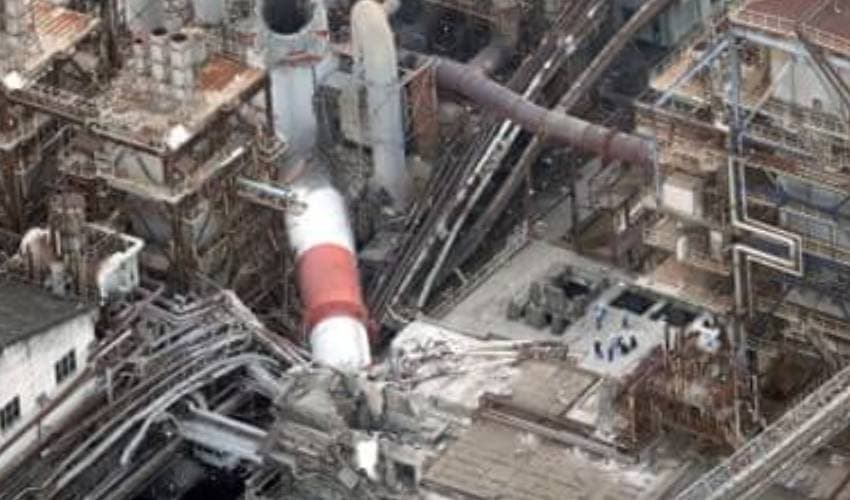
The death toll from a powerful earthquake in southern Japan has risen to 13 as rescuers race against time to find people trapped under collapsed buildings and rubble.
The 7.1-magnitude earthquake struck Japan’s Kumamoto prefecture on Tuesday, damaging infrastructure, cutting electricity supplies and triggering emergency rescue operations across the region.
Eight people were rescued alive from the rubble of a partially collapsed shopping mall near Kumamoto after an explosion occurred about an hour after the earthquake. Two women in their 20s were killed in the incident.
Around 20 to 30 mall workers were reported missing following the collapse, according to Japan’s public broadcaster NHK.
“Even now, there are people waiting to be rescued, and this is a race against time,” Japanese Prime Minister Sanae Takaichi told reporters.
Rescue teams search collapsed mall
Firefighters, police officers and around 170 military personnel focused their efforts on parts of the mall where calls for help were reported.
Authorities are investigating a possible gas explosion at the Aeon shopping centre, with rescuers reporting a smell of gas inside the building. Officials said the cause of the blast remains under investigation.
More than 4,500 military personnel have been deployed to support rescue and recovery operations across the affected areas.
Thousands remain without power
The earthquake left more than 36,000 homes without electricity as temperatures reached around 34 degrees Celsius, prompting authorities to warn residents about heatstroke risks.
Around 260,000 people were advised to move to evacuation centres, while police received hundreds of emergency calls reporting collapsed buildings and people trapped inside.
Authorities warned residents to remain alert for possible aftershocks and landslides in the coming days.
Hospitals struggle to handle injured
Hospitals near the earthquake’s epicentre reported difficulties treating patients due to power outages and a surge in emergency cases.
One hospital in Uki city said it had effectively turned into a field hospital after losing electricity, while another facility suspended new admissions after treating dozens of injured people.
High-speed train services were also suspended after several passengers were injured during the quake.
Businesses suspend operations
Several major companies with facilities in the region, including Sony, Tokyo Electron and Honda, suspended operations as a safety measure.
Chipmaker TSMC evacuated workers from its local plant but later began restarting operations.
The earthquake also damaged roads, creating large cracks on highways and disrupting traffic.
Japan sits on the Pacific “Ring of Fire” and experiences frequent seismic activity, accounting for a significant share of the world’s stronger earthquakes.





.jpg&w=256&q=75 "PML-N wins 9, PPP secures 4 seats in first phase of AJK elections")